'India Was Vishwa Guru for Its Wisdom': CM Yogi Lashes Out at Invaders in Gorakhpur
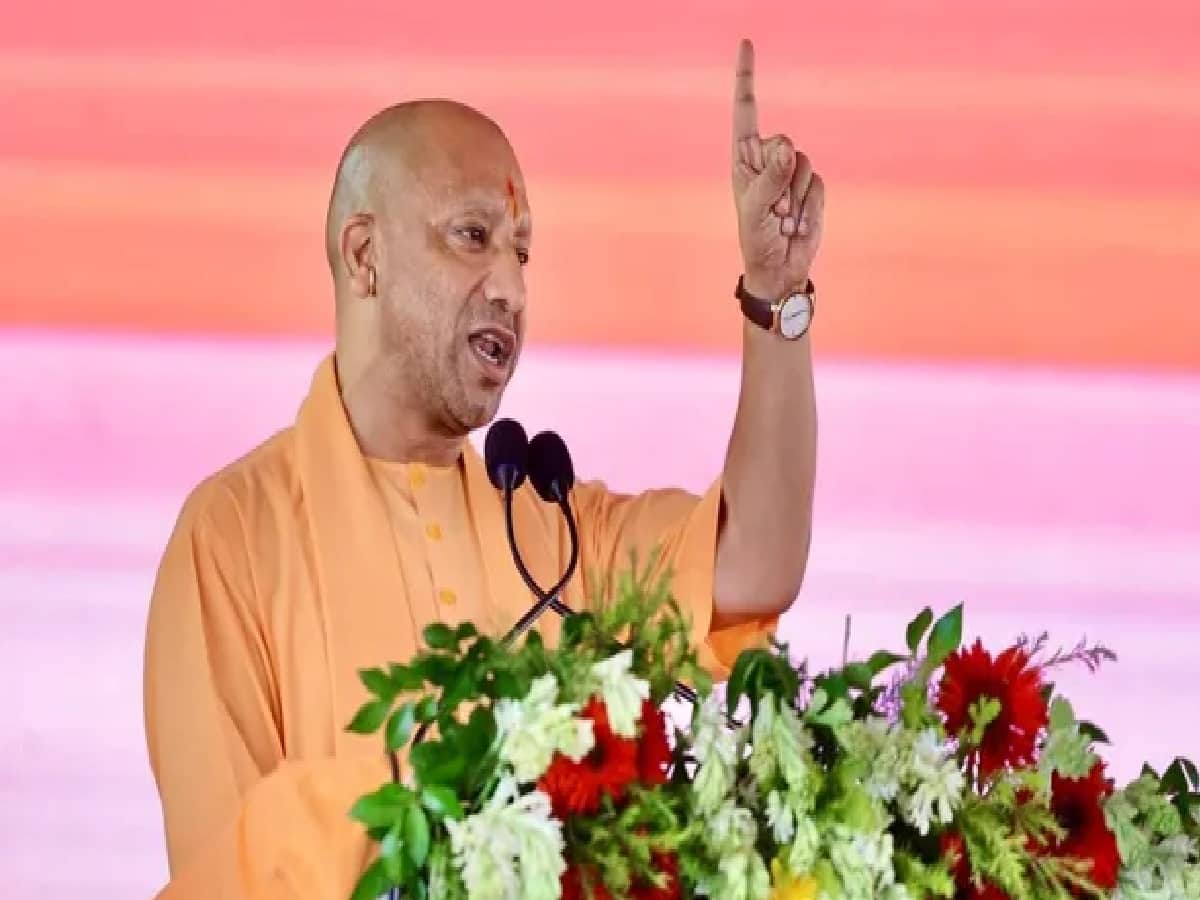
Addressing a high-level academic and spiritual congregation at the Gorakhnath Temple complex, Uttar Pradesh Chief Minister and Gorakhpeethadhiswar Yogi Adityanath delivered a blistering critique of foreign invaders and colonial forces, asserting that their historical onslaughts aimed not merely to loot the subcontinent's material wealth, but to systematically obliterate its ancient knowledge traditions. Presiding over a seminar titled 'Current Perspective of Indian Knowledge Tradition' at the Mahant Digvijaynath Smriti Bhawan, the Chief Minister recalled that India earned the revered status of 'Vishwa Guru' solely through its intellectual supremacy, scientific breakthroughs, and spiritual enlightenment. He emphasized that the time has arrived for the current generation to substantiate ancient wisdom with empirical evidence and digitize it using cutting-edge modern technology.
From Somnath to British Rule: The Systematic Subversion of Vedic Knowledge
Drawing historical parallels from the Ramayana era to medieval incursions, CM Yogi highlighted how ashrams in Dandakaranya and revered pilgrimage centers like Somnath were targeted to strike at the spiritual core of the civilization. He observed that while early invaders used brutal force, the British colonial apparatus adopted an insidious psychological approach by discrediting indigenous languages, literature, and medical systems. By supplanting Sanskrit with English and replacing holistic indigenous healthcare with Western paradigms, colonial administrators deliberately detached Indians from their cultural roots and intellectual heritage. He noted that long before modern nations existed, ancient India had pioneered grammar through Panini, yoga through Patanjali, governance through Chanakya's Arthashastra, and holistic medicine through Ayurveda, alongside legendary educational epicenters like Takshashila and Nalanda that attracted global scholars thousands of years ago.
Digitizing Ancient Heritage: Over One Lakh Manuscripts Preserved in Kashi
Emphasizing state and national initiatives to reclaim lost knowledge, the Chief Minister outlined ongoing preservation and archival efforts across Uttar Pradesh. He revealed that over one lakh ancient manuscripts have been gathered at Sampurnanand Sanskrit University in Varanasi, where meticulous conservation and high-resolution digitization are actively underway. Similar archival treasures—including rare copper plates, inscriptions, and palm-leaf manuscripts—are being systematically documented across Ayodhya, Prayagraj, Mathura-Vrindavan, and Lucknow. CM Yogi emphasized that technology must serve as the primary tool to debunk historical distortions, silence detractors, and present verified Indian scholarship to the global community, urging academic institutions to establish dedicated research centers focused on the Indian Knowledge System (IKS).
Global Recognition and the National Education Policy 2020 Framework
The symposium, organized to mark the 57th death anniversary of Brahmalin Mahant Digvijaynath Ji Maharaj and the 12th death anniversary of Rashtrasant Brahmalin Mahant Avedyanath Ji Maharaj, also witnessed addresses from prominent scholars and spiritual leaders. Keynote speaker Prof. V. Ramanathan of IIT BHU and former Higher Education Service Commission Chairman Prof. Ishwar Sharan Vishwakarma highlighted that the National Education Policy (NEP) 2020 mandates five percent of academic curricula to be grounded in the Indian Knowledge Tradition, aiming directly at shedding colonial mentalities. Dignitaries noted that initiatives like International Yoga Day and the creation of the Ministry of AYUSH spearheaded by Prime Minister Narendra Modi have restored global respect to India’s holistic sciences, setting a clear trajectory for a self-reliant and developed nation.