







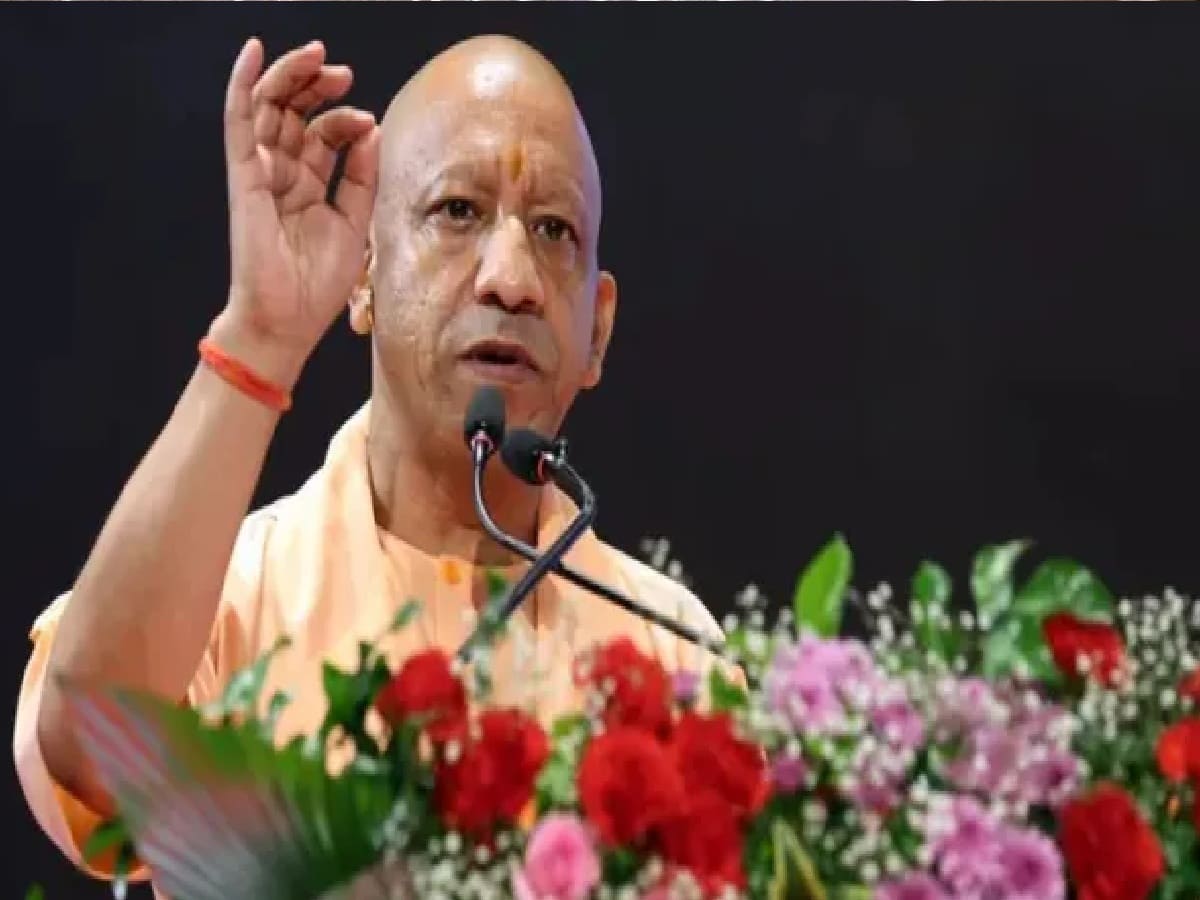
CM Yogi to Celebrate Diwali in Vantangiya, Gift ₹82 Cr Projects
UP CM Yogi Adityanath will celebrate Diwali with the Vantangiya community in Jungle Tikonia No. 3, Gorakhpur, unveiling 52 projects worth ₹82.41 crore.
Deep within the sal and teak canopies of the Kusmhi forest, approximately 15 kilometers from the Gorakhpur district headquarters, the forest settlement of Jungle Tikonia Number Three is immersed in festive celebration. Ahead of the festival of lights on Sunday, November 8, 2026, the courtyard of every dwelling in this historically marginalized hamlet is being swept, whitewashed, and illuminated with earthen lamps. For the residents of this Vantangiya village, Diwali does not formally begin until their revered guest, Uttar Pradesh Chief Minister Yogi Adityanath, steps onto their soil. Upholding a tradition that began during his tenure as a Member of Parliament and head of the Gorakhnath Math, the Chief Minister will spend the festival among the forest dwellers, inaugurating and laying the foundation stones for 52 key development projects valued at ₹82.41 crore. The comprehensive infrastructure package highlights how a community that lived on the fringes of society for an entire century has been integrated into the civic and economic life of the state.
Deepotsav in Kusmhi Forest: Sustaining an Unbroken Tradition
The bond between Chief Minister Yogi Adityanath and the Vantangiya families of eastern Uttar Pradesh represents one of the most sustained outreach efforts in the state's recent socio-political history. While administrative teams, forest officials, and district engineers finalize arrangements for the event in Jungle Tikonia Number Three, villagers are preparing to welcome "Yogi Baba" as a member of their own households. The annual Deepotsav celebration in this woodland pocket is not a symbolic photo opportunity; it marks the continuation of an unyielding custom initiated in 2009. Even after assuming the office of Chief Minister in 2017, Adityanath has consistently commenced his personal Diwali festivities from the heart of this forest community before participating in broader regional observances.
During the event, the Chief Minister will interact directly with local elders, review welfare scheme delivery, and distribute festive gift hampers, educational kits, notebooks, and fireworks to school-going children to encourage their academic pursuits. For the villagers, the event carries profound emotional resonance. In local folklore and everyday conversations, residents frequently note that without their "Baba," the festival remains incomplete. Over the past two decades, this yearly gathering has grown into an enduring symbol of dignity, social recognition, and civil rights for thousands of forest-dwelling families across the Terai belt.
From Colonial Exploitation to Citizenship: The 100-Year Struggle
The history of the Vantangiya community is rooted in colonial-era forestry policies. During British rule in the late 19th and early 20th centuries, large-scale railway expansion across the Indian subcontinent generated an enormous demand for durable timber, leading to the clear-felling of indigenous sal and teak forests. To replenish depleted woodlands, the colonial administration brought in landless laborers and displaced rural families to plant and maintain new teak plantations using the Burmese "taungya" agroforestry method. The families who settled inside the forests under this system came to be known as Vantangiyas. In 1918, five primary settlements were carved out inside the Kusmhi forest reserve: Jungle Tikonia Number Three, Rajhi Khale Tola, Rajhi Nursery, Ambag Nursery, and Chilbilwa, while another 18 settlements were established across the neighboring Maharajganj forest divisions.
Although India attained independence in 1947, the legal and social status of the Vantangiya people remained largely unchanged for decades. Because their settlements were categorized strictly as reserve forest land under colonial forestry statutes, the residents were denied basic citizenship recognition, land ownership titles, and voter registration. They were legally prohibited from constructing permanent pucca brick dwellings, leaving entire generations confined to mud-and-thatch shacks vulnerable to wildlife encounters and extreme weather. Deprived of schools, hospitals, electricity, and clean drinking water, the community survived by collecting fallen leaves, selling seasonal forest produce, and working as agricultural day laborers, all while living under the constant threat of eviction and harassment by forest department authorities.
The Turning Point: Healthcare, Gorakshanath Vidyapeeth, and Legal Battles
The first institutional intervention to address the plight of the Vantangiya settlements began in 1998, when Yogi Adityanath was first elected to the Lok Sabha representing the Gorakhpur parliamentary constituency. Observing the deprivation in these forest pockets, Adityanath deployed the charitable resources of the Gorakhnath Temple to bring essential relief to the settlements. Mobile medical units operated by the Guru Shri Gorakhnath Hospital began making scheduled visits into Jungle Tikonia Number Three, providing primary healthcare, pediatric vaccinations, and maternal treatment to families who had never accessed professional medical facilities.
Simultaneously, educational institutions managed by the Maharana Pratap Shiksha Parishad—notably MP Krishak Inter College and Maharana Pratap PG College in Jungle Dhusar—began conducting literacy drives and enrolling young forest children. In 2009, when Yogi Adityanath's volunteers began constructing a temporary school using asbestos sheets in Jungle Tikonia Number Three, forest department officials intervened, declared the structure illegal under conservation laws, and filed criminal cases against the organizers. Resisting the bureaucratic resistance, Adityanath defended the initiative in court, arguing that denying primary education to underprivileged children violated fundamental constitutional guarantees. The legal challenge succeeded, and the school was constructed. Today, operating under the name Gorakshanath Hindu Vidyapeeth, the institution remains a living monument to the community’s struggle for educational empowerment. Ramganesh, a veteran resident of the village, recalls that before this movement took shape, the community lived in complete isolation: "If Maharaj Ji had not stepped into our lives, our families would have remained trapped in poverty and obscurity forever".
Historic Transformation: Revenue Village Status and 100% Saturation
A decisive policy shift for the Vantangiya people unfolded following the political transition of 2017. Although Adityanath had championed the community’s case in Parliament to help secure initial land rights under the Scheduled Tribes and Other Traditional Forest Dwellers (Recognition of Forest Rights) Act in 2010, full civic integration remained elusive until he took office as Chief Minister. Within months of forming the state government in 2017, Adityanath issued executive notifications granting full revenue village status to the Vantangiya settlements across Gorakhpur and Maharajganj.
This legal reclassification brought an end to a century of administrative neglect. By converting forest enclaves into formal revenue villages, the state government unlocked budgetary allocations for public works, paving the way for complete infrastructure parity with standard rural panchayats. Over the past decade, 23 Vantangiya villages across the two districts have achieved 100 percent saturation across key welfare schemes. Every eligible household in Jungle Tikonia Number Three now possesses a pucca concrete home under the Chief Minister Awas Yojana, along with individual household latrines, clean piped drinking water, RO water purification plants, rooftop solar lighting, LPG connections under the Ujjwala scheme, ration cards, and social security pensions for senior citizens and widows.
Infrastructure Package: 52 Projects Worth ₹82.41 Crore Unveiled
Adding substantial momentum to regional rural development on the occasion of Deepotsav, Chief Minister Adityanath will officially inaugurate and lay the foundation stones for 52 development projects totaling ₹82.41 crore. The portfolio includes the foundation stone laying for 26 new initiatives valued at ₹77.97 crore, alongside the formal dedication and inauguration of 26 completed public utility projects executed at an expenditure of ₹4.43 crore.
Among the prominent infrastructure initiatives receiving a foundation stone is an all-weather interlocking concrete roadway that will link the Rajhi intersection directly to Pipraich via Jungle Tikonia Number Three. Budgeted at ₹3.65 crore, this dedicated transport link will provide dependable vehicular connectivity for forest residents, facilitating smooth commutes to district markets, agricultural mandi yards, healthcare centers, and educational colleges in Gorakhpur city. The broader package also encompasses rural drainage improvements, localized water delivery networks, paved community pathways, and civic street lighting systems across adjacent rural wards, ensuring sustained improvements in regional quality of life.
Eco-Tourism and Commerce: Kusmhi Eco-Park and Pipraich Global Market
In addition to rural civic infrastructure, the Chief Minister’s visit will initiate two major projects intended to generate local employment and boost ecological tourism. The first is a large-scale eco-park within the Kusmhi forest reserve, for which Adityanath will lay the foundation stone. Developed at an estimated cost of ₹4.84 crore, the eco-tourism hub will feature comfortable Swiss-style cottages, nature trails, open green lawns, and visitor amenities designed to attract eco-tourists to the serene natural canopy of eastern Uttar Pradesh. The facility is projected to create sustainable livelihoods for local youth through guiding services, catering, hospitality, and forest conservation stewardship.
The second flagship commercial initiative is the construction of a modern Global City Market in the Pipraich Nagar Panchayat, involving an investment of ₹1.91 crore. Once completed, this multi-facility retail center will streamline the commercial layout of Pipraich, offering organized trading stalls, modern storage facilities, and improved sanitation for regional merchants, vegetable growers, and handicraft artisans. Together, the eco-park and municipal commercial hub reflect an integrated administrative strategy that combines rural welfare with economic revitalization, demonstrating that sustainable ecological management and local commerce can reinforce one another.
As the earthen diyas illuminate the pathways of Jungle Tikonia Number Three this Diwali, the celebrations stand as proof of a profound community transformation. From an exploited group of colonial forest laborers living under constant threat of eviction to empowered citizens with secure homes, school-going children, and modern civic infrastructure, the Vantangiya people have found their rightful place in India's development narrative. For the residents of the Kusmhi forest, the lights of Deepotsav symbolize not only the triumph of light over darkness, but the enduring realization of social justice and shared dignity.




