







'Aren't You That Daughter': CM Yogi Meets Little Vachi in Lucknow
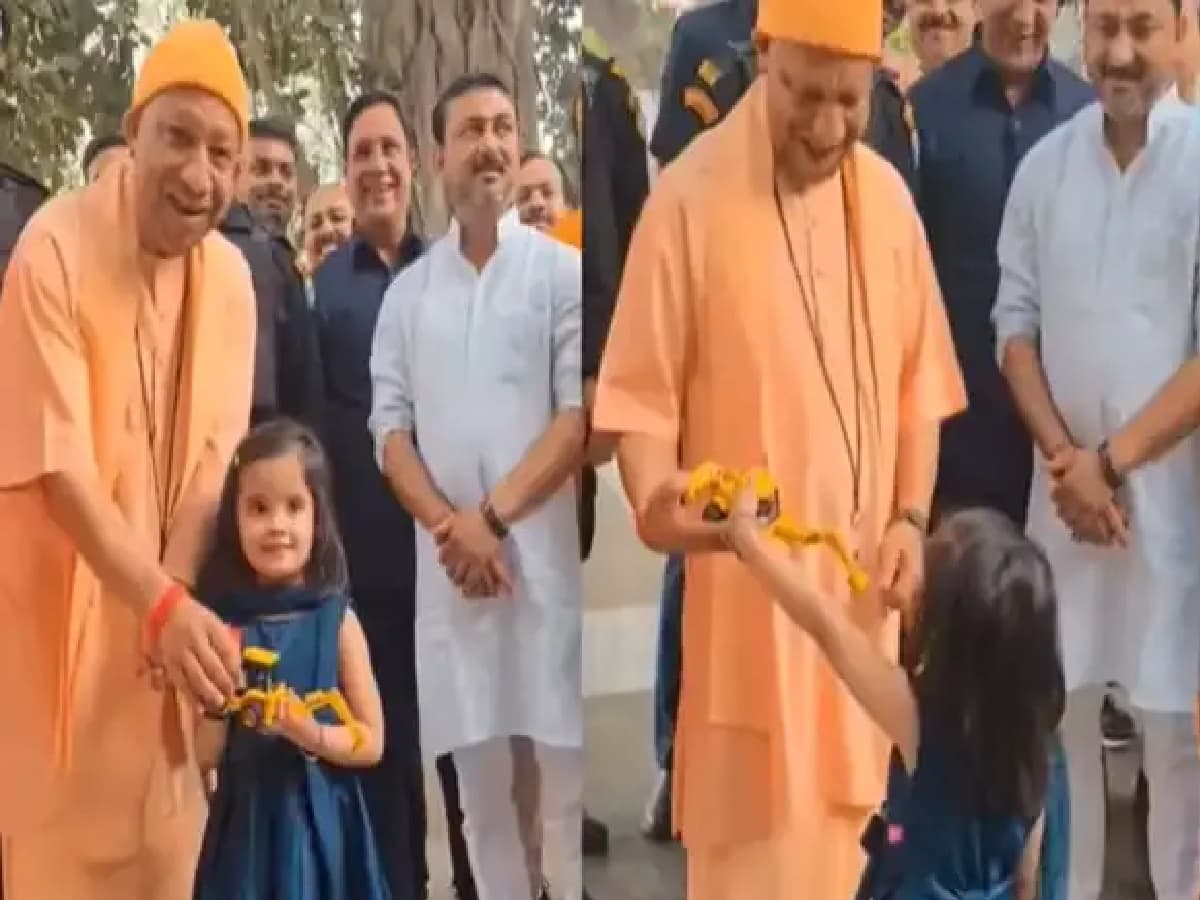
The bustling corridors of the Indira Gandhi Pratishthan in Lucknow witnessed an unexpected and heartwarming scene on Friday, November 6, 2026, during the landmark "One District, One Cuisine" (ODOC) culinary showcase, While the venue buzzed with senior administrative officials, master chefs, and food entrepreneurs from across all 75 districts of Uttar Pradesh, a spontaneous call from a young schoolgirl brought the Chief Minister’s high-security entourage to an immediate halt. Standing proudly beside a stall showcasing Moradabad’s traditional lentils, first-grader Vachi Saxena called out to Chief Minister Yogi Adityanath, offering him a packet of homemade dal. What followed was an endearing personal exchange that captivated onlookers, as the Chief Minister instantly recognized the child, engaged in an affectionate conversation, presented her with chocolates, and held up her family’s humble domestic enterprise as a shining example of grassroots innovation and entrepreneurial spirit.
A Sweet Encounter in Lucknow: The Innocent Call That Stopped the CM
The event, conceptualized to celebrate and commercialize the state's diverse culinary traditions, featured prominent stalls representing regional delicacies from across the heartland. Amit Saxena, a resident of Moradabad, had traveled to the state capital to represent the culinary heritage of the Brass City, setting up a pavilion dedicated to the rich flavors of Moradabadi dal and artisan-crafted moong dal namkeen. Accompanied by his young daughters, Vachi and Aachi, Saxena was busy explaining the nutritional properties and unique roasting methods of their homemade lentils to visitors when Chief Minister Yogi Adityanath began his walkthrough of the exhibition floor.
As the Chief Minister passed by flanked by security personnel, cabinet ministers, and media photographers, little Vachi caught sight of him and called out innocently: "Uncle, please take some namkeen!" The genuine, childlike appeal cut cleanly through the formal decorum of the official inspection. Halting in his tracks, Chief Minister Yogi Adityanath broke away from the designated VIP pathway with a warm smile, walking directly over to the modest Moradabad stall to meet the young entrepreneur and her family.
'Aren't You That Same Daughter?': A Touching Moment of Recognition
As the Chief Minister approached the counter, his expression shifted from polite administrative curiosity to genuine delight. Looking closely at the young girl, he remarked with spontaneous affection: "You are that same daughter who was admitted to a school in Moradabad, aren't you?" The unexpected flash of memory drew gasps of admiration from the assembled delegation, highlighting the Chief Minister's deep personal recall of local citizens and community interactions across the state.
Beaming with pride, young Vachi reached into the display and personally presented a packaged portion of Moradabadi lentils to the Chief Minister. Visibly touched by her innocent enthusiasm, Yogi Adityanath accepted the gift with folded hands, engaged her in lighthearted conversation about her studies, and presented her with a chocolate from his staff. The Chief Minister also patted her younger sister, Aachi, and posed for a smiling selfie with Vachi and her parents, turning an ordinary trade exhibition into a lifelong memory for the Saxena family. Culture and Tourism Minister Jaiveer Singh, along with senior officials present, applauded the heartwarming interaction that quickly became the defining visual highlight of the entire ODOC program.
Beyond the Brass City: The Culinary Heritage of Moradabadi Dal
The delightful encounter also succeeded in placing a well-deserved spotlight on one of Uttar Pradesh’s most iconic yet under-commercialized culinary preparations. While the historic city of Moradabad has earned global fame as the "Peetal Nagari" (Brass City) for its exquisite brass handicrafts, its culinary landscape is anchored by the beloved Moradabadi dal. Unlike heavy, cream-laden restaurant curries, traditional Moradabadi dal is crafted from slow-cooked yellow split moong lentils, simmered in copper and brass handis until it reaches a velvety, porridge-like consistency.
Served hot in terracotta bowls, the dish is traditionally garnished with a generous dollop of pure desi ghee, a pinch of roasted cumin-asafoetida powder, spicy red chili oil, crunchy jalebi crumbs or crisp savory mathri, freshly chopped ginger slivers, and a sharp squeeze of green lime. Historically favored by the royal kitchens of the Rohilkhand region as a light, protein-packed breakfast and evening comfort food, Moradabadi dal has transitioned into a signature street-food staple across Western Uttar Pradesh. Amit Saxena’s initiative to present this traditional recipe in a ready-to-consume and packaged form at the Lucknow exhibition demonstrated how hyper-local comfort foods possess the culinary sophistication to captivate palates far beyond their districts of origin.
Scaling Local Flavors: Yogi’s Call for Professional Branding and Packaging
During his formal keynote address later in the afternoon at the Indira Gandhi Pratishthan, Chief Minister Yogi Adityanath invited Vachi and her family onto the main stage to felicitate their dedication before a packed audience of industrialists and food scientists. Using the little girl’s homemade enterprise as a central theme of his address, the Chief Minister underscored the vast commercial potential dormant within traditional home kitchens across the state.
He pointed out that global food multinationals generate hundreds of billions of dollars annually by selling packaged snacks, breakfast items, and processed staples with basic nutritional profiles. In contrast, the nutrient-dense, heritage recipes developed by Indian mothers and grandmothers have remained confined to informal local bazaars purely due to a lack of professional packaging, uniform shelf-life stabilization, and structured marketing. The Chief Minister specifically urged the Department of MSME, food processing authorities, and culinary platforms to collaborate with family micro-enterprises like the Saxenas, emphasizing that vacuum-sealed, tamper-evident packaging and attractive modern branding could easily elevate Moradabadi dal and indigenous snacks into high-value commercial brands capable of competing on international supermarket shelves.
Empowering Grassroots Enterprise: Women, Families, and the ODOC Vision
The story of Vachi’s family stall highlights the deeper economic philosophy underpinning the expansion of the "One District, One Cuisine" initiative across Uttar Pradesh. Vachi’s father shared that the lentils and savory namkeen showcased at the stall were handcrafted at home by his wife, representing the quiet economic potential of millions of rural and semi-urban homemakers. Under the state government’s revised policy framework, the ODOC scheme is penetrating down to the tehsil, block, and village levels, connecting domestic culinary practitioners with formal Geographical Indication (GI) registration, food hygiene certifications, and collateral-free credit through the Mukhyamantri Yuva Udyami Vikas Abhiyan.
By providing interest-free loans of up to ₹5 lakh and capital subsidies scaling up to ₹20 lakh for expanding food processing units, the state is building an institutional pipeline designed to transform domestic kitchens into thriving commercial enterprises. The spontaneous interaction between Chief Minister Yogi Adityanath and first-grader Vachi served as a vivid demonstration that cultural preservation and economic development can work hand in hand. As the images of Vachi gifting Moradabadi dal to the Chief Minister circulated widely across digital media, they delivered a powerful message of empowerment: that in modern Uttar Pradesh, no entrepreneurial dream is too small, and every authentic local flavor carries the potential to make its mark on the world stage.




