







Why Shri Ram Called Hanuman His Brother Like Bharat: Chalisa Verse
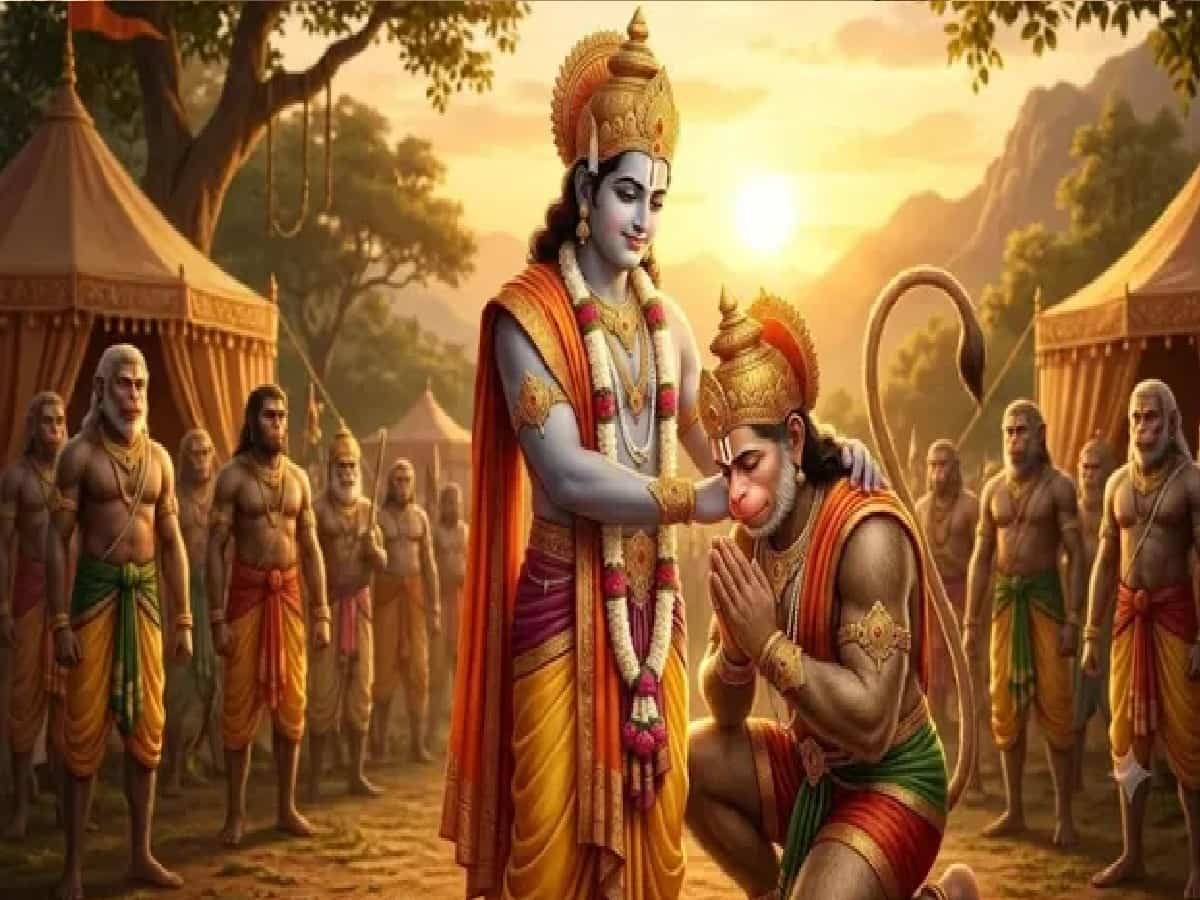
Across millions of homes and temples throughout India and the global Hindu diaspora, reciting Goswami Tulsidas's sacred forty-verse hymn, the Hanuman Chalisa, is cherished as a source of courage, protection, and inner peace. While every couplet (doha) and quatrain (chaupai) of this sixteenth-century devotional masterpiece carries deep spiritual wisdom, one specific verse captures the most emotional turning point in the bond between Lord Shri Ram and Bajrangbali: "Raghupati Kinhi Bahut Badai, Tum Mama Priya Bharat Hi Sam Bhai." In this immortal line, Lord Rama—the noble scion of the Raghu dynasty—does not merely praise Lord Hanuman as an extraordinary messenger or a loyal servant; instead, he embraces Hanuman with deep affection and declares him as dear as his own beloved brother Bharat. In the spiritual philosophy of the Ramayana and Ramcharitmanas, few statements carry greater emotional weight. Among all of Rama's brothers in Ayodhya, Bharat stood as the very embodiment of renunciation, tearful longing, and unconditional love, placing Rama's wooden sandals (padukas) on the royal throne for fourteen years while awaiting his return. By placing Hanuman on the exact same pedestal of brotherhood as Bharat, Lord Shri Ram reveals a transformative truth for seekers in every era: when devotion is pure, humble, and completely free of ego, the Divine erases the boundary between master and servant, welcoming the devotee into the closest circle of family and grace. For devotees, spiritual readers, and temple visitors across Ayodhya, New Delhi, Varanasi, Prayagraj, Lucknow, Kanpur, Chitrakoot, Jaipur, Bengaluru, and Mumbai, reflecting on this life-changing verse turns daily recitation of the Hanuman Chalisa into a deeply personal encounter with selfless love.
Meaning and Context of the Sacred Hanuman Chalisa Quatrain
To appreciate why Goswami Tulsidas composed this moving verse, it helps to examine its literal translation, scriptural backdrop in the Ramayana, and enduring spiritual takeaway:
| Verse Element | Sacred Text & Literal Meaning | Scriptural Context & Devotional Insight |
| Original Chaupai (Awadhi) | "Raghupati Kinhi Bahut Badai, Tum Mama Priya Bharat Hi Sam Bhai" | Composed by Goswami Tulsidas in the Hanuman Chalisa, celebrating the union of devotion and divine grace. |
| Word-by-Word Translation | Raghupati (Lord Shri Ram) kinhi bahut badai (offered immense praise): Tum mama priya (You are dear to me) Bharat hi sam bhai (just like my own brother Bharat). | Spoken by Lord Rama after Hanuman returned from Lanka with news of Goddess Sita, having crossed the ocean and humbled Ravana's pride. |
| Why Comparison to Bharat Matters | Bharat represented the pinnacle of selfless sibling love and sacrifice in Ayodhya. | Equating Hanuman with Bharat signifies that spiritual kinship through bhakti stands equal to—and indivisible from—blood relationship. |
| Core Life Lesson | Ego-free service transforms a devotee from a follower into a cherished member of the Lord's own family. | Encourages humility, gratitude, and sincerity in both spiritual practice and everyday human relationships. |
How Hanuman's Selfless Service in Lanka Earned Eternal Brotherhood
The moment celebrated in this chaupai unfolds after one of the most arduous missions in the Ramayana. Following the abduction of Goddess Sita by Lanka's demon king Ravana, Lord Rama and Lakshmana searched tirelessly for any trace of her whereabouts. Stepping forward without hesitation or boastfulness, Hanuman leaped across the vast southern ocean, endured perilous trials, located Sita in Ashok Vatika, reassured her with Rama's signet ring, and returned across the sea to deliver the life-giving news to Shri Ram.
Yet when Hanuman stood before Lord Rama, he claimed zero personal credit—attributing every feat solely to the power of Rama's name and grace. Moved to tears by such unmatched courage paired with total humility, Lord Rama embraced Bajrangbali and uttered the words immortalized by Tulsidas: "You are as dear to me as my brother Bharat." Even when Rama sought to repay Hanuman's service, Hanuman bowed low and asked for nothing except unwavering devotion (bhakti) at his Lord's feet.
Why This Verse Remains Life-Changing for Modern Devotees
In everyday life, human beings often measure worth through status, recognition, or transactional rewards. The quatrain "Raghupati Kinhi Bahut Badai, Tum Mama Priya Bharat Hi Sam Bhai" gently overturns that mindset. It teaches that true greatness does not require demanding praise or asserting superiority; rather, when a person performs their duties with sincerity, courage, and a pure heart, respect and love naturally follow.
Reciting this verse mindfully—especially on Tuesdays and Saturdays, days traditionally dedicated to Lord Hanuman—reminds devotees that Bajrangbali stands not as a distant cosmic figure, but as an approachable elder brother and protector who carries every sincere prayer straight to the heart of Shri Ram.




