







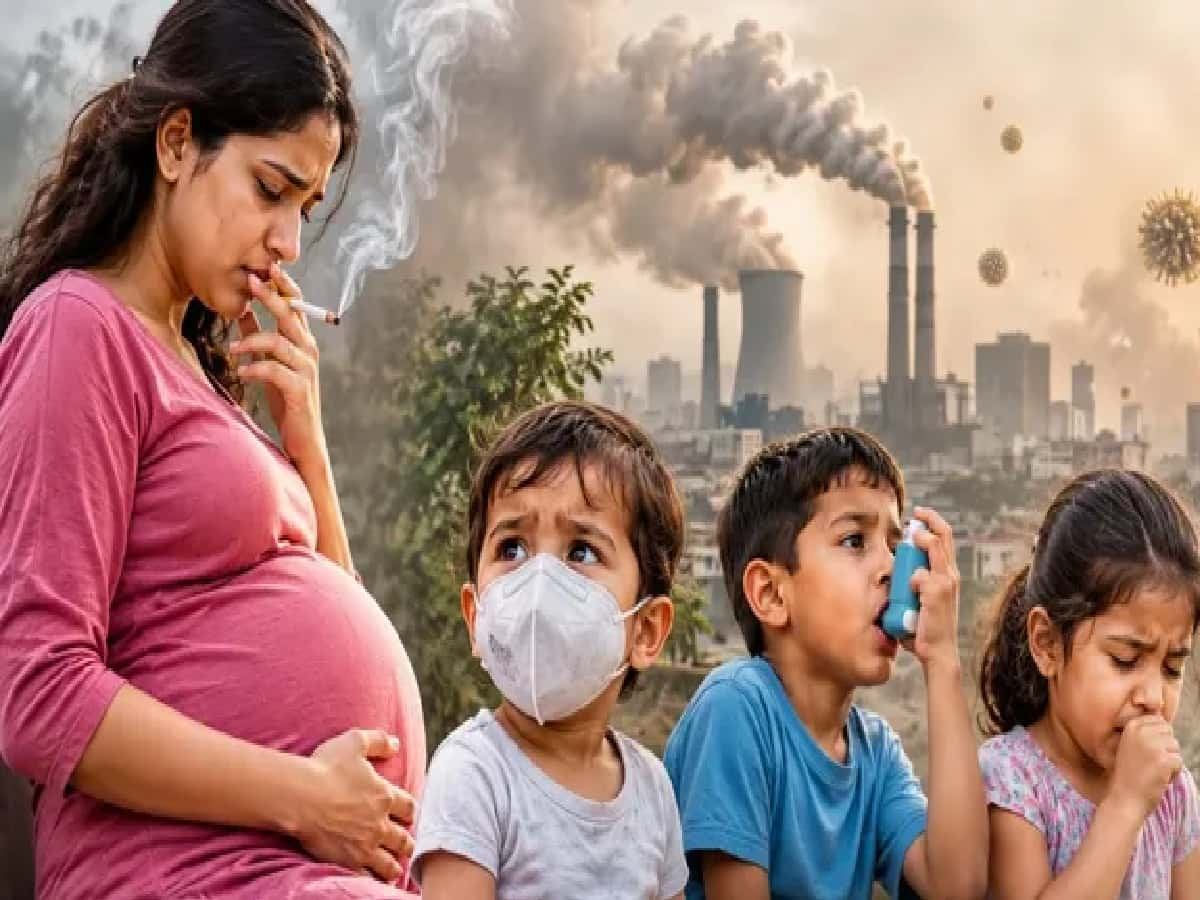
Pollution Harms Children Even in the Womb: 48 Lifelong Risks Found
Deteriorating environmental conditions are no longer merely an ecological crisis—they are silently shaping human health before a child even takes their first breath. According to a landmark scientific study conducted by researchers at the Barcelona Institute for Global Health (ISGlobal) and published in the peer-reviewed journal Science Advances, environmental pollution and early-life exposures begin affecting a child's physical and behavioral development directly inside the womb, creating vulnerabilities that can persist well into adolescence and adulthood. Using a comprehensive, population-wide "exposome" framework—an approach that evaluates the totality of environmental factors a human being encounters across life, including outdoor and indoor air pollution, tobacco smoke, and dietary quality—the research team identified 48 distinct environmental risk factors carrying the strongest associations with adverse health outcomes. Specifically, the findings pinpoint 6 critical risk factors during pregnancy and 42 risk factors during childhood that significantly elevate a young person's vulnerability across four core health domains: cardiometabolic health, mental and behavioral wellbeing, respiratory function, and allergies. Among the standout revelations, exposure to maternal smoking during pregnancy was closely associated with higher body mass index (BMI) as well as behavioral patterns such as aggression and impulsivity that frequently endure into the teenage years, while childhood exposure to indoor air pollution and poor dietary quality left measurable imprints on both physical vitality and emotional regulation. For parents, expectant mothers, pediatricians, policymakers, and citizens across New Delhi, Lucknow, Kanpur, Varanasi, Patna, Gurugram, Noida, Ghaziabad, Mumbai, and Bengaluru, the study underscores why protecting pregnant women and young children from polluted air and household toxins is an urgent public health priority.
What the ISGlobal Study in 'Science Advances' Revealed: 48 Early-Life Risks
Rather than examining a single pollutant in isolation, researchers at the Barcelona Institute for Global Health (ISGlobal) adopted an integrated exposome-wide approach to understand how multiple everyday exposures interact during the most sensitive windows of human growth:
| Study Dimension | Key Scientific Finding | Long-Term Health & Behavioral Impact |
| Research Institution & Journal | Barcelona Institute for Global Health (ISGlobal) — published in Science Advances | Evaluates combined environmental exposures from fetal development through childhood and adolescence. |
| Prenatal Window (Pregnancy) | 6 high-impact environmental risk factors identified during gestation | Maternal smoking during pregnancy linked to elevated childhood BMI, aggression, and impulsivity persisting into adolescence. |
| Postnatal Window (Childhood) | 42 high-impact environmental risk factors identified during early growth | Indoor air pollution and suboptimal dietary quality strongly tied to long-term physical and behavioral outcomes. |
| Four Affected Health Domains | 1. Heart & Metabolic Health | 2. Mental Health | 3. Respiratory Health | 4. Allergies | Demonstrates that early environmental hazards cut across organ systems simultaneously rather than causing isolated symptoms. |
How Prenatal Exposure Shapes Metabolism and Behavior Into Adolescence
During pregnancy, the developing fetus relies entirely on the maternal environment for oxygen, nutrition, and hormonal balance, making prenatal tissues extraordinarily sensitive to airborne toxins and chemical stressors. The ISGlobal study highlights that six specific prenatal risk factors exert measurable, lasting influence over a child's developmental trajectory.
In particular, exposure to maternal tobacco smoke in utero was associated not only with altered metabolic regulation and a higher likelihood of elevated body mass index (BMI), but also with neurobehavioral challenges—including heightened aggression and impulsivity—that often persist well into adolescence. These insights reinforce medical consensus that safeguarding maternal air quality and eliminating smoke exposure during pregnancy yield lifelong dividends for a child's physical and emotional stability.
Why Childhood Indoor Air Pollution and Diet Matter Across Four Health Domains
Once a child is born, rapid lung maturation, immune system calibration, and brain development continue throughout the early years, where researchers documented 42 distinct environmental risk factors. Notably, everyday exposures inside the home—such as indoor air pollution from cooking fumes, solid fuels, secondhand smoke, and poor ventilation—alongside dietary quality proved to be powerful determinants of long-term health across cardiometabolic, respiratory, allergic, and mental health domains.
By mapping how the exposome—the cumulative web of air, diet, and chemical surroundings—influences young bodies, the Science Advances study sends a clear message to families and urban planners alike: reducing indoor and outdoor air pollution, ensuring smoke-free homes, and prioritizing nutritious diets during pregnancy and early childhood are among the most effective investments society can make in lifelong human health.




