







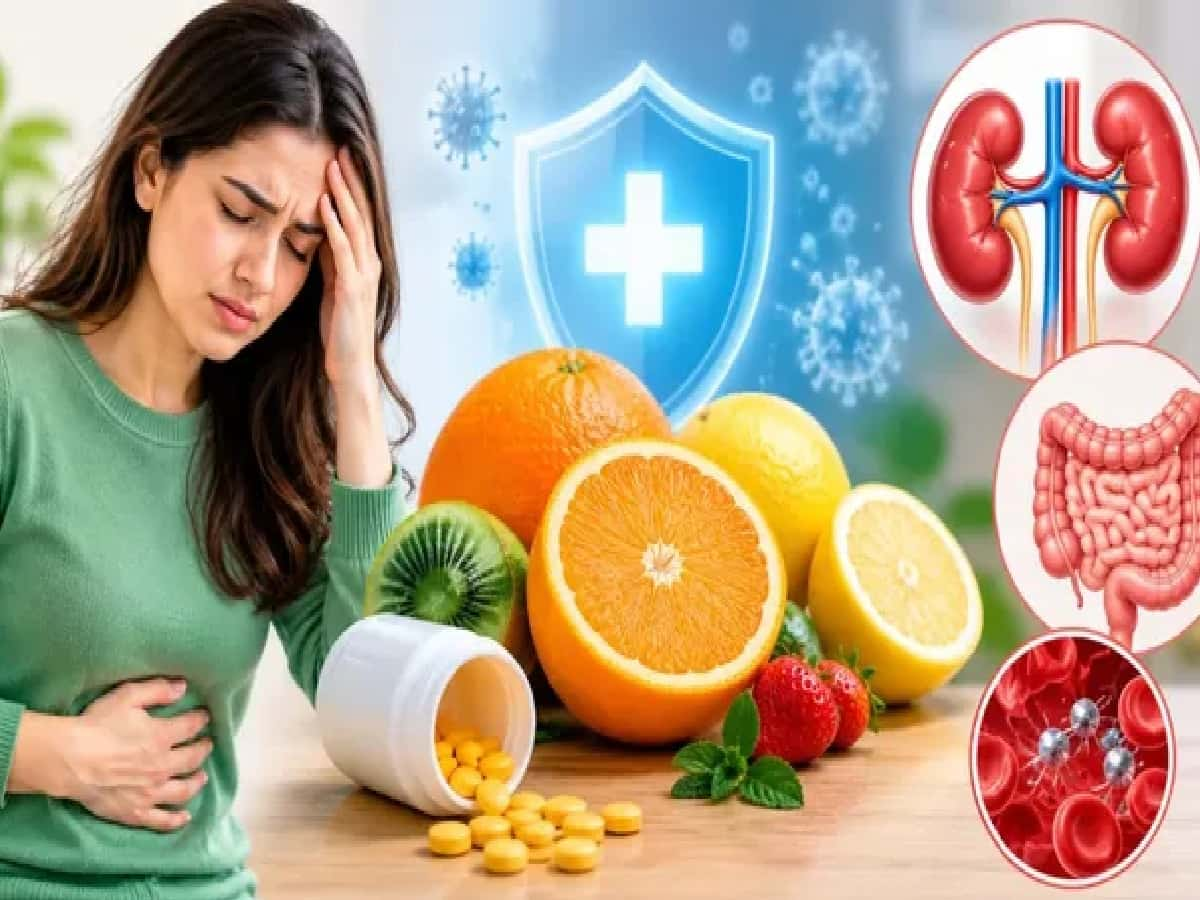
Too Much Vitamin C Can Be Harmful: Kidney Stone & Iron Overload Risks
Essential for immune defense, skin health, wound healing, and cellular protection against oxidative stress, Vitamin C (ascorbic acid) is widely regarded as one of the safest everyday nutrients. Because it is water-soluble and not stored in large reserves by the body, excess amounts are generally filtered out through urine. However, health and nutrition specialists warn that self-prescribing high-dose Vitamin C tablets, effervescent fizzers, or immunity gummies in search of rapid results can backfire—triggering uncomfortable digestive side effects and increasing the risk of calcium oxalate kidney stones and iron overload in vulnerable individuals. According to established clinical nutrition guidelines—including references from the National Institutes of Health (NIH) and Mayo Clinic—adult men require roughly 90 mg of Vitamin C per day and adult women require 75 mg per day, while the Tolerable Upper Intake Level (UL) for adults is strictly capped at 2,000 mg (2 grams) daily from food and supplements combined. Regularly exceeding that 2,000 mg threshold—especially through concentrated supplements rather than whole fruits and vegetables—can overwhelm gut absorption, convert excess ascorbic acid into urinary oxalate, and significantly accelerate non-heme iron absorption in people with underlying iron-storage disorders such as hemochromatosis or thalassemia. For health-conscious readers, wellness seekers, and families across New Delhi, Mumbai, Bengaluru, Lucknow, Kanpur, Varanasi, Hyderabad, Chennai, Kolkata, and Jaipur, understanding safe daily Vitamin C limits and prioritizing natural dietary sources over megadose pills is essential for protecting kidney, liver, and digestive health.
Recommended Daily Vitamin C Intake vs. Harmful Upper Limit
Most healthy adults can easily meet—and even exceed—their daily Vitamin C requirement through a single serving of citrus fruit, guava, bell peppers, tomatoes, or leafy greens without ever needing a supplement. The table below summarizes clinical daily targets alongside the upper safety cap:
| Population Group | Recommended Daily Dietary Intake | Tolerable Upper Intake Limit (UL) | Clinical Guidance & Key Notes |
| Adult Men (19+ years) | 90 mg / day | 2,000 mg / day | High-dose single-ingredient supplements (>1,000 mg/day) are linked in clinical studies to elevated urinary oxalate and kidney stone risk in men. |
| Adult Women (19+ years) | 75 mg / day | 2,000 mg / day | Needs rise slightly during pregnancy (85 mg/day) and lactation (120 mg/day); stay well below the 2,000 mg cap. |
| Children & Adolescents | 15 mg – 75 mg / day (varies by age) | 400 mg – 1,800 mg / day (varies by age) | Upper limits are substantially lower for younger age groups; avoid adult high-dose immunity tablets. |
Four Major Health Risks of Consuming Excessive Vitamin C
When Vitamin C intake climbs beyond what the digestive tract can efficiently absorb—particularly above 2,000 mg per day—several clinically documented side effects can emerge:
-
Digestive Distress and Acidity: Unabsorbed ascorbic acid draws excess water into the intestines, frequently causing abdominal cramps, gas, nausea, heartburn, acid reflux, and osmotic diarrhea.
-
Elevated Risk of Kidney Stones: As the body metabolizes excess Vitamin C, a portion is converted into oxalate and excreted in urine. High urinary oxalate can bind with calcium to form calcium oxalate kidney stones, posing heightened risk for men and anyone with a history of renal stones or kidney disease.
-
Iron Overload in Susceptible People: Vitamin C strongly enhances the intestinal absorption of non-heme iron from plant foods. While helpful in moderation, excessive Vitamin C supplementation in individuals with hereditary hemochromatosis, thalassemia, or chronic iron-loading conditions can accelerate dangerous iron accumulation that harms the liver, heart, and pancreas.
-
Headaches, Fatigue, and Sleep Disruption: Some individuals taking chronic megadoses of Vitamin C supplements also report headaches, restlessness, fatigue, and disturbed sleep, alongside potential interactions with specific medical treatments such as chemotherapy, radiation therapy, or certain cholesterol medications.
Why Natural Food Sources Are Safer and Smart Precautions to Follow
Clinical nutritionists emphasize that obtaining Vitamin C from fresh whole foods—such as amla (Indian gooseberry), oranges, lemons, guava, kiwi, strawberries, tomatoes, broccoli, and bell peppers—virtually eliminates toxicity risks because whole foods deliver balanced doses alongside fiber and protective phytonutrients.
To keep supplementation safe, follow four practical precautions: stick to balanced daily quantities rather than megadoses; consult a qualified physician before starting high-potency supplements (especially if you have a history of kidney stones, kidney disease, or iron-storage disorders); avoid stacking multiple immunity supplements that each contain hidden Vitamin C; and drink adequate water throughout the day to support healthy kidney filtration.




