







Why Rajasthani Weddings Are Incomplete Without Toran and Padla Rituals
With the auspicious Hindu wedding season underway following Devuthani Ekadashi (Prabodhini Ekadashi)—when Lord Vishnu awakens from his four-month Chaturmas cosmic slumber and sacred ceremonies resume across India—families from Jaipur, Jodhpur, Udaipur, and Bikaner to New Delhi, Lucknow, and Mumbai are celebrating time-honored marital traditions. Among the sixteen sacred sacraments (Samskaras) of Hinduism, marriage (Vivah) represents a lifelong union not merely between two individuals, but between two extended families. While royal Rajasthani weddings are celebrated worldwide for their grandeur, folk music, and vibrant attire, two deeply symbolic rituals—Toran Maarna and Padla (Bari Padla)—hold indispensable cultural and spiritual value, without which a traditional Rajasthani marriage is considered incomplete.
What Is the 'Toran Maarna' Ritual and Why Is It Performed
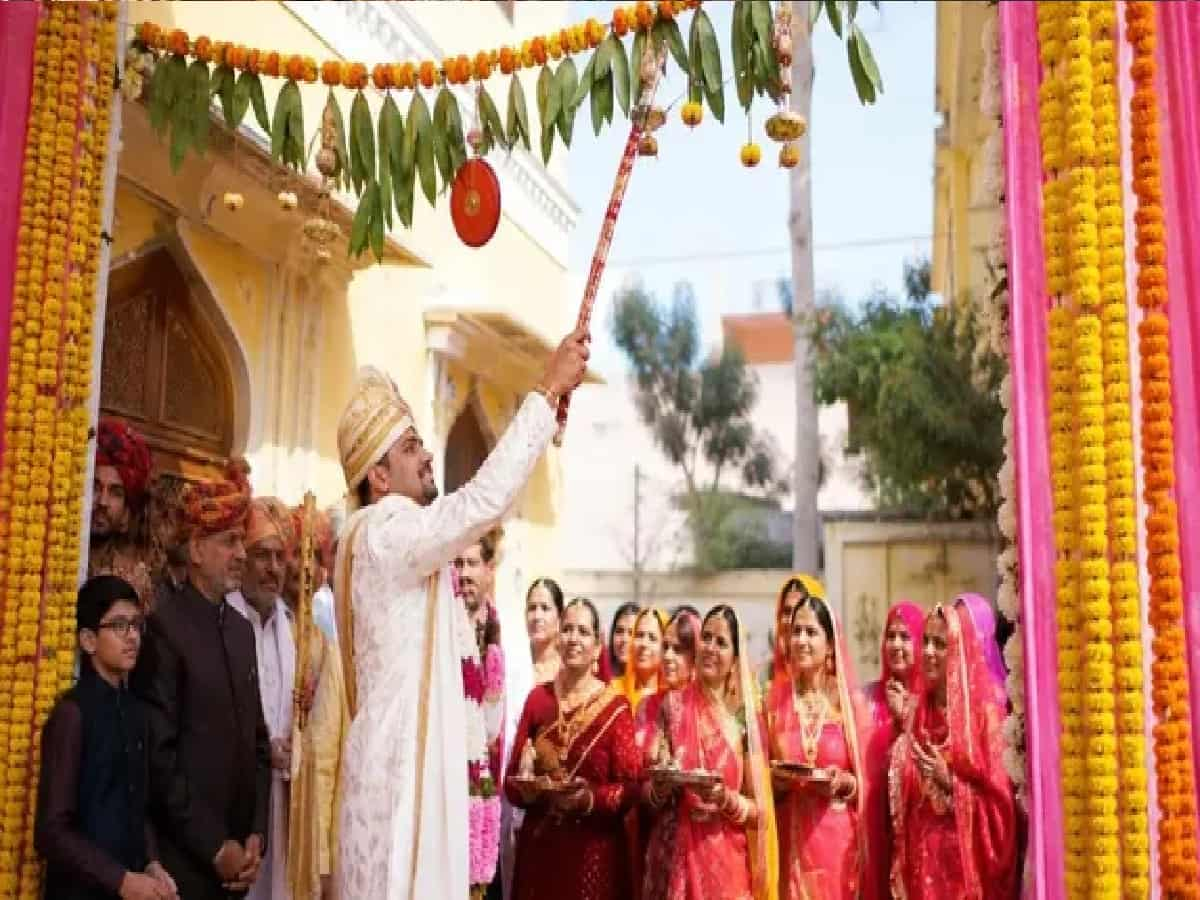
Performed right at the main threshold of the bride's residence or wedding venue when the groom's procession (Baraat) arrives, Toran Maarna is one of the most dramatic and meaningful moments of a Rajasthani wedding. Suspended above the decorated entrance doorway is a handcrafted wooden frame adorned with auspicious motifs—typically carved peacocks, parrots, or the sacred emblem of Lord Ganesha—known as the Toran.
Mounted on a decorated mare or standing at the entrance, the groom reaches upward and gently strikes or touches the hanging wooden Toran seven times using a ceremonial sword or a fresh neem branch (Neem ki Chhadi). Traditional folklore and Vedic custom attach three distinct meanings to this gesture:
-
Warding off negative energy and evil eyes: Striking the Toran symbolizes conquering any lingering negative forces, obstacles, or ill omens before the groom crosses the bride's family threshold.
-
A solemn vow to protect the bride: Rooted in Rajasthan's Rajput and martial heritage, touching the Toran with a sword or neem twig signifies the groom's lifelong pledge to shield his bride and her household from every hardship.
-
Inviting harmony and prosperity: Immediately after the groom performs Toran Maarna, the bride's mother welcomes him with a traditional Aarti, tilak, and auspicious sweets, ushering him into the wedding pavilion (Mandap) amid folk songs.
How the Toran Ceremony Is Known Across Other Indian States
While Rajasthan celebrates this threshold ritual as Toran Maarna, parallel entrance customs echo across North, Central, and Western India under regional names:
| Region / States | Local Name of the Entrance Ritual | Core Cultural Tradition |
| Rajasthan | Toran Maarna | Groom touches a carved wooden Toran at the door with a sword or neem branch |
| Uttar Pradesh & Bihar | Dwarchar / Dwar Puja | Groom and elders are welcomed at the main gate with Vedic chants, tilak, and gifts |
| Gujarat & Maharashtra | Toran / Pokhwanu | Traditional welcome beneath an ornate doorway Toran with auspicious rituals |
| Madhya Pradesh | Toran Maarna & Dwar Rokna | Combines touching the doorway Toran with playful gate-blocking by the bride's sisters |
| Haryana & Punjab | Milni & Ribbon Katai | Elders exchange garlands (Milni) while sisters-in-law block the entrance with a ribbon |
What Is the 'Padla' (Bari Padla) Ceremony in a Rajasthani Wedding
Equally central to a Rajasthani wedding is the Padla—widely referred to across Rajasthan and parts of North India as Bari Padla. Performed on the wedding day prior to the main Pheras, this ceremony represents the groom's family formally welcoming, honoring, and embracing the bride into their lineage.
During the Padla ritual, elders from the groom's side arrive with ornate trays bearing the bride's ceremonial wedding ensemble—including the traditional Rajasthani Poshak or bridal lehenga, gold and Kundan jewelry, Chooda (bridal bangles), Sindoor (vermilion), Mehendi, fragrant cosmetics, dry fruits, and sweets. According to custom, the bride wears the very bridal attire and ornaments gifted in the Padla when she steps into the mandap for the sacred wedding vows.
Beyond its visual splendor, the Padla ceremony carries deep emotional weight: it symbolizes that the groom's household accepts the bride not as an outsider, but with complete dignity, affection, and shared family pride—cementing an enduring bond of mutual respect between both families.




