







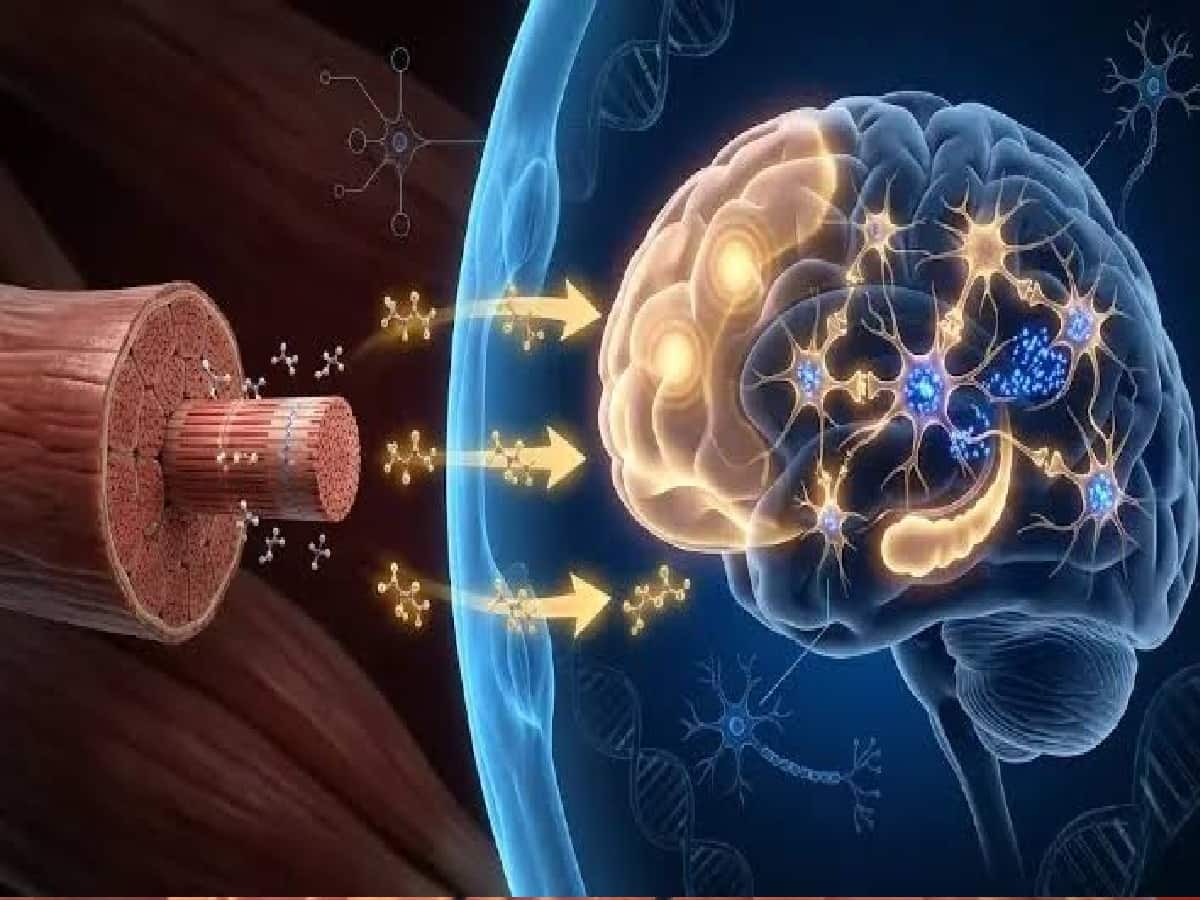
Creatine Beyond Muscles: How It Aids Brain Health, Alzheimer's & Parkinson's
For decades, creatine has been a staple in fitness centers from New Delhi, Mumbai, and Bengaluru to Lucknow, prized by athletes and weightlifters for boosting physical power and muscle recovery. Today, however, neuroscientists and nutrition researchers are increasingly exploring whether this familiar amino-acid derivative can also fuel the human brain—and potentially offer new supportive hope for conditions such as Alzheimer's disease, Parkinson's disease, and traumatic brain injury. While social media buzz often outpaces clinical proof, leading exercise and brain-health researchers emphasize a balanced view: early findings around cellular energy metabolism are genuinely encouraging, even though larger human trials are still needed before calling creatine a standalone brain therapy. "I think a little dose of reality needs to really come into what we're talking about on the brain health side of things," notes Stuart Phillips, Professor of Kinesiology at McMaster University in Ontario. "Promise? Sure. But lots of things show promise."
How Creatine Fuels Cellular Energy (ATP) in Both Muscles and the Brain
To understand why scientists are studying creatine for cognitive health, it helps to look at how cells generate power. Creatine plays a vital role in replenishing adenosine triphosphate (ATP)—the primary energy currency inside human cells. During intense weightlifting or sprinting, stored phosphocreatine rapidly donates phosphate molecules to regenerate ATP, allowing muscle fibers to sustain effort slightly longer and build greater strength over time.
The human brain is an extraordinarily energy-hungry organ: despite making up only a small fraction of body weight, it consumes roughly 20 percent of the body's total energy expenditure. Because neurons depend on uninterrupted ATP production to transmit signals, maintain memory networks, and repair cellular stress, researchers hypothesized that boosting creatine availability might similarly sharpen focus, support mental clarity, and reduce cognitive fatigue.
Why the Blood-Brain Barrier Tightly Regulates Brain Creatine
Unlike skeletal muscles—which readily absorb supplemental creatine from the bloodstream—the brain keeps its internal creatine reserves under strict control. In fact, the brain synthesizes its own supply of creatine locally so it is never entirely dependent on diet.
-
Limited transport across the blood-brain barrier: Dietary or supplemental creatine produced in the liver or ingested through food crosses the blood-brain barrier via specialized transporter proteins, but only in modest amounts. As pharmaceutical sciences expert Mehdi Boroujerdi notes, the brain does not simply throw open its gates to every extra gram of creatine consumed.
-
When stressed brains respond best: University of Regina kinesiology researcher Darren Candow points out that well-rested, healthy adults rarely experience dramatic cognitive leaps from routine creatine supplements because their brains are already operating near normal capacity. However, when the brain faces acute metabolic stress—such as severe sleep deprivation, oxygen deprivation (hypoxia), intense mental exertion, or concussion recovery—supplemental creatine appears far more helpful in temporarily supporting focus, working memory, and decision-making.
What Research Says About Creatine in Alzheimer's and Parkinson's Disease
| Neurological Context | Biological Mechanism Studied | Current Scientific Evidence |
| Healthy, Well-Rested Adults | Baseline ATP maintenance in neurons | Minimal cognitive boost; brain already regulates its own creatine supply |
| Sleep Deprivation & Mental Fatigue | Rapid ATP replenishment under acute metabolic stress | Small studies show improved short-term memory, focus & processing speed |
| Alzheimer's Disease | Restoring impaired brain bioenergetics & mitochondrial function | Pilot clinical trial (20 g/day for 8 weeks) raised brain creatine by 11% and improved working memory scores |
| Parkinson's Disease & Brain Injury | Neuroprotection, reduced oxidative stress & cellular energy support | Promising preclinical and bioenergetic findings; larger human clinical trials still underway |
Growing evidence indicates that impaired brain energy metabolism and mitochondrial dysfunction play a significant role in neurodegenerative disorders such as Alzheimer's disease and Parkinson's disease. In a notable pilot clinical study conducted at the University of Kansas Medical Center, researchers tested 20 grams daily of creatine monohydrate over eight weeks in adults with Alzheimer's disease. Brain scans revealed an 11 percent increase in brain creatine levels, accompanied by encouraging improvements on standardized working memory and executive function tests. Similarly, in Parkinson's disease and traumatic brain injury research, scientists are investigating creatine's ability to buffer cellular energy deficits and limit oxidative stress in vulnerable neurons.
While larger placebo-controlled clinical trials remain essential before doctors prescribe creatine for neurodegenerative conditions, the evolving science marks an exciting shift—showing that a time-tested muscle supplement may one day become a valuable nutritional ally for long-term brain resilience. Anyone considering high-dose supplementation, particularly older adults or individuals with kidney concerns or neurological conditions, should consult a qualified physician before starting.




