







Why Cows and Bulls Are Decorated on Govardhan Puja 2026
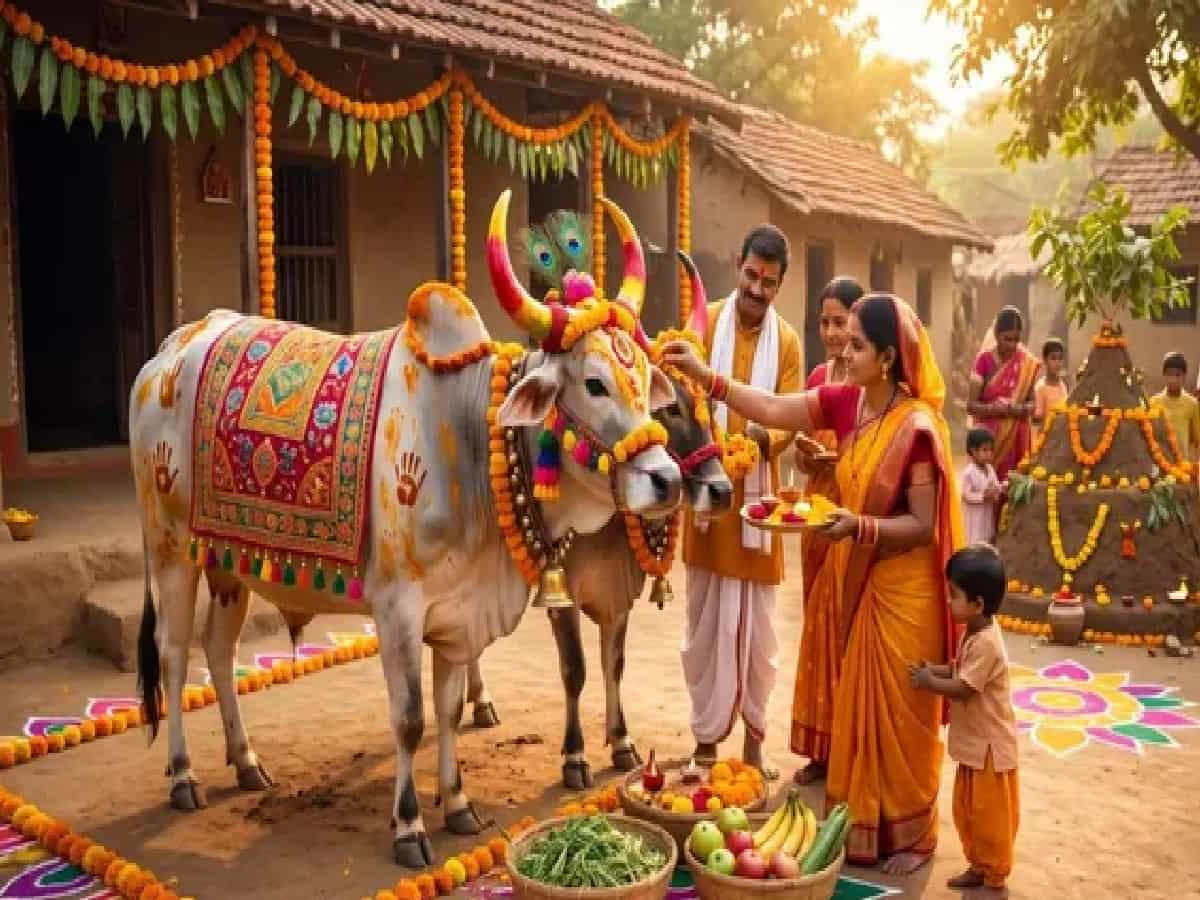
As the festive illumination of Diwali softens into the earthy, pastoral devotions of Govardhan Puja across northern India, rural courtyards and urban cattle shelters (gaushalas) undergo a vivid visual transformation. Celebrated on the Pratipada Tithi of Shukla Paksha in the sacred Hindu month of Kartik, the festival—observed with fervor across the historic Brij region and the Awadh plains of Uttar Pradesh, including Lucknow, Mathura, and Varanasi—shifts the focus of worship from palace halls to pastoral pastures. While families gather to sculpt symbolic earthen replicas of Mount Giriraj from cow dung and prepare elaborate feasts of Annakut, the true stars of the celebration are domestic cattle. Early in the morning, cows and working bulls are gently awakened, bathed in fresh water, and adorned like royalty with painted horns, vibrant textile coverings, fragrant flower garlands, and jingling brass bells. Far from being a mere decorative village custom, the tradition of adorning cattle on Govardhan Puja is an ancient ritual anchored in profound theological lore, symbolizing human gratitude toward nature, honoring the agricultural backbone of civilization, and fulfilling Lord Krishna’s eternal command of Gau Seva.
Living Temples of Divinity: Gau Mata and Nandi’s Sacred Symbolism
The core theological reason for adorning cattle on Govardhan Puja stems from the divine status granted to cows and bulls in Sanatan Dharma. The cow is not regarded merely as livestock, but is venerated as Gau Mata—the universal mother whose gentle temperament and nourishing milk sustain humanity. Ancient Vedic scriptures, including the Rigveda and Bhavishya Purana, record that thirty-three categories (koti) of celestial divinities reside within the physical form of the indigenous Indian cow. Within this cosmological anatomy, Lord Brahma resides at the roots of her horns, Lord Vishnu dwells in her neck and throat, Lord Shiva manifests across her forehead, while the divine solar and lunar deities illuminate her eyes. To adorn the cow is therefore considered an act of adorning a living, breathing temple housing the entire celestial pantheon.
Simultaneously, the bull occupies an equally exalted stature as the physical representation of Nandi, the celestial bull who serves as the eternal mount (vahana), gatekeeper, and foremost disciple of Lord Shiva. In traditional Hindu metaphysics, Nandi embodies unshakeable righteousness (Dharma), quiet strength, discipline, and selfless service. While cows provide life-giving nourishment through dairy products, bulls have historically powered rural civilization by plowing fields, turning oil presses, and hauling agricultural produce across long distances. By cleaning, garlanding, and anointing both cows and bulls on Govardhan Puja, devotees pay homage to the twin pillars of agrarian life, balancing feminine nurturing energy with masculine fortitude.
The Krishna Connection: Honoring Gopala and the Miracle of Giriraj
The celebration of Govardhan Puja is intimately intertwined with the pastoral youth of Lord Shri Krishna in the meadows of Dwapara-era Gokul and Vrindavan. Known across devotional poetry by the names Gopala (protector of the cowherds) and Govinda (he who brings joy to cows), Krishna redefined the spiritual priorities of his era. When the young cowherd boy persuaded his foster father Nanda Baba and the village elders to abandon their elaborate, fear-driven sacrificial offerings to Devraj Indra, the god of storms, his central argument was ecological: true gratitude belonged not to a distant sky deity, but to the tangible elements that sustained their daily lives—the sacred soil, the forested slopes of Mount Govardhan, and their beloved cattle herds.
When a wrathful Indra unleashed torrential tempests to flood the Braj countryside, Krishna lifted Mount Govardhan upon his little finger, providing a dry, secure sanctuary for the entire village population and their livestock for seven days and seven nights. When Indra’s pride was shattered and the storms cleared, the celestial cow Kamadhenu descended to bathe Krishna in sacred nectar, formally conferring upon him the eternal title of Govinda. From that moment, Krishna established that the worship of Giriraj would always remain inseparable from the veneration of cattle. Worshipping and adorning cows and bulls on Govardhan Puja is viewed by devotees as the most direct path to earning Krishna's blessings, as the deity famously promised that anyone who loves, feeds, and protects his herds directly wins his divine grace.
Sacred Artistry: How Cattle Are Bathed, Painted, and Adorned
The actual process of adorning cattle on the morning of Govardhan Puja is a meticulous ritual that blends folk artistry with herbal care. Devotees rise before dawn to wash their cows, calves, and bulls with fresh well or river water, often infusing the water with sacred neem leaves to cleanse their coats naturally. Once groomed and dried, the ornamentation begins using organic, natural pigments that carry both symbolic meaning and Ayurvedic protective properties. The horns of the animals are oiled with mustard oil and painted in brilliant shades of crimson and saffron using natural geru (red ochre) and ground turmeric. In traditional Brij households, colorful cotton pom-poms, ribbons, and iridescent peacock feathers—the emblem of Krishna—are tied securely to the tips of their horns.
The foreheads of the cattle are anointed with a ceremonial tilak made of pure turmeric, sandalwood paste, and roli, acknowledging the divine presence within the animal. Around their necks, owners drape thick garlands of freshly woven marigolds, roses, and fragrant tulsi leaves, which symbolize spiritual purity and festive joy. Heavy brass cowbells and braided leather straps embedded with tinkling ghungroos are buckled around their necks. According to traditional belief, the melodic chimes generated as the cattle move through courtyards dispel negative energies (drishti dosha) and invite positive vibrations into the homestead. Finally, decorative handwoven fabrics, embroidered saddle blankets (jhool), or silk stoles are draped over the animals' backs, completing a vibrant transformation that turns ordinary working animals into living symbols of cultural elegance.
Agrarian Gratitude: Honoring the Unsung Heroes of Rural Economy
Beyond mythological reverence, the decoration of cows and bulls on Govardhan Puja carries a profound socioeconomic significance that reflects India's agrarian identity. For thousands of years, the rural economy of the subcontinent was anchored entirely in the cattle shelter. Cattle provided nutritious A2 milk, curd, and clarified butter (desi ghee) that formed the nutritional bedrock of families. Their dung served as the primary source of clean fuel for cooking stoves, natural plaster for insulating mud homes, and potent organic fertilizer for farmland, while their urine served as the foundational ingredient for indigenous Ayurvedic remedies and natural bio-pesticides.
In an era before mechanized tractors and synthetic fertilizers, human survival depended on the strength of the bull and the fertility of the cow. Govardhan Puja functioned as an ancient harvest thanksgiving, providing hardworking farming families with a dedicated calendar day to set aside manual labor and pamper the animals that spent the entire year working in the heat and rain. By bathing them, massaging their muscles with warm mustard oil, and serving them before human family members partake of their own festive meals, the tradition instills a culture of mutual respect and ethical stewardship, teaching subsequent generations that domestic animals are not mere economic commodities, but cherished family partners in sustaining life.
Living Heritage in Uttar Pradesh: Festive Rhythms from Brij to Awadh
Across Uttar Pradesh, the ritual of decorating cattle remains a vibrant community celebration that bridges ancient folklore and contemporary life. In the heart of the Brij region—across Mathura, Vrindavan, Govardhan town, Nandgaon, and Barsana—the festivities take on the atmosphere of a grand cultural carnival. Herds of decorated cows, accompanied by singing cowherds playing flutes and beating earthen dholaks, are paraded through village squares in a joyous procession known locally as Gau Charana. In these holy towns, temples and public shrines organize grand feasts where hundreds of cattle are fed specialized festive delicacies known as Gau Ghaas, comprising jaggery (gur), soaked black gram (chana), sweet wheat flatbreads, and bundles of fresh green fodder.
In the Awadh region, encompassing Lucknow and its surrounding agricultural belts, the custom is observed with deep familial warmth. Families residing in traditional peri-urban homesteads and modern dairy farms clean their cattle sheds with holy Ganga water and cow-dung wash before presenting the animals with fresh seasonal greens and sweet rice preparations. As urban spaces expand and mechanized farming alters traditional agricultural landscapes, the ritual of adorning cattle on Govardhan Puja serves as a vital cultural anchor. It reminds modern society that true prosperity does not arise from material conquest, but from living in humble, affectionate, and reverent balance with the gentle creatures that share our earth.
Why Cows and Bulls Are Decorated on Govardhan Puja 2026
Meta Description:
Discover the sacred reasons why cows and bulls are adorned with painted horns, bells, and flower garlands during Govardhan Puja across Uttar Pradesh and India.
As the festive illumination of Diwali softens into the earthy, pastoral devotions of Govardhan Puja across northern India, rural courtyards and urban cattle shelters (gaushalas) undergo a vivid visual transformation. Celebrated on the Pratipada Tithi of Shukla Paksha in the sacred Hindu month of Kartik, the festival—observed with fervor across the historic Brij region and the Awadh plains of Uttar Pradesh, including Lucknow, Mathura, and Varanasi—shifts the focus of worship from palace halls to pastoral pastures. While families gather to sculpt symbolic earthen replicas of Mount Giriraj from cow dung and prepare elaborate feasts of Annakut, the true stars of the celebration are domestic cattle. Early in the morning, cows and working bulls are gently awakened, bathed in fresh water, and adorned like royalty with painted horns, vibrant textile coverings, fragrant flower garlands, and jingling brass bells. Far from being a mere decorative village custom, the tradition of adorning cattle on Govardhan Puja is an ancient ritual anchored in profound theological lore, symbolizing human gratitude toward nature, honoring the agricultural backbone of civilization, and fulfilling Lord Krishna’s eternal command of Gau Seva.
Living Temples of Divinity: Gau Mata and Nandi’s Sacred Symbolism
The core theological reason for adorning cattle on Govardhan Puja stems from the divine status granted to cows and bulls in Sanatan Dharma. The cow is not regarded merely as livestock, but is venerated as Gau Mata—the universal mother whose gentle temperament and nourishing milk sustain humanity. Ancient Vedic scriptures, including the Rigveda and Bhavishya Purana, record that thirty-three categories (koti) of celestial divinities reside within the physical form of the indigenous Indian cow. Within this cosmological anatomy, Lord Brahma resides at the roots of her horns, Lord Vishnu dwells in her neck and throat, Lord Shiva manifests across her forehead, while the divine solar and lunar deities illuminate her eyes. To adorn the cow is therefore considered an act of adorning a living, breathing temple housing the entire celestial pantheon.
Simultaneously, the bull occupies an equally exalted stature as the physical representation of Nandi, the celestial bull who serves as the eternal mount (vahana), gatekeeper, and foremost disciple of Lord Shiva. In traditional Hindu metaphysics, Nandi embodies unshakeable righteousness (Dharma), quiet strength, discipline, and selfless service. While cows provide life-giving nourishment through dairy products, bulls have historically powered rural civilization by plowing fields, turning oil presses, and hauling agricultural produce across long distances. By cleaning, garlanding, and anointing both cows and bulls on Govardhan Puja, devotees pay homage to the twin pillars of agrarian life, balancing feminine nurturing energy with masculine fortitude.
The Krishna Connection: Honoring Gopala and the Miracle of Giriraj
The celebration of Govardhan Puja is intimately intertwined with the pastoral youth of Lord Shri Krishna in the meadows of Dwapara-era Gokul and Vrindavan. Known across devotional poetry by the names Gopala (protector of the cowherds) and Govinda (he who brings joy to cows), Krishna redefined the spiritual priorities of his era. When the young cowherd boy persuaded his foster father Nanda Baba and the village elders to abandon their elaborate, fear-driven sacrificial offerings to Devraj Indra, the god of storms, his central argument was ecological: true gratitude belonged not to a distant sky deity, but to the tangible elements that sustained their daily lives—the sacred soil, the forested slopes of Mount Govardhan, and their beloved cattle herds.
When a wrathful Indra unleashed torrential tempests to flood the Braj countryside, Krishna lifted Mount Govardhan upon his little finger, providing a dry, secure sanctuary for the entire village population and their livestock for seven days and seven nights. When Indra’s pride was shattered and the storms cleared, the celestial cow Kamadhenu descended to bathe Krishna in sacred nectar, formally conferring upon him the eternal title of Govinda. From that moment, Krishna established that the worship of Giriraj would always remain inseparable from the veneration of cattle. Worshipping and adorning cows and bulls on Govardhan Puja is viewed by devotees as the most direct path to earning Krishna's blessings, as the deity famously promised that anyone who loves, feeds, and protects his herds directly wins his divine grace.
Sacred Artistry: How Cattle Are Bathed, Painted, and Adorned
The actual process of adorning cattle on the morning of Govardhan Puja is a meticulous ritual that blends folk artistry with herbal care. Devotees rise before dawn to wash their cows, calves, and bulls with fresh well or river water, often infusing the water with sacred neem leaves to cleanse their coats naturally. Once groomed and dried, the ornamentation begins using organic, natural pigments that carry both symbolic meaning and Ayurvedic protective properties. The horns of the animals are oiled with mustard oil and painted in brilliant shades of crimson and saffron using natural geru (red ochre) and ground turmeric. In traditional Brij households, colorful cotton pom-poms, ribbons, and iridescent peacock feathers—the emblem of Krishna—are tied securely to the tips of their horns.
The foreheads of the cattle are anointed with a ceremonial tilak made of pure turmeric, sandalwood paste, and roli, acknowledging the divine presence within the animal. Around their necks, owners drape thick garlands of freshly woven marigolds, roses, and fragrant tulsi leaves, which symbolize spiritual purity and festive joy. Heavy brass cowbells and braided leather straps embedded with tinkling ghungroos are buckled around their necks. According to traditional belief, the melodic chimes generated as the cattle move through courtyards dispel negative energies (drishti dosha) and invite positive vibrations into the homestead. Finally, decorative handwoven fabrics, embroidered saddle blankets (jhool), or silk stoles are draped over the animals' backs, completing a vibrant transformation that turns ordinary working animals into living symbols of cultural elegance.
Agrarian Gratitude: Honoring the Unsung Heroes of Rural Economy
Beyond mythological reverence, the decoration of cows and bulls on Govardhan Puja carries a profound socioeconomic significance that reflects India's agrarian identity. For thousands of years, the rural economy of the subcontinent was anchored entirely in the cattle shelter. Cattle provided nutritious A2 milk, curd, and clarified butter (desi ghee) that formed the nutritional bedrock of families. Their dung served as the primary source of clean fuel for cooking stoves, natural plaster for insulating mud homes, and potent organic fertilizer for farmland, while their urine served as the foundational ingredient for indigenous Ayurvedic remedies and natural bio-pesticides.
In an era before mechanized tractors and synthetic fertilizers, human survival depended on the strength of the bull and the fertility of the cow. Govardhan Puja functioned as an ancient harvest thanksgiving, providing hardworking farming families with a dedicated calendar day to set aside manual labor and pamper the animals that spent the entire year working in the heat and rain. By bathing them, massaging their muscles with warm mustard oil, and serving them before human family members partake of their own festive meals, the tradition instills a culture of mutual respect and ethical stewardship, teaching subsequent generations that domestic animals are not mere economic commodities, but cherished family partners in sustaining life.
Living Heritage in Uttar Pradesh: Festive Rhythms from Brij to Awadh
Across Uttar Pradesh, the ritual of decorating cattle remains a vibrant community celebration that bridges ancient folklore and contemporary life. In the heart of the Brij region—across Mathura, Vrindavan, Govardhan town, Nandgaon, and Barsana—the festivities take on the atmosphere of a grand cultural carnival. Herds of decorated cows, accompanied by singing cowherds playing flutes and beating earthen dholaks, are paraded through village squares in a joyous procession known locally as Gau Charana. In these holy towns, temples and public shrines organize grand feasts where hundreds of cattle are fed specialized festive delicacies known as Gau Ghaas, comprising jaggery (gur), soaked black gram (chana), sweet wheat flatbreads, and bundles of fresh green fodder.
In the Awadh region, encompassing Lucknow and its surrounding agricultural belts, the custom is observed with deep familial warmth. Families residing in traditional peri-urban homesteads and modern dairy farms clean their cattle sheds with holy Ganga water and cow-dung wash before presenting the animals with fresh seasonal greens and sweet rice preparations. As urban spaces expand and mechanized farming alters traditional agricultural landscapes, the ritual of adorning cattle on Govardhan Puja serves as a vital cultural anchor. It reminds modern society that true prosperity does not arise from material conquest, but from living in humble, affectionate, and reverent balance with the gentle creatures that share our earth.




