







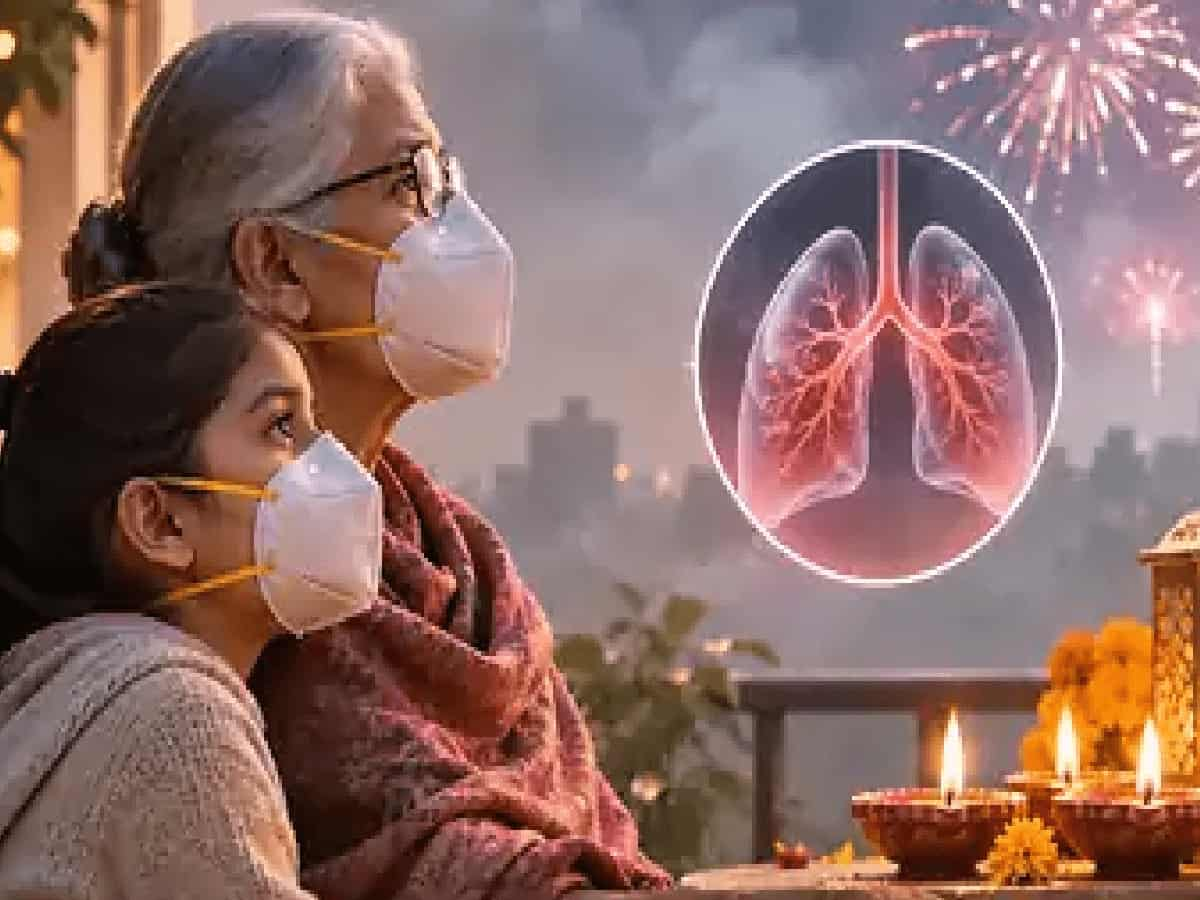
Diwali Smog Alert: How Children and Asthmatics Can Stay Safe
While the festive season of Diwali fills neighborhoods across India with lights and family celebrations, it also leaves behind an invisible, suffocating emergency: a dense, chemical-laden blanket of post-fireworks smog that settles over major cities. Far from ordinary airborne dust, the emissions generated by millions of firecrackers contain an aerosolized cocktail of toxic heavy metals, sulfurous compounds, and respirable particulate matter that penetrates deep into human airways. Clinical pulmonologists warn that this seasonal pollution surge is not just an inconvenience for the eyes and throat, but a direct health threat that can trigger severe respiratory crises. For vulnerable populations—particularly growing children, elderly citizens, and individuals managing preexisting pulmonary conditions such as bronchial asthma and Chronic Obstructive Pulmonary Disease (COPD)—the days following the festival are the most hazardous of the entire year. Without proactive precautions and timely medical intervention, exposure to this stagnant winter smog can lead to acute bronchospasms, hypoxemia, and long-term lung injury.
The Chemical Cocktail: How Firecracker Smoke Poison Acts on Airways
The smoke produced by celebratory pyrotechnics is fundamentally distinct from typical vehicle exhaust or construction dust. To produce vibrant sparks and loud concussive blasts, manufacturers blend gunpowder with chemical oxidizers, stabilizers, and heavy metal colorants, including barium nitrate for green flames, strontium salts for red flares, copper halides for blue hues, and aluminum or magnesium powders for brilliant white flashes. When ignited, these chemical compounds vaporize and rapidly condense into microscopic particulate matter (PM2.5 and PM10), alongside sulfur dioxide ($SO_2$), nitrogen oxides ($NO_x$), carbon monoxide, and volatile organic compounds.
Because PM2.5 particles are approximately thirty times smaller than the diameter of a single human hair, natural nasal filters cannot capture them. Once inhaled, these ultrafine particles bypass upper airway defenses, settling deep into terminal bronchioles and alveoli, where they induce immediate oxidative stress and systemic inflammation. For individuals with hyper-reactive airways, this chemical intrusion triggers mast cell degranulation, causing sudden bronchial constriction, excessive mucus secretion, and impaired gas exchange. Consequently, air quality indices (AQI) routinely cross the hazardous 400-to-500 mark across northern cities, exposing citizens to toxicity levels dozens of times higher than the annual safety thresholds established by the World Health Organization (WHO).
Winter Temperature Inversion: Why the Toxic Smog Lingers for Days
A dangerous misconception persists that the air cleanses itself naturally within hours after fireworks cease. In reality, the physical dynamics of early winter weather patterns create an atmospheric trap that concentrates ground-level pollutants.
Meteorologists and respiratory specialists point to three contributing factors:
-
Thermal Inversion Layers: Under normal conditions, warm air near the surface rises, carrying airborne pollutants into the upper atmosphere. During November, falling night temperatures cool ground-level air rapidly, while a layer of warmer air sits directly above it, acting as an atmospheric lid that traps chemical smoke within breathing level.
-
Low Wind Velocities: Calm, sluggish surface winds characteristic of early winter prevent horizontal dispersion, keeping localized clouds of sulfurous fumes suspended over residential colonies and congested urban streets.
-
High Ambient Humidity: Elevated moisture levels bond with suspended chemical particulates, forming persistent, photochemical smog that clings to buildings and tree canopies for days after the initial celebratory emissions.
High-Risk Groups: Vulnerabilities in Children, Seniors, and Asthmatics
While toxic air quality affects every person who inhales it, the health impact falls disproportionately on specific segments of the population whose physiological defenses are either developing or compromised.
Senior pulmonologist Dr. Vivek Nangia highlights the distinct biological risks confronting three major demographics:
-
Young Children: A child's respiratory system undergoes active cellular maturation until roughly eight years of age. Children breathe at a faster minute ventilation rate per kilogram of body weight compared to adults, resulting in greater volumetric intake of suspended air toxins relative to their lung capacity. Inhaling dense firecracker particulates during early developmental stages can damage developing alveolar tissue, trigger pediatric wheezing, and permanently lower peak lung capacity.
-
The Elderly: Aging brings progressive reductions in thoracic wall compliance, diminished respiratory muscle strength, and weakened mucosal clearance mechanisms. When elderly individuals inhale chemical smog, the resulting airway inflammation can destabilize underlying cardiovascular conditions, accelerating hypertension, precipitating heart failure, and triggering acute pulmonary edema.
-
Asthma and COPD Patients: For individuals already living with chronic respiratory inflammation, inhaling sulfur and nitrogen compounds acts as a direct broncho-constrictor. The immune system reacts with severe mucosal swelling, leading to persistent coughing fits, acute wheezing, chest tightness, and sudden asthmatic episodes that often require emergency nebulization or hospitalization.
Clinical Prevention: Practical Steps to Safeguard Lung Health
Mitigating the dangerous health impacts of post-Diwali smog requires proactive daily habits rather than passive waiting. Health experts emphasize that early preventive measures are far more effective than attempting to manage acute respiratory failure after exposure occurs.
Essential protective guidelines recommended by medical experts include:
-
Avoid Peak Smog Hours: Keep vulnerable individuals indoors during early morning and late evening hours when cold ground air holds the densest concentrations of heavy metal particles. Outdoor morning walks and physical exercise should be suspended during hazardous AQI spells.
-
Secure Indoor Air Quality: Keep windows and exterior doors tightly sealed during high-pollution periods. If using indoor air purifiers, ensure they are equipped with genuine HEPA-grade filtration rather than simple dust filters, and avoid burning indoor incense, dhoop, or mosquito coils that contribute to secondary indoor particulate loads.
-
Wear Certified N95 Respirators: Standard surgical cloth masks provide virtually no protection against microscopic PM2.5 toxins. Whenever stepping outdoors is unavoidable, individuals must use well-fitted, certified N95 or FFP2 respirators that form a tight seal against the contours of the face.
-
Maintain Hydration and Mucosal Moisture: Drinking plenty of warm water throughout the day keeps mucosal linings hydrated, enabling cilia in the trachea to clear inhaled foreign matter. Warm steam inhalation can also help clear superficial throat irritation.
-
Strict Medication Adherence: Asthmatic and COPD patients must maintain their regular controller medications and maintenance inhalers precisely as prescribed. Emergency bronchodilator inhalers (such as salbutamol) should be checked for full capacity and kept within immediate reach at all times.
When to Seek Emergency Care: Red Flags That Require Immediate Attention
Medical experts caution families against relying on untested home remedies when a vulnerable patient experiences worsening respiratory symptoms. Post-pollution respiratory distress can deteriorate from mild coughing to critical airway obstruction within hours.
Immediate medical assessment at an emergency healthcare facility is essential if a child, elderly relative, or asthmatic exhibits any of the following symptoms:
-
Inability to speak full sentences without pausing to catch breath.
-
Audible, high-pitched wheezing that fails to respond to prescribed rescue inhaler doses.
-
Visible intercostal retractions, where the chest wall or hollow of the neck caves in during inhalation.
-
Bluish or grayish discoloration of the lips, tongue, or nail beds (cyanosis), signifying inadequate blood oxygen saturation.
-
Persistent lethargy, confusion, or dizziness accompanied by severe shortness of breath.
Diwali's celebration of light and renewal should never come at the expense of respiratory safety. By understanding the chemical risks of post-firecracker pollution, monitoring local Air Quality Index readings, and taking deliberate protective steps, families can shield their vulnerable loved ones from the seasonal surge of airborne toxins.




