







Why Barbarika Didn't Fight Mahabharata & Became Khatu Shyam
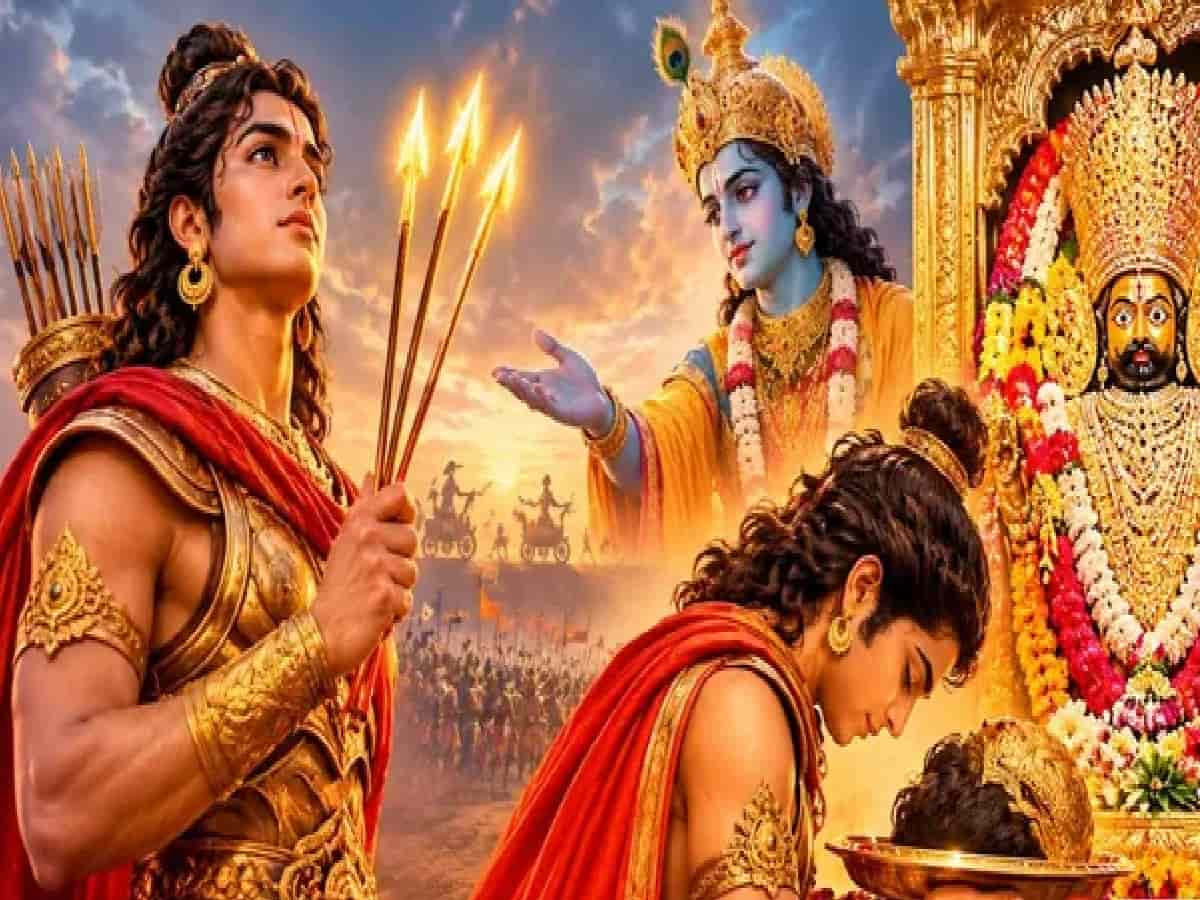
Few episodes in Indian devotional lore capture the tension between raw martial power, moral duty, and supreme self-sacrifice quite like the story of Barbarika and his transformation into Khatu Shyam. Highlighted across devotional and cultural features on Tuesday, November 24, 2026, the legend follows Barbarika—grandson of Bhima, son of Ghatotkacha, and beloved son of Morvi—who earned three divine arrows from Lord Shiva through intense penance, giving him the theoretical power to decide an entire war in moments. Yet on the eve of the Kurukshetra battle, his noble vow to always fight for whichever side was losing threatened to turn the war into endless back-and-forth devastation—prompting Lord Krishna to test him in the guise of a Brahmin, ask for his head in charity (daan), place his severed head on a vantage point so he could witness the entire conflict, and bless him with the boon that in Kaliyuga he would be worshipped by Krishna's own name as Khatu Shyam. For devotees traveling from Lucknow, Kanpur, Varanasi, Mumbai, and New Delhi toward Khatu Shyam Ji in Sikar district, Rajasthan, as well as families reflecting on timeless themes of devotion and keeping one's word, Barbarika's narrative remains a deeply resonant chapter of Hindu tradition.
Legend of Barbarika & Khatu Shyam: Three Arrows, Krishna's Test & Boon
To bring together how Barbarika's three divine arrows worked and why his pledge posed a dilemma at Kurukshetra, the peepal-leaf test and Lord Krishna's request for his head, and how devotion and sacrifice led to his worship as Khatu Shyam, the tables below summarize the traditional narrative:
Barbarika's Three Arrows & The Kurukshetra Dilemma
| Aspect | Traditional Narrative Detail | Significance in the Story |
| Lineage & Penance | Grandson of Bhima and son of Ghatotkacha and Morvi; performed austere penance for Lord Shiva. | Grounded in deep devotion and martial capability from an early age. |
| Function of the Three Arrows | First arrow: marks targets to be spared/protected or designated (per tradition); Second arrow: marks targets to be destroyed; Third arrow: strikes all designated targets and returns to the quiver. | Granted extraordinary speed and decisive battlefield reach with minimal arrows. |
| The 'Weaker Side' Vow | Promised his mother Morvi that he would always side with whichever army was weaker or losing. | Had one side begun falling behind, Barbarika would switch sides—risking prolonged destruction of both forces. |
From Peepal-Leaf Test to 'Khatu Shyam' in Kaliyuga
| Episode | What Happens in the Legend | Spiritual & Moral Takeaway |
| The Peepal-Leaf Test | Lord Krishna, disguised as a Brahmin, challenged Barbarika to pierce all leaves of a peepal tree with one arrow; the arrow hovered over a leaf hidden beneath Krishna's foot. | Demonstrated unmatched precision while revealing Krishna's omniscient test. |
| Donation of His Head & Final Wish | Krishna asked for Barbarika's head to prevent a destabilizing cascade in the war; Barbarika willingly gave it and asked to watch the war unfold from a high vantage point. | Exemplifies unhesitating fulfillment of a promise and selfless surrender. |
| Boon as Khatu Shyam | Moved by Barbarika's sacrifice, Krishna blessed him that in Kaliyuga he would be worshipped under Krishna's own name, Shyam, becoming revered as Khatu Shyam. | Explains the enduring devotion around Khatu Shyam Ji among pilgrims. |
Why Devotees Connect With Barbarika's Sacrifice Across Generations
At its heart, the story of Barbarika speaks to qualities people value in everyday life: keeping a word given to a mother, accepting a higher purpose without ego, and honoring devotion over personal glory. Whether pilgrims undertake yatras from Lucknow, Kanpur, Varanasi, Mumbai, or New Delhi to Sikar's Khatu Shyam temple or read the episodes at home, the tale endures because it pairs heroic might with quiet humility.
Pilgrim & Cultural Context for Visitors Planning a Trip
For devotees planning a visit to Khatu Shyam Ji or exploring Mahabharata folklore, local temple darshan timings, seasonal crowd surges during fairs/ekadashis, and travel routes from major cities like Lucknow, Jaipur, and New Delhi should always be verified through official temple trusts and transport advisories prior to travel.




