







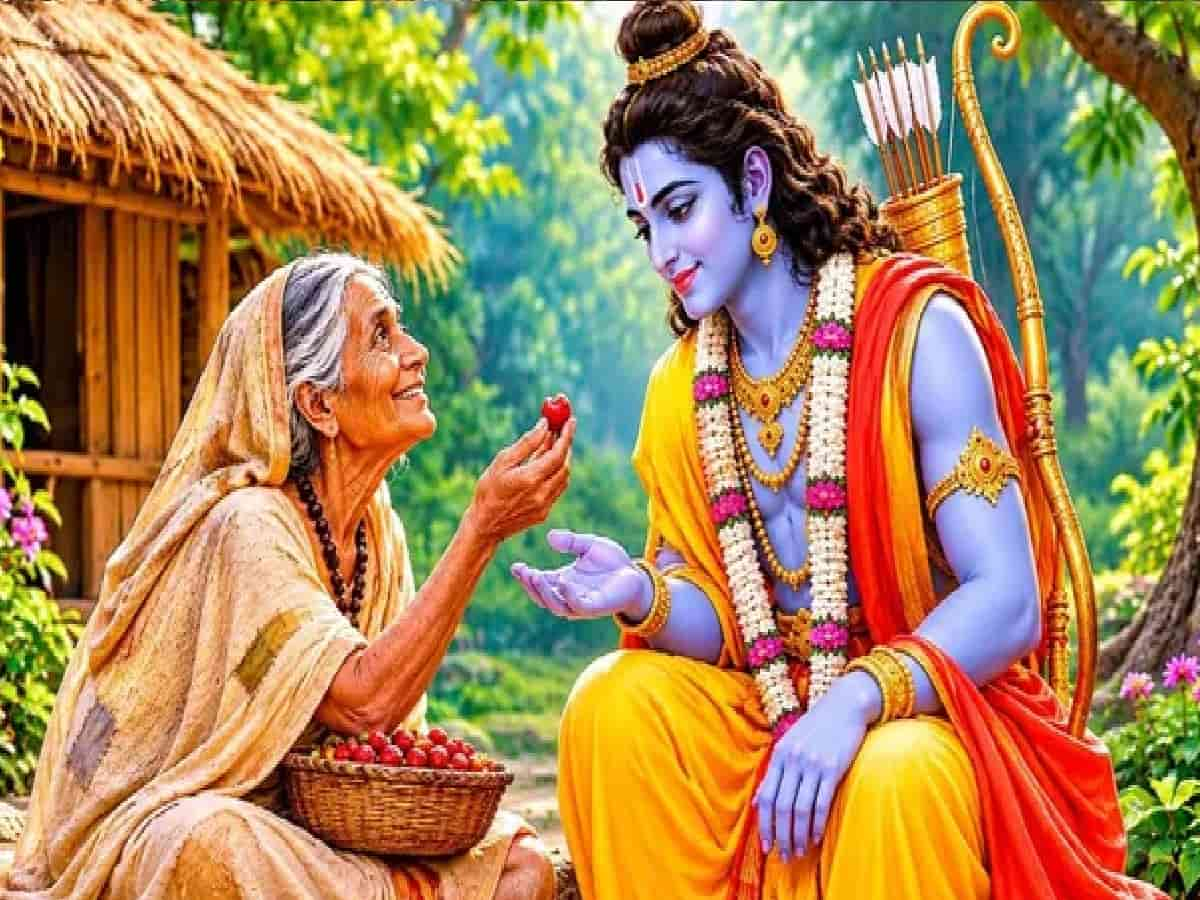
Who Was Mother Shabari, How She Met Lord Rama in Aranyakanda
The sacred epic Ramayana stands as one of the foundational pillars of Indian spiritual and cultural heritage, filled with timeless lessons on duty, compassion, and pure devotion. Among its most emotionally resonant chapters is the Aranyakanda, which recounts the unforgettable forest meeting between Mother Shabari and Lord Shri Rama. During his fourteen-year exile, while searching relentlessly for Mother Sita alongside his younger brother Lakshmana, Lord Rama arrived at the tranquil hermitage of Sage Matanga near the Pampa Sarovar. There, an elderly tribal devotee who had spent decades sweeping forest pathways and gathering wild berries greeted the Lord with tears of joy—offering him fruits she had tasted one by one to ensure only the sweetest reached his hands. For readers across Ayodhya, Chitrakoot, New Delhi, Lucknow, Varanasi, Prayagraj, and throughout India, Shabari's story remains the ultimate testament that sincere love outweighs every worldly ritual or social barrier.
Who Was Mother Shabari and Why Did She Leave Home Before Marriage?
According to classical Ramayana lore, Mother Shabari was born into a respected family of the Bhil tribal community, and her marriage had been arranged to a young Bhil chieftain. However, on the eve of the wedding ceremony, Shabari noticed a large number of animals and birds gathered for ritual slaughter as part of the celebratory feast. Deeply moved by compassion for innocent living creatures, her heart recoiled from participating in a celebration built upon bloodshed.
Determined not to be part of the ritual sacrifice, Shabari quietly left her home under the cover of night before the marriage could take place and retreated deep into the surrounding forests in search of spiritual truth and peace.
Years of Silent Service at Sage Matanga's Hermitage
Inside the forest stood the hermitage of the revered Sage Matanga, where disciples practiced strict austerity and meditation. Longing to dedicate her life to serving the sage, Shabari hesitated to approach the ashram openly, fearing that her tribal background might prevent her from being accepted into the monastic fold.
Instead, she chose a path of quiet, unseen devotion:
-
Dawn-to-dusk selfless service: Every morning long before sunrise, Shabari woke up and swept the rocky forest trails leading from Sage Matanga's hermitage down to the river, clearing away sharp stones, thorns, and dry leaves so the sages could walk safely to their morning ablutions.
-
Sage Matanga's blessing and prophecy: When Sage Matanga discovered that it was Shabari who had been tending the pathways with such humility and grace, he welcomed her into his ashram as a cherished disciple. Before departing from his mortal body, the sage blessed her with a sacred promise—instructing her to remain at the hermitage because Lord Shri Rama himself would one day visit her humble hut and grant her liberation (Moksha).
How Shabari Met Lord Rama and Offered Tasted Berries
Anchored by unshakeable faith in her guru's words, Mother Shabari turned every single day into an act of joyful anticipation. Each morning she cleaned the courtyard, spread fresh flowers along the entrance, and ventured into the woods to pluck wild ber (Indian jujube) berries and forest roots for Lord Rama. To make certain that the Lord never had to bite into a sour or bitter fruit, Shabari gently bit into each berry first—discarding the sour ones and carefully placing only the sweetest berries inside her woven basket.
Decades passed, yet her devotion never wavered. Finally, guided by the counsel of Kabandha during their search for Mother Sita, Lord Shri Rama and Lakshmana walked down the flower-strewn path to Sage Matanga's ashram. Overwhelmed with emotion upon seeing the Supreme Lord standing at her doorstep, Shabari washed his feet with her tears, seated both brothers with reverence, and humbly placed her basket of wild berries before them.
Unmindful of conventional notions of ritual purity, Lord Rama ate the tasted berries with deep affection—declaring that no royal delicacy had ever tasted as sweet as fruits offered with pure, unconditional love (Bhakti).
Key Takeaways From the Shabari Episode in the Ramayana
| Aspect of the Episode | Scriptural & Spiritual Details | Timeless Life Lesson |
| Scriptural Reference | Aranyakanda of the Ramayana (Ashram of Sage Matanga near Pampa Sarovar) | True spirituality flourishes in humility and patience |
| Compassion Over Custom | Left her arranged wedding to prevent animal sacrifice | Empathy for all living beings is the highest virtue |
| Unseen Service (Seva) | Swept forest paths at dawn for years without seeking recognition | Sincere service performed quietly never goes unnoticed by the Divine |
| Primacy of Devotion (Bhakti) | Lord Rama joyfully accepted the berries Shabari had tasted first | God values the purity of a devotee's heart over wealth, status, or ritual |
Before leaving her body in sacred yogic fire with Lord Rama's blessing, Mother Shabari also guided Rama and Lakshmana toward Rishyamukha Hill to forge their pivotal alliance with Sugriva and Lord Hanuman. Centuries later, her timeless story continues to remind humanity that devotion rooted in love and humility transcends all boundaries.




