The Lord of Seven Tongues: Unveiling the Mystery of Agni Dev, the Vedic God Who Lives in Every Home
In the vast tapestry of Sanatana Dharma, Agni Dev—the God of Fire—stands as the most elemental and omnipresent deity. As one of the Panchamahabhutas (the five fundamental elements of creation), fire is not merely a physical force but the sacred bridge between the mortal realm and the divine. From the very first verse of the Rigveda, Agni is invoked as the foundational power of the universe, serving as the celestial messenger who carries our prayers and offerings directly to the heavens.
The Sacred Messenger of the Vedas
In Vedic tradition, fire is the heartbeat of every ritual, from the daily Aarti to the grand Yajna. It is believed that no prayer reaches the gods without Agni as the conduit. Beyond rituals, fire sustains life itself; it fuels our hearths to cook food and regulates the digestive fire (Jatharagni) within our bodies. This dual role—as both a divine messenger and a biological necessity—is why Agni has been worshipped as a primary deity since the dawn of civilization.
The Iconography of the Fire God
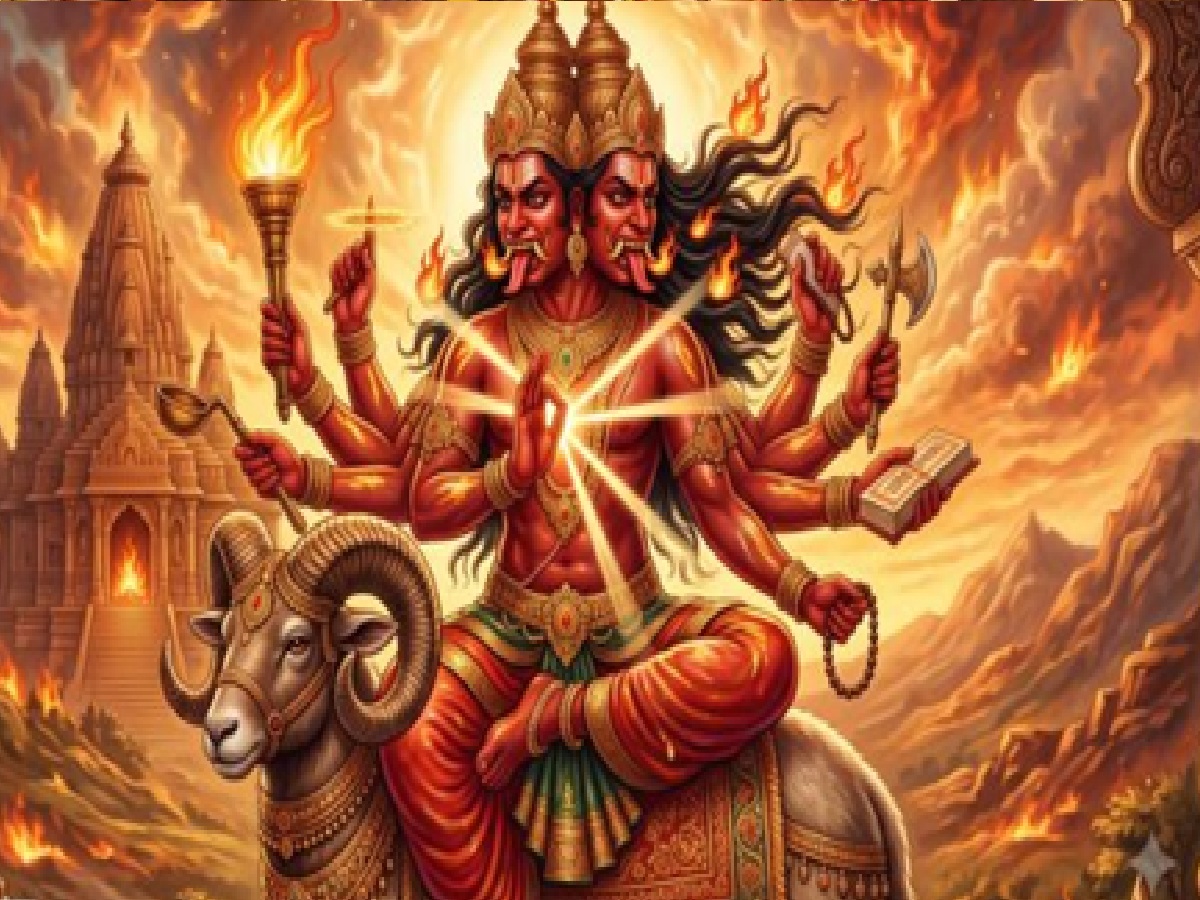
The visual depiction of Agni Dev is as complex as his role in the universe. In his divine form, he is often portrayed with a striking appearance: a red complexion, long black hair, and sharp golden teeth. His form is rich in symbolism, featuring:
-
Two Heads: Representing the duality of immortality and life.
-
Seven Fiery Tongues: Symbolizing the various manifestations of flame.
-
Three Legs and Three Arms: Reflecting his presence across the three realms of Earth, the Atmosphere, and Heaven.
-
The Ram (Aja): His traditional vehicle, symbolizing the raw energy of fire.
Agni’s Equal Grace: Beyond Discrimination
One of the most profound aspects of Agni is his impartiality. He is the Vaishvanara—the one who resides in every home, regardless of caste, creed, or wealth. He does not distinguish between the rich and the poor, the young and the old; he is the universal witness to all human activity. His presence in the kitchen is just as sacred as his presence in a temple altar, reminding us that every act of consumption and creation is a divine offering.
Vastu and the Sacred Directions
According to Vedic guidelines, the utility of fire is determined by its direction, reflecting its specific cosmic function:
-
East: Reserved for offerings to the Gods (Deva-yajna).
-
South: Dedicated to offerings for the ancestors (Pitra-yajna).
-
West: Utilized for daily household tasks, specifically cooking, to maintain balance and harmony.
As the second most important deity of the Vedic era, Agni Dev remains the silent guardian of our lives. He is the purifier who consumes our impurities and the catalyst that allows evolution to continue. Without the blessings of Agni, life on Earth would not only be difficult—it would be impossible.