







The First Mantra Lord Krishna Gave Arjuna That Changed Mahabharata
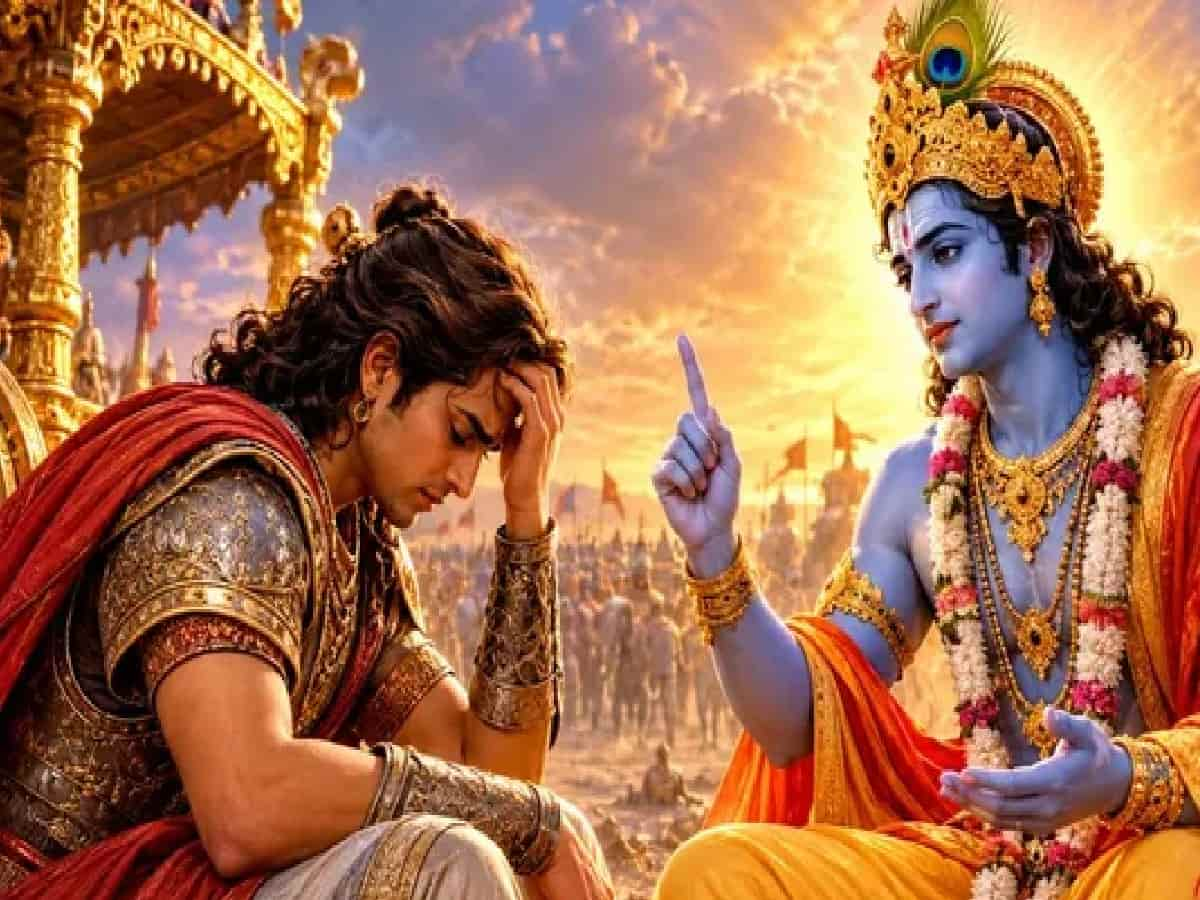
The epic Mahabharata War fought on the sacred plains of Kurukshetra was far more than a dynastic clash between the Pandavas and the Kauravas; it was an eternal struggle between Dharma (righteousness) and Adharma (unrighteousness), as well as a mirror to the deepest moral and emotional conflicts inside the human mind. Standing between two vast armies with his legendary Gandiva bow in hand, the peerless warrior Arjuna suddenly found his resolve shattered when he beheld his revered grandsire Bhishma, his beloved teacher Dronacharya, and his own brothers, cousins, and elders arrayed in battle formation. Overcome by intense attachment, grief, and fear of bloodshed, Arjuna lowered his weapons and turned to his charioteer, Lord Krishna, seeking clarity. The foundational spiritual mantra that Shri Krishna imparted to him in that decisive moment—recorded in the second chapter of the Srimad Bhagavad Gita—not only transformed the course of the Mahabharata, but continues to guide millions across New Delhi, Varanasi, Mathura, Vrindavan, Kurukshetra, Lucknow, and around the world whenever life confronts them with paralyzing doubt.
Arjuna's Moral Crisis on the Battlefield of Kurukshetra
Moments before the conch shells signaled the start of the eighteen-day war, Arjuna asked Lord Krishna to station their chariot squarely in the no-man's-land between the Pandava and Kaurava forces so he could survey the warriors he was about to face. As his gaze swept across familiar faces—mentors who had trained him since childhood and elders who had nurtured him—compassion and sorrow overwhelmed his warrior spirit.
His limbs began to tremble, his mouth went dry, and the mighty Gandiva bow nearly slipped from his grasp. Confessing his inner turmoil, Arjuna told Shri Krishna that he had no desire for victory, royal power, or worldly happiness if achieving them meant slaying his own kinsmen. Folding his hands in surrender, the bewildered prince asked Krishna to show him the righteous path out of his moral paralysis.
The First Foundational Wisdom: The Soul Is Immortal, the Body Is Mortal
To dispel Arjuna's delusion, Lord Krishna began in Chapter 2 (Sankhya Yoga) of the Bhagavad Gita by drawing a fundamental distinction between the perishable physical body and the eternal soul (Atman). Krishna explained that truly wise individuals grieve neither for the living nor for the dead, because the soul is never born, nor does it ever die; it is timeless, indestructible, and untouched by weapons or fire.
To make this profound metaphysical truth vivid and accessible, Shri Krishna offered one of the most celebrated verses in Indian spiritual philosophy—Bhagavad Gita Chapter 2, Verse 22:
"Vasamsi jirnani yatha vihaya navani grihnati naro 'parani, tatha sharirani vihaya jirnany anyani samyati navani dehi."
Meaning: Just as a human being casts off worn-out garments and puts on new clothes, the embodied soul similarly sheds an old, worn-out physical body and enters into a new one. By revealing that death is merely a transition of the outer garment rather than the destruction of eternal consciousness, Krishna freed Arjuna from paralyzing grief over physical mortality.
The Second Pillar: Performing Duty Without Attachment to Results
Once Arjuna understood the immortality of the soul, Lord Krishna anchored him in practical action through Karma Yoga and his Kshatriya Dharma (warrior duty). Krishna taught that retreating from righteous responsibility out of fear or emotional attachment is never the answer; instead, human beings hold authority solely over their sincere effort, never over the eventual outcome. This timeless life principle is enshrined in Bhagavad Gita Chapter 2, Verse 47:
"Karmanyevadhikaraste ma phaleshu kadachana, ma karmaphalaheturbhurma te sango 'stvakarmani."
Meaning: You have the right only to perform your prescribed duties, never to claim entitlement over the fruits of those actions. Neither let the expectation of reward be your sole motive, nor allow yourself to slip into inaction.
Core Pillars of Lord Krishna's First Teaching to Arjuna
| Spiritual Principle | Bhagavad Gita Reference | Practical Meaning in Daily Life |
| Immortality of the Soul (Atman) | Chapter 2, Verse 22 (Vasamsi Jirnani...) | Overcome fear of loss and change by recognizing that the true self is eternal |
| Selfless Action (Nishkama Karma) | Chapter 2, Verse 47 (Karmanyevadhikaraste...) | Focus 100% on disciplined effort without anxiety over success or failure |
| Steadfast Duty (Swadharma) | Chapter 2 (Sankhya Yoga) | Stand firm for justice and responsibility even when personal emotions waver |
Guided by this twin awakening—the eternal nature of the soul and fearless dedication to rightful action—Arjuna picked up his Gandiva bow with renewed clarity, transforming the outcome of the Mahabharata and leaving humanity an enduring blueprint for conquering stress, hesitation, and fear in everyday life.




