







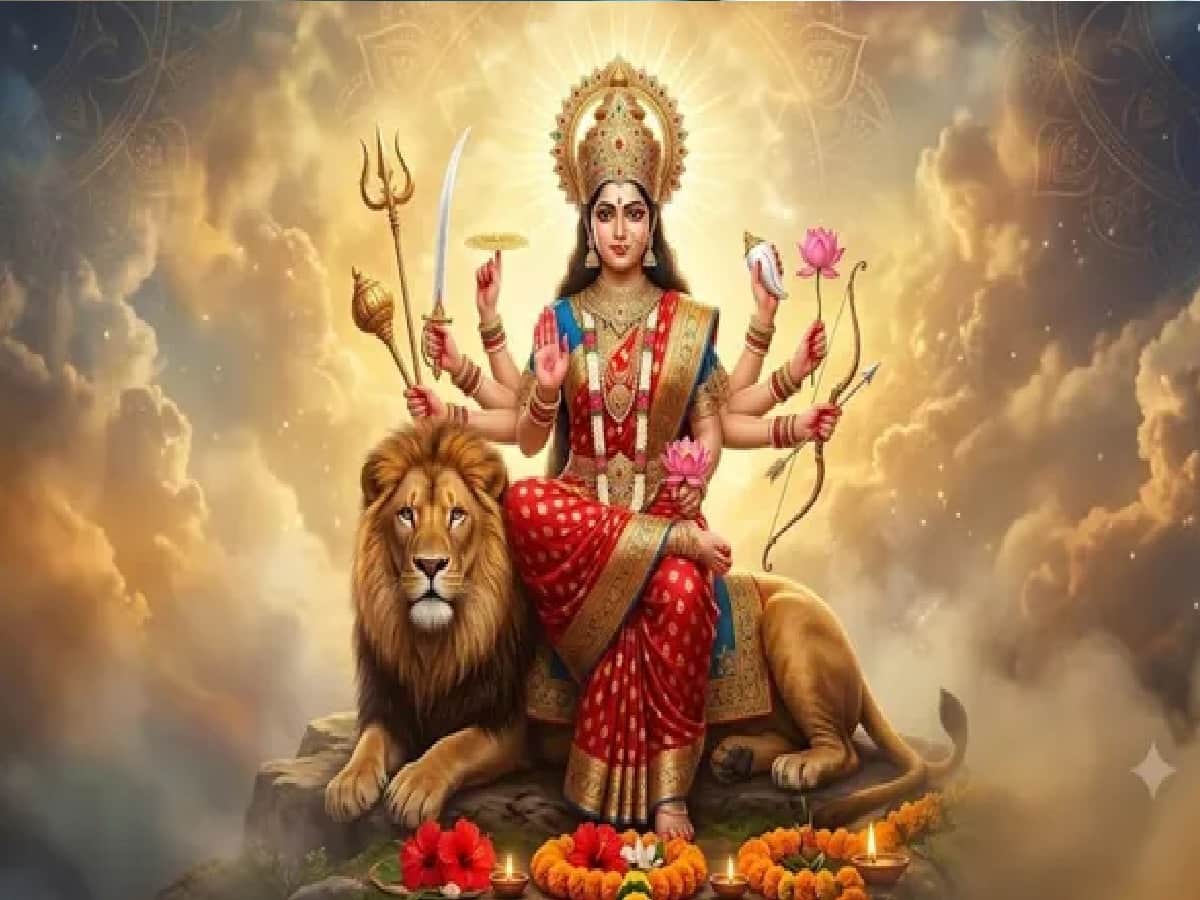
The Divine Mystery Behind Why Goddess Durga is Revered as Jagadamba
Within the rich philosophical tapestry of Sanatana Dharma, Goddess Durga stands as the supreme embodiment of primordial energy (Adishakti), harmonizing fierce protection, cosmic balance, and maternal compassion. Devotees across the globe invoke Her grace through the revered epithet "Jagadamba," seeking prosperity, divine sanctuary, and spiritual liberation. Derived from two classical Sanskrit roots—Jagat (meaning the universe or creation) and Amba (meaning mother)—the sacred name identifies the Goddess as the universal matriarch and metaphysical architect of existence. Scriptural traditions maintain that whenever cosmic righteousness is threatened by demonic disruption or moral decay, the Supreme Mother steps forth in specialized manifestations to shield creation, affirming Her timeless role as the vigilant protector of all sentient life.
The Sacred Manifestation of Ambika: Secrets from the Durga Saptashati
The foundational narrative connecting Goddess Durga to this maternal identity is chronicled within the sacred verses of the Durga Saptashati. Following the annihilation of the tyrannical buffalo-demon Mahishasura, celestial beings and deities gathered in profound gratitude, singing hymns of adoration to celebrate the restoration of cosmic order. Sacred texts recount that during this cosmic eulogy, Goddess Parvati arrived to perform sacred ablutions at the divine source of the sacred River Ganga. Hearing the heartfelt prayers echoing through the realms, She shed Her outer illusory form (kosha) to reveal an effulgent, intensely auspicious manifestation that became known as Goddess Ambika. Emerging as the supreme female sovereign and the eternal divine counterpart to Lord Shiva, this glorious epiphany reinforced the doctrine that the ultimate sustaining energy of the cosmos is inherently maternal, granting sustenance and refuge to both gods and mortals alike.
The Test of the Trimurti: Mahakali’s Compact and Eternal Bond with Lord Shiva
Another profound scriptural legend traces the divine title to an ancient cosmological trial, wherein the Supreme Goddess assumed the formidable, primordial form of Mahakali to assess the spiritual discernment of the Trinity (Brahma, Vishnu, and Shiva). While Lord Brahma and Lord Vishnu were struck with awe and apprehension upon witnessing Her fierce, uninhibited cosmic darkness, Lord Shiva looked upon Her with boundless devotion, reverence, and unconditional love, recognizing the divine mother behind the terrifying veil. Pleased by Mahadev's profound understanding, Mahakali granted Him a divine boon, pledging that She would serve as His eternal consort and partner in facilitating cosmic welfare and universal balance. However, this divine union required supreme penance and dedication, prompting Adishakti to descend into worldly existence across consecutive celestial eras—first as Goddess Sati and subsequently as Goddess Parvati—solidifying Her enduring legacy as Jagadamba, the eternal mother whose cosmic grace nurtures, protects, and sustains the entire universe.




