







The 12-Year Curse That Forced Goddess Lakshmi Into a Farmer’s Hut
Celebrated annually on the thirteenth day of the dark fortnight (Krishna Paksha Trayodashi) in the sacred month of Kartik, Dhanteras stands as the grand herald of the five-day Diwali festival. While millions mark the occasion by purchasing auspicious gold, silver, and metal utensils, celebrating the birth anniversary of Lord Dhanvantari—the celestial patron of health and Ayurveda—and lighting 13 protective earthen lamps across their households, the spiritual genesis of worshipping Goddess Lakshmi on this evening traces back to a lesser-known mythological tale. Rooted in ancient Vedic lore, the foundational katha of Dhanteras recounts how a momentary lapse in discipline led to a 12-year penance for the goddess of wealth herself, forcing her to dwell within the humble mud cottage of an impoverished farmer before instituting the eternal ritual that millions observe today.
A Forbidden Journey South: The Broken Promise and Lord Vishnu's Decree
According to sacred mythological chronicles, the legend began when Lord Vishnu prepared to descend upon Earth for a cosmic pilgrimage. Eager to witness the mortal realm, Goddess Lakshmi requested to accompany him on the journey. Lord Vishnu consented on one strict condition: that she would unquestioningly adhere to divine discipline and respect his instructions throughout their travels. Upon descending to Earth, Lord Vishnu instructed Goddess Lakshmi to remain stationed at a designated clearing, explicitly cautioning her not to follow him as he departed toward the southern direction on cosmic duty. However, overcome by curiosity regarding what secrets lay in the south, Goddess Lakshmi breached the mandate and discreetly followed her consort's path. Along the way, she was captivated by a lush, vibrant mustard field blooming with vivid yellow flowers, where she paused to pluck the blossoms and adorn herself. Moving further, she encountered an expansive sugarcane farm and began relishing the sweet stalks. Upon witnessing her damaging an ordinary mortal's agricultural produce and disobeying divine counsel, Lord Vishnu reprimanded the goddess, decreeing that to atone for destroying a poor peasant's hard-earned harvest, she must take residence in the farmer’s modest household and serve the family in human guise for a span of 12 years.
The Transformed Household and the Genesis of Kartik Trayodashi Puja
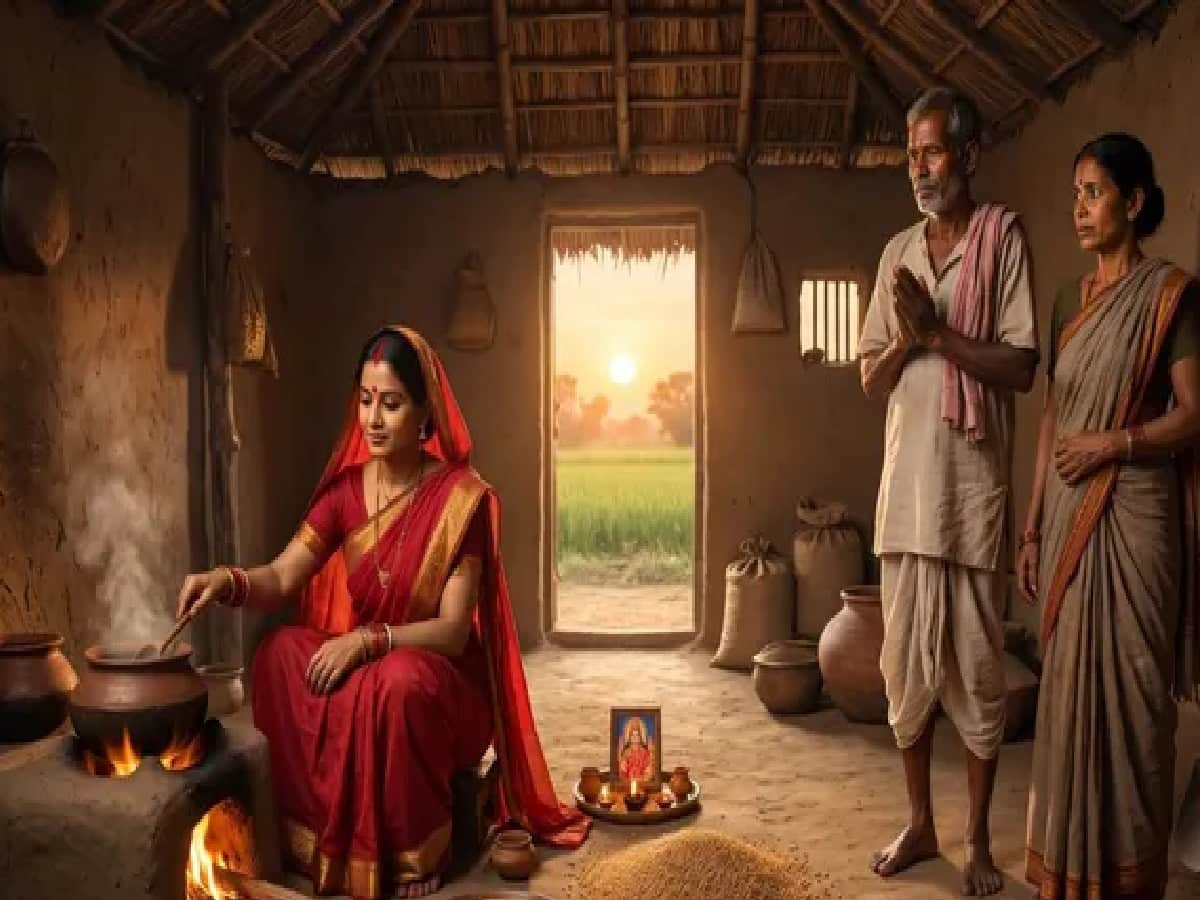
The entry of Goddess Lakshmi into the farmer's humble home initiated an extraordinary era of prosperity, lifting the struggling household out of destitution into abundant wealth and comfort. Prior to bestowing her boundless graces, Goddess Lakshmi instructed the farmer’s wife to awaken before dawn every morning, perform a ritual purifying bath, and conduct dedicated prayers before lighting the kitchen hearth. Embracing the guidance with pure devotion, the family observed complete spiritual purity, resulting in overflowing granaries, robust cattle wealth, and lasting domestic harmony. When the 12-year term elapsed, Lord Vishnu arrived on Earth to escort his divine consort back to Vaikuntha. Desperate to prevent her departure, the farmer fell at Lord Vishnu’s feet, pleading that the source of his family's happiness never leave his home. Lord Vishnu gently explained that Goddess Lakshmi is inherently Chanchala (ever-moving and dynamic), meaning she cannot remain permanently confined to a single mortal dwelling, as her cosmic duty is to dispense grace across the universe. Moved by the peasant's tears and unwavering service, Goddess Lakshmi bestowed a lasting boon, instructing him that the following day was Kartik Krishna Trayodashi; if he meticulously cleaned and purified his home, lit a lamp of pure cow ghee at dusk, and worshipped her with devout offerings, her divine presence and blessings would forever reside within his walls. This promise laid the spiritual cornerstone for the Dhanteras rituals celebrated across Sanatan households, where devotees recite this holy katha while illuminating their homes to invite eternal fortune and ethical abundance.




