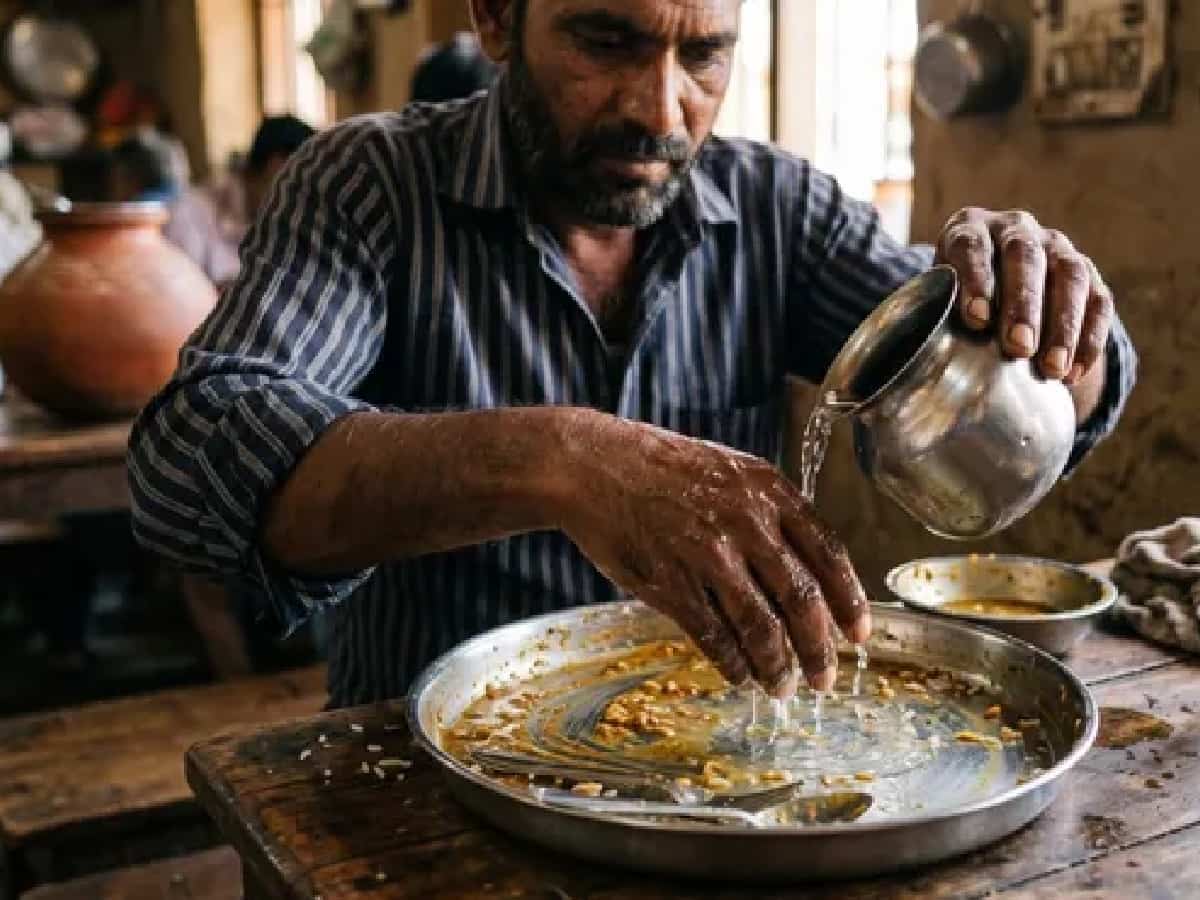
Stop Washing Hands in Your Food Plate: Vedic Warning on How It Brings Poverty
In Vedic culture and Sanatan Dharma, food is revered as a manifestation of the divine, directly embodying the grace of Maa Annapurna and Goddess Lakshmi. Ancient scriptures emphasize that households honoring each morsel of sustenance cultivate lasting abundance, spiritual tranquility, and material prosperity. Conversely, mundane daily habits that appear harmless on the surface—such as casually washing dirty fingers directly over the eating plate after finishing a meal—are classified as profound spiritual transgressions that can invite severe financial distress and domestic adversity.
Why Washing Hands in the Dining Plate Attracts Poverty
A widespread domestic practice involves rinsing soiled fingers inside the used thali or dining plate once the meal concludes. According to Vastu Shastra and traditional religious codes, this action severely disrespects leftover food particles and crumbs remaining on the surface. Rinsing dirty, greasy water directly over the plate contaminates the sacred vessel and offends Goddess Lakshmi, the presiding deity of wealth. This careless habit is believed to generate negative vibrations and severe Vastu dosha, gradually eroding accumulated household savings and inviting chronic monetary hurdles.
The Right Vedic Etiquette for Leftover Food and Hygiene
To uphold household sanctity, individuals should always rise from the dining area and cleanse their hands in a designated washbasin or separate water vessel rather than contaminating the eating dish. Discarding edible leftovers into trash cans is similarly discouraged in sacred texts. Puranic guidelines, including teachings from the Bhagavata Purana, mandate offering surplus food to animals such as cows, birds, or stray dogs, transforming potential waste into an act of compassionate charity (Jiva Seva) that generates positive karmic merit.
Zero Waste Philosophy Across Indian Traditions
Sanatan Dharma and Jain traditions strictly prohibit wasting even a single grain of grain (Anna). While modern habits debate the propriety of cleaning fingers thoroughly to prevent food wastage, historical etiquette stresses careful dining portions that leave zero residue behind. Jain practices emphasize consuming every single food grain, often swirling pure water in the vessel to drink the remaining particles rather than letting them go to waste. Honoring dining etiquette and treating the plate with reverence ensures divine blessings, preserving long-term financial harmony in the home.