Shiva Temples Have Navagraha Shrines While Vishnu Temples Don't: Sacred Mystery Explained
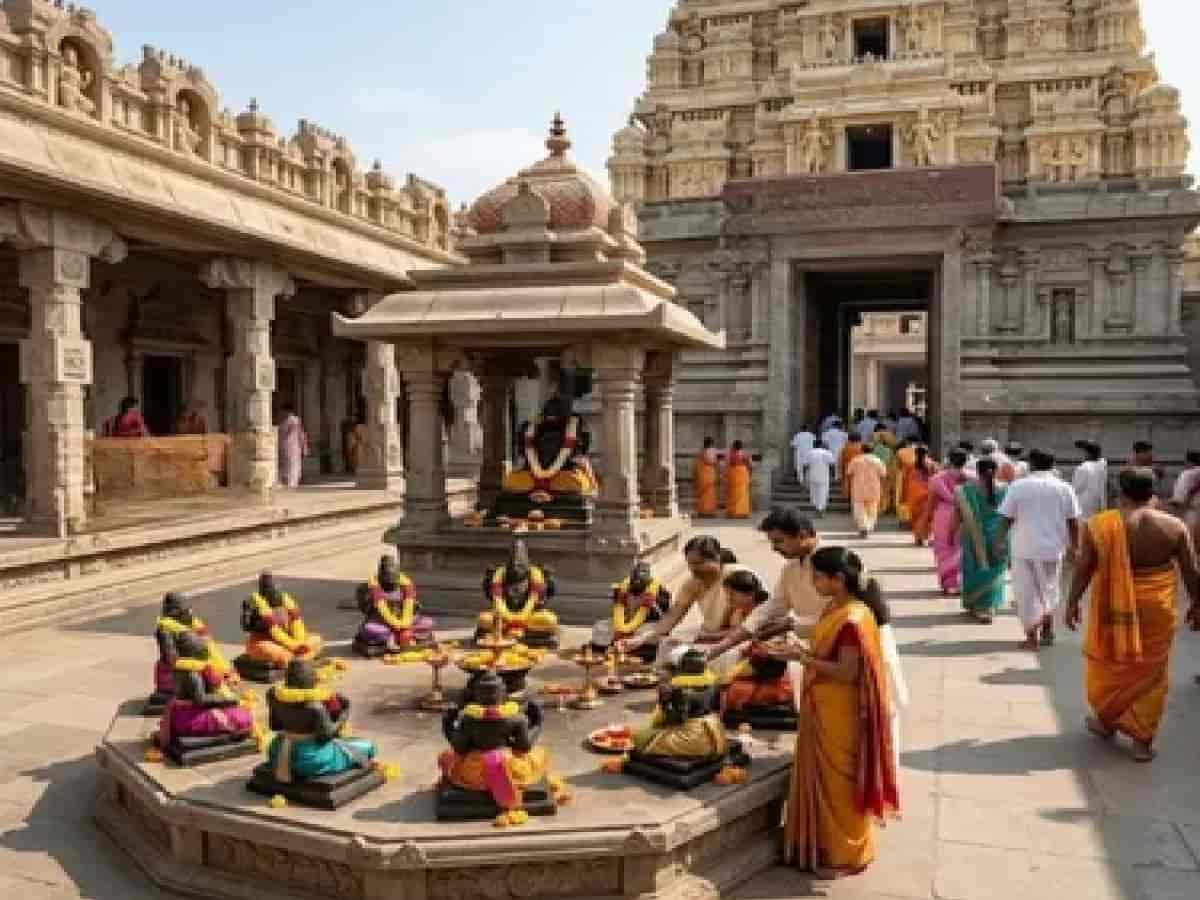
Stepping inside ancient Hindu temple complexes reveals fascinating architectural and theological contrasts across different traditions of Sanatana Dharma. In nearly every traditional Shiva temple, pilgrims encounter a dedicated nine-pillared platform or separate mandapa housing the murtis of the Navagrahas—the nine celestial bodies comprising Surya, Chandra, Mangala, Budha, Brihaspati, Shukra, Shani, Rahu, and Ketu. Devotees routinely perform circumambulations around these planetary deities alongside their worship of the central Shivalinga to ward off astrological afflictions. However, visiting temples dedicated to Lord Vishnu or His prominent avatars, such as Lord Rama or Lord Krishna, reveals a striking contrast: standalone Navagraha enclosures are almost entirely missing. This architectural divergence is neither accidental nor arbitrary, but stems from deep-rooted scriptural mandates, cosmic hierarchies, and fundamental philosophical contrasts between the Shaiva and Vaishnava lineages.
Complete Surrender in Vaishnavism: Why Bhagavan Transcends the Stars
The primary philosophical reason for the absence of Navagraha idols in Vishnu temples lies in the core doctrine of Sharanagati or Prapatti—unconditional, absolute surrender to the Supreme Lord. In the sacred dialogue of the Srimad Bhagavad Gita, Lord Krishna delivers the ultimate spiritual directive: "Sarva-dharman parityajya mam ekam sharanam vraja", commanding the seeker to abandon reliance on secondary pathways and take refuge exclusively in Him. Vaishnava theology maintains that Lord Narayana is the supreme architect and ultimate sustainer of the cosmic order. Consequently, the nine celestial planets function merely as administrative entities operating under His divine cosmic law. Devotees holding steadfast faith in Vishnu believe that once an individual seeks shelter at the feet of the Supreme Preserver, separate appeasement of planetary forces becomes redundant, as divine grace automatically shields the surrendered soul from all malefic astrological influences.
Mahadev as 'Mahakaal': Why Planetary Rulers Reside in Shiva Mandirs
In stark contrast, the inclusion of the Navagraha within Shaivite sanctums is deeply rooted in Lord Shiva's manifestation as Mahakaal—the Lord of Time, Eternity, and Dissolution. Cosmic time and human lifespan (Kaal) are intrinsically measured and governed by the rotational cycles and alignments of the planetary spheres. According to verses in the Shiva Purana, the planetary deities perform their cosmic functions under the supreme authority of Mahadev. A prominent scriptural example is that of Shani Dev (Saturn), who achieved his exalted cosmic office as the dispenser of karmic justice (Nyayadheesh) through rigorous austerities dedicated to Lord Shiva. Because Mahadev controls both cosmic dissolution and temporal karma, propitiating the Navagrahas within a Shiva temple allows devotees to seek planetary appeasement, mitigate severe afflictions like Shani's Sade Sati or Rahu-Ketu doshas, and obtain Mahadev’s supreme protection simultaneously.
Astrological Remedies vs. Pure Bhakti: Contrasting Spiritual Energies
This scriptural distinction directly shapes the differing spiritual ambiances of these sacred spaces. Shiva temples frequently serve as epicenters for karmic purification, astrological rectifications, and esoteric remedies designed to dispel worldly tribulations such as Kaal Sarp Dosha or chronic planetary impediments. Conversely, Vishnu and Krishna temples cultivate an atmosphere centered strictly around loving devotion (Bhakti), congregational singing (Sankirtan), and ultimate liberation (Moksha). While the court of Mahadev invites devotees to balance planetary debts through disciplined rituals, the sanctuary of Hari assures seekers that single-minded contemplation of Narayana inherently dissolves all planetary faults, granting complete peace and divine grace.