Feeling Lost: These 6 Bhagavad Gita Chapters Reveal Solutions to Life’s Toughest Battles
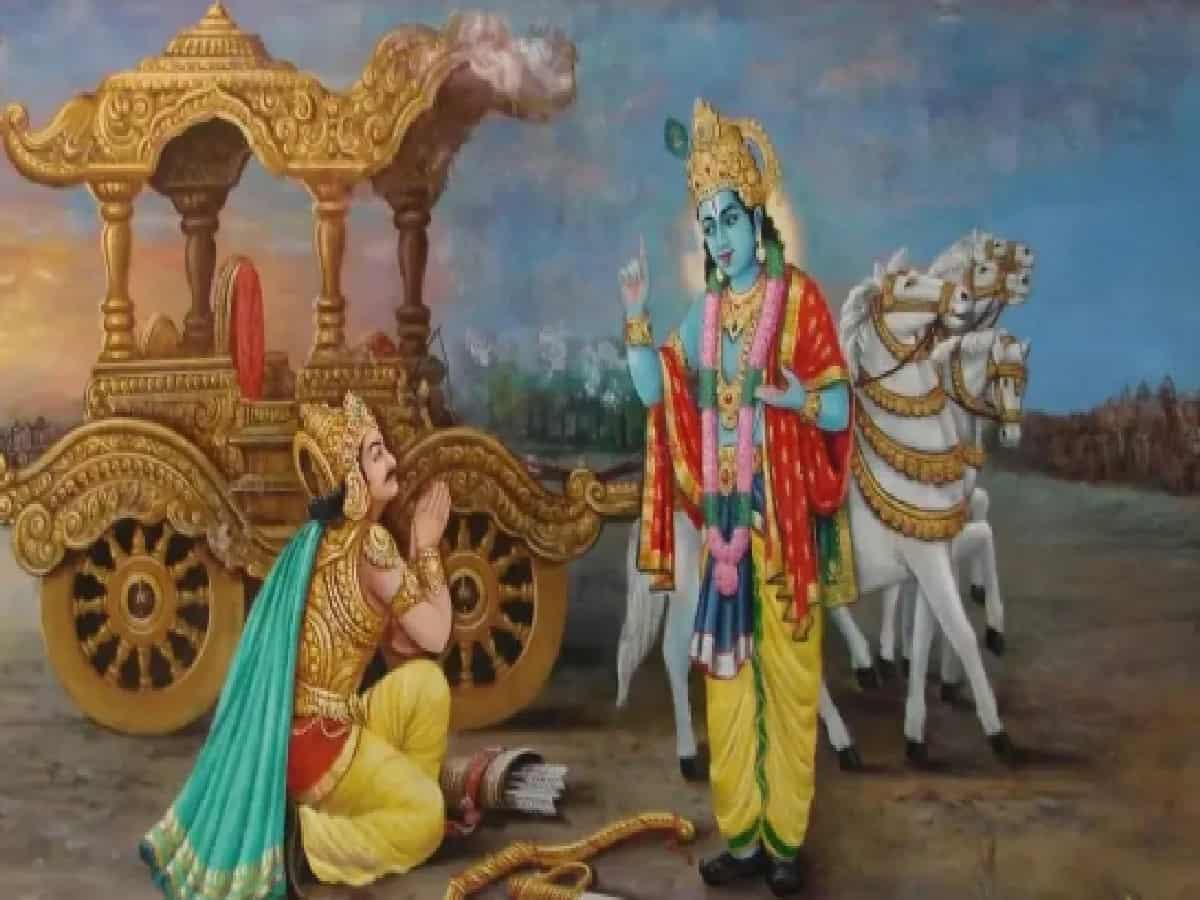
Modern life frequently subjects individuals to episodes of deep despair, emotional paralysis, and moral indecision where worldly remedies offer little comfort. In Sanatana Dharma, the Srimad Bhagavad Gita serves as an unmatched philosophical beacon, cutting through cognitive turmoil to restore mental clarity and purpose. While the sacred dialogue between Lord Krishna and Arjuna covers every dimension of human duty across its eighteen chapters, spiritual scholars emphasize that Chapters 7 through 12 form the profound spiritual core of the entire scripture. Delving into the mysteries of cosmic illusion, the inevitability of physical mortality, and the liberating path of pure devotion, these six chapters provide an essential psychological anchor for anyone navigating adversity.
Unveiling the Web of Maya and Demystifying Death: Chapters 7 and 8
In Chapter 7, Jnana Vijnana Yoga (The Yoga of Knowledge and Discernment), Lord Krishna reveals the architecture of the material universe, characterizing the world as His divine cosmic illusion (Daivi Maya). Entangled in this deceptive web of material attachments and fleeting pleasures, human beings struggle to find enduring peace; yet, Krishna affirms that those who surrender wholeheartedly at His feet cross this turbulent ocean of illusion effortlessly. Following this foundational revelation, Chapter 8, Aksara Brahma Yoga (The Yoga of the Imperishable Absolute), confronts humanity's greatest fear: physical death. Lord Krishna explains that a person's final thoughts during the decisive moment of departure mirror their predominant lifelong pursuits, shaping their next metaphysical trajectory. To attain liberation (Moksha), the seeker must cultivate an ongoing habit of remembering the Supreme amidst everyday responsibilities, ensuring that the mind remains tranquil and spiritually grounded when bodily life concludes.
The Sovereignty of Love Over Rituals: Chapter 9 and the Purity of Pure Bhakti
In Chapter 9, Raja Vidya Raja Guhya Yoga (The Yoga of Sovereign Science and Secret Knowledge), the Gita strips away rigid religious posturing to unveil the core of authentic worship. Lord Krishna proclaims that the Divine does not demand ostentatious display, excessive asceticism, or lavish wealth. The celebrated verse "Patram Pushpam Phalam Toyam" emphasizes that even the humble offering of a single leaf, a fresh flower, a wild fruit, or a drop of water is accepted with boundless joy if offered with a pure, loving heart. Every charitable act, daily labor, and personal penance is transformed into spiritual energy when dedicated selflessly to the Almighty, dissolving the burdens of worldly anxiety.
Experiencing the Infinite: Chapters 10 and 11 Reveal the Cosmic Vishwarupa
Expanding the seeker's spiritual vision, Chapter 10, Vibhuti Yoga (The Yoga of Divine Glories), illustrates that the entire material creation is an infinitesimal manifestation of divine grandeur, guiding the devotee to recognize sacred grace in every magnificent aspect of existence. This spiritual buildup culminates dramatically in Chapter 11, Vishwarupa Darshan Yoga (The Yoga of the Vision of the Cosmic Form). Bestowing divine vision upon Arjuna, Lord Krishna reveals His terrifying and wondrous omnipresent form, encompassing galaxies, stars, time, destruction, and creation within Himself. Witnessing this vast cosmic scale liberates the human intellect from narrow, self-absorbed worries, illustrating that transient mortal struggles are small parts of an unfathomable divine plan.
The Path to Inner Equanimity: Chapter 12 and the Qualities Dear to the Divine
Addressing the practical application of this wisdom, Chapter 12, Bhakti Yoga (The Yoga of Devotion), resolves the ancient debate between meditating on the unmanifest, formless Absolute (Nirguna) and loving the personal, embodied Divine (Saguna). Lord Krishna points out that meditating on the formless aspect presents severe psychological difficulties for embodied beings, making personalized devotion the most accessible and peaceful spiritual pathway. In concluding verses that serve as an ethical blueprint for daily life, Krishna describes the seeker most dear to Him: one who remains serene in pleasure and pain, bears no malice toward any living entity, forgives freely, rises above ego and possessiveness, and radiates goodwill to all.