







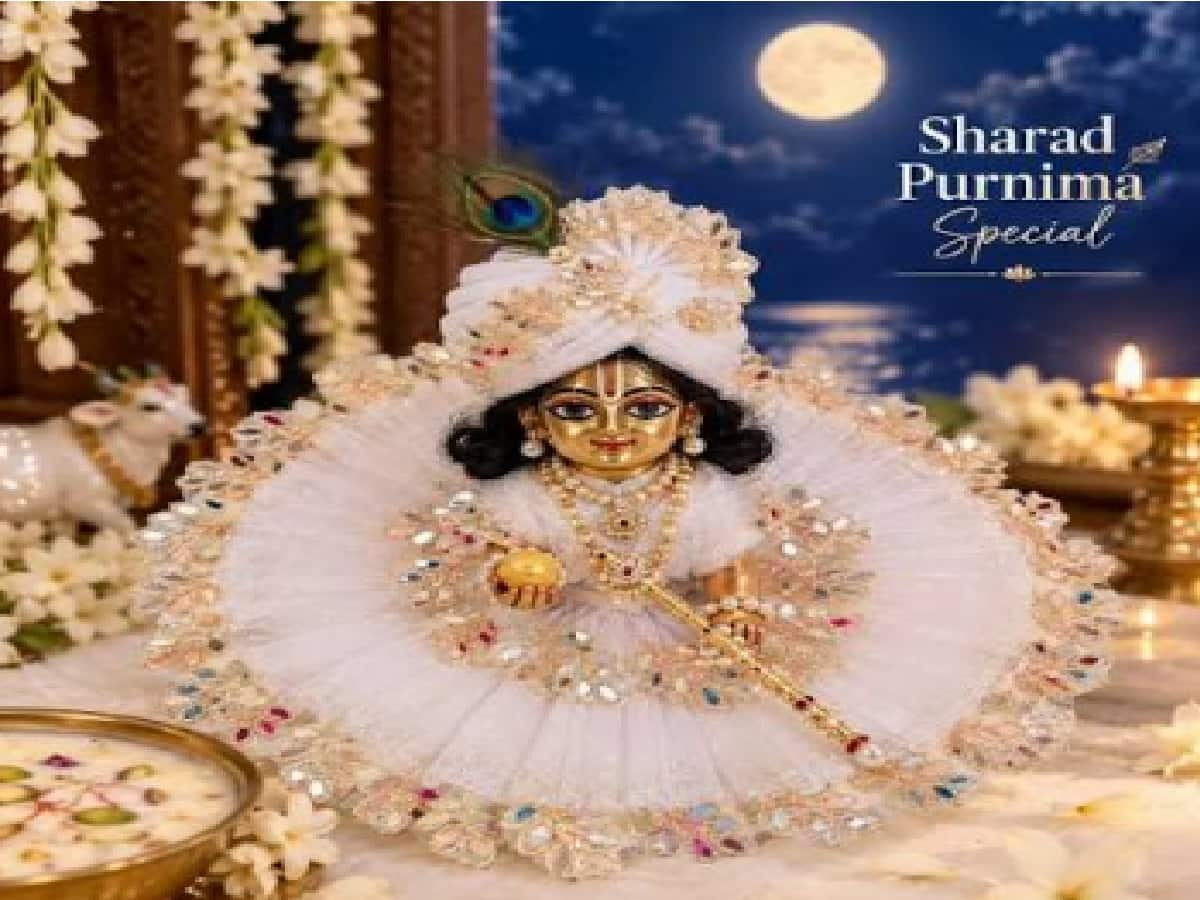
Sharad Purnima: Why Laddu Gopal’s Shringar is Incomplete Without 'Chandrika'
Sharad Purnima holds profound spiritual significance in Sanatan tradition as the solitary night of the year when the moon illuminates the cosmos in its complete sixteen divine phases (Shodasha Kala), showering the earth with healing lunar nectar. While seekers across the country worship Goddess Lakshmi and Lord Krishna on this sacred Kojagari Purnima, the day is especially transformative for households devoted to Laddu Gopal, the cherished infant manifestation of Lord Krishna. Scriptural lore establishes that on this night, Lord Krishna orchestrates the celestial Maharaas in the sacred groves of Vrindavan, bathing the world in transcendental bliss. Devotees commemorate this cosmic leela by dressing Bal Gopal in pure white adornments (Shwet Shringar) and presenting sacred offerings, a devotional practice believed to cleanse domestic spaces of planetary malefic influences, dispel financial distress, and attract enduring prosperity and peace.
The Divine Maharaas Shringar: Why 'Chandrika' and Pearl Attire are Essential
The hallmark of Sharad Purnima lies in the monochromatic elegance of Laddu Gopal’s white shringar, reflecting the spotless glow of the autumn moon. The deity is dressed in shimmering white silk or muslin robes accentuated with intricate silver embroidery, delicate zari work, and natural pearl embellishments. Devotees adorn the Lord with layered white pearl necklaces (Moti Mala), a resplendent crown, his signature golden or silver flute (Bansuri), and cooling fragrant white sandalwood (Malayagiri Chandan) tilak across his forehead. Central to this festive attire is the sacred headpiece known as 'Chandni' or 'Chandrika Jewellery'. Worn alongside or directly atop the crown, this crescent-shaped ornament signifies the nectarine rays of the moon and captures the radiant beauty of Krishna as he stepped out for the divine Raas Leela, making Bal Gopal’s Sharad Purnima shringar incomplete without its inclusion.
Abhishekam Timing and the Moonlight Kheer Ritual: Key Rules for Devotees
Serving Laddu Gopal on this day requires mindful devotion and adherence to gentle domestic rituals. Devotees should begin their morning by purifying the home alter, yet avoid waking the infant deity prematurely during early Brahma Muhurta, as child forms of divinity are nurtured with parental tenderness and should be gently awakened slightly later in the morning. The ritual begins with an Abhishekam using clean holy water or traditional Panchamrit crafted from fresh cow’s milk, curd, pure desi ghee, organic honey, and rock sugar (mishri). After drying the deity with a soft cloth, dressing him in his white vestments, and decorating his throne with fragrant jasmine and white lotus flowers, devotees offer a traditional bhog comprising fresh white butter (makhan), mishri, seasonal fruits, and freshly prepared kheer made with cow’s milk, aromatic basmati rice, and sugar. In accordance with age-old Ayurvedic and spiritual traditions, the vessel of kheer is covered with a sterile muslin cloth or fine mesh lid to keep it clean while leaving it exposed directly under the overnight moonlight, allowing the dessert to absorb the lunar rays before being distributed to family members as consecrated, health-restoring prasad.




