







Seeing an Owl on Diwali: 5 Signs of Wealth and Good Fortune
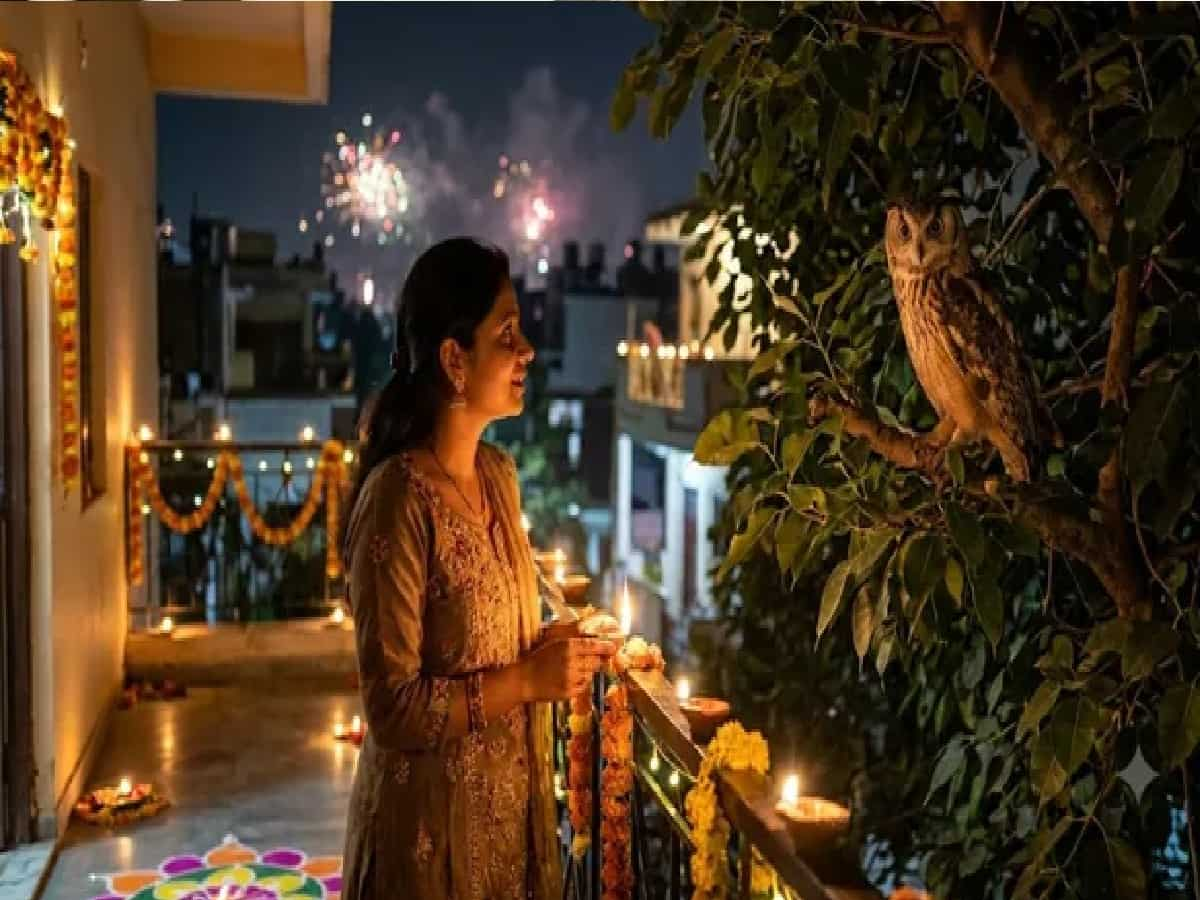
As the dusk of Kartik Amavasya settles over millions of illuminated households across India, the sacred night of Diwali transforms cities and villages into luminous tapestries of flickering clay lamps, fragrant marigolds, and joyous gatherings. While devotees perform the time-honored Lakshmi-Ganesha puja, reciting ancient mantras to invite harmony and abundance into their dwellings, traditional folklore notes that certain rare celestial and earthly omens carry deep spiritual significance. Among the most auspicious events described in Sanatan Dharma's ancient omen scriptures, known as Shakuna Shastra, is the sudden, quiet appearance of an owl during the dark hours of Diwali night. In Hindu iconography, the owl (Ulooka) is revered not as a creature of darkness, but as the sacred vahana (divine vehicle) of Goddess Lakshmi, the supreme harbinger of wealth, spiritual fortune, and domestic prosperity. A spontaneous encounter with this solitary nocturnal bird on the festival of lights is widely believed to signal that a cycle of financial stagnation and emotional distress is drawing to a close, heralding an era of unanticipated fortune and divine benevolence.
The Divine Vahana: The Symbolic Bond Between Lakshmi and the Owl
To understand why the sight of an owl is celebrated with such reverence on Diwali, one must look deep into the philosophical foundations of Hindu iconography. Known affectionately in sacred verses as Ulooka Vahini—the divine mother who rides upon an owl—Goddess Lakshmi’s choice of companion holds profound esoteric meaning. In the natural world, the owl possesses the rare ability to see with crystalline precision through absolute darkness, while remaining virtually blinded by harsh midday light. Spiritually, this nocturnal vision symbolizes spiritual awakening, introspection, and the pursuit of inner illumination amidst the surrounding gloom of worldly ignorance.
According to traditional religious lore, Goddess Lakshmi descends upon the mortal plane on Diwali night to inspect the homes of devotees, blessing spaces that are pristine, peaceful, and illuminated with sincere devotion. When an owl appears on a rooftop, perches upon a parapet, or glides across an illuminated courtyard during these sacred hours, scriptural scholars interpret it as a tangible sign that the goddess’s presence is actively brushing past the household. Rather than a mere coincidence of nature, the sighting is embraced as a rare spiritual omen indicating that the protective and wealth-bestowing aura of the Divine Mother has enveloped the family, preparing the ground for lasting abundance in the year ahead.
1. Recovery of Stuck Funds and Unexpected Financial Inflows
The foremost omen associated with spotting an owl on Diwali night relates directly to the unlocking of frozen capital and sudden financial windfalls. In daily life, individuals and business owners frequently grapple with delayed payments, defaulted loans, disputed family inheritances, or long-forgotten investments that have yielded no returns. Astrological traditions suggest that an owl sighting on this auspicious night clears blockages in one's wealth channels.
Devotees believe that this auspicious encounter acts as a cosmic catalyst, initiating circumstances that allow stuck or trapped funds to return smoothly to their rightful owners. Furthermore, it often heralds the emergence of entirely new, unexpected revenue streams. Whether arriving in the form of a long-anticipated career bonus, an unexpected tax settlement, or a lucrative freelance venture, the appearance of Lakshmi's mount serves as an assurance that the upcoming Samvat accounting year will be defined by healthy liquidity and monetary stability.
2. Career Expansion, Lucrative Deals, and Business Growth
For merchants, entrepreneurs, and salaried professionals, an owl sighting on Diwali night is regarded as an exceptional herald of commercial breakthrough and professional elevation. The owl is famed for its unyielding focus, extraordinary patience, and lightning-fast precision when capturing opportunities—qualities that are essential for long-term commercial success in competitive markets.
If a business owner glimpses an owl during the festive hours, classical interpreters suggest that stalled business negotiations will regain forward momentum, unsold inventory will begin moving, and favorable contracts will soon be signed. For salaried individuals striving for professional recognition, this sighting is traditionally associated with overdue promotions, substantial increments, or long-awaited appointments to leadership positions. It indicates that the individual’s hard work, previously overlooked in challenging economic climates, will finally be acknowledged and rewarded by mentors and organizational superiors.
3. Dissolution of Debt and Alleviation of Chronic Stress
Beyond the accumulation of material assets, the true blessing of Goddess Lakshmi lies in the eradication of Daridrata—a term that encompasses not merely physical poverty, but the crippling mental anguish, chronic stress, and sleepless anxiety that accompany compounding debt. Financial burdens weigh heavily on the human spirit, clouding judgment and disrupting domestic peace.
Within the framework of Shakuna Shastra, the silent flight of an owl across Diwali’s midnight sky represents the quiet banishment of domestic misfortune. The encounter signifies that the heavy fog of financial insecurity is lifting, creating practical pathways for families to consolidate and clear lingering debts. As monetary pressure recedes, households experience an immediate restoration of mental calm, allowing family members to redirect their emotional energy toward constructive planning, self-care, and creative pursuits.
4. Sustained Household Abundance: The Perched Visitor
An exceptionally rare and revered occurrence on Diwali night is when an owl chooses not merely to fly past, but to alight and perch near or directly upon a household's boundary, balcony, or terrace. In traditional households across Uttar Pradesh, Bihar, Bengal, and Gujarat, elders view this event with boundless joy, interpreting the bird's settled presence as a direct consecration of the premises.
This rare behavior is believed to bestow the dual blessings of Annapurna and Akshaya—the divine gifts of never-ending food security and inexhaustible resources. Families blessed with such a visitation are said to enjoy a year marked by domestic harmony, healthy kitchen stores, and an absence of sudden catastrophic expenditures. The bird's calm demeanor atop the roof is viewed as an invisible spiritual shield, guarding the domestic perimeter against external envy (nazar dosha), malevolent energies, and sudden familial discord throughout the ensuing twelve months.
5. The End of Prolonged Karmic Trials and Welcoming Peace
Finally, encountering an owl during Deepavali represents a profound turning point in a person's broader life journey, signaling the end of an arduous karmic cycle. Life often subjects individuals to protracted phases of continuous struggle, where despite their utmost dedication, every enterprise seems to collapse prematurely, leaving them emotionally drained and spiritually disillusioned.
Spiritual commentators note that an owl sighting on this auspicious night functions as an omen of renewal. It marks the conclusion of unfavorable astrological transits and ushers in a phase where circumstances naturally align in the individual’s favor. Strained familial bonds begin to heal, misunderstandings with lifelong companions dissolve, and an overarching sense of equilibrium settles over the heart. The individual discovers renewed purpose, stepping into the post-Diwali season with confidence, knowing that the trials of yesterday have cleared the path for tomorrow’s triumphs.
Sacred Lore Meets Ecological Compassion: Protecting the Silent Hunter
While Sanatan Dharma celebrates the auspicious nature of owl sightings, ethical scholars and environmental conservationists emphasize that genuine reverence for Goddess Lakshmi requires absolute protection of her sacred companion. In natural ecosystems, owls—such as the Barn Owl and the Indian Eagle-Owl—serve as irreplaceable guardians of the agricultural food chain, working as nature’s silent pest controllers by keeping rodent populations in check and protecting precious crop reserves.
Tragically, superstitious misconceptions and unethical occult practices sometimes lead unscrupulous elements to capture or harm these magnificent nocturnal birds around Diwali under the false belief that sacrifice brings quick wealth. Spiritual teachers firmly denounce such acts, affirming that inflicting cruelty upon the sacred vahana of Goddess Lakshmi invites severe spiritual retribution rather than divine favor. True Sanatan values dictate that one should celebrate an owl sighting with quiet prayer, reverent folded hands, and a profound commitment to protecting wildlife. When approached with humility and environmental mindfulness, the silent grace of the owl on Diwali night stands as an inspiring reminder that fortune favors those who respect both divine mystery and the living wonders of nature.




