







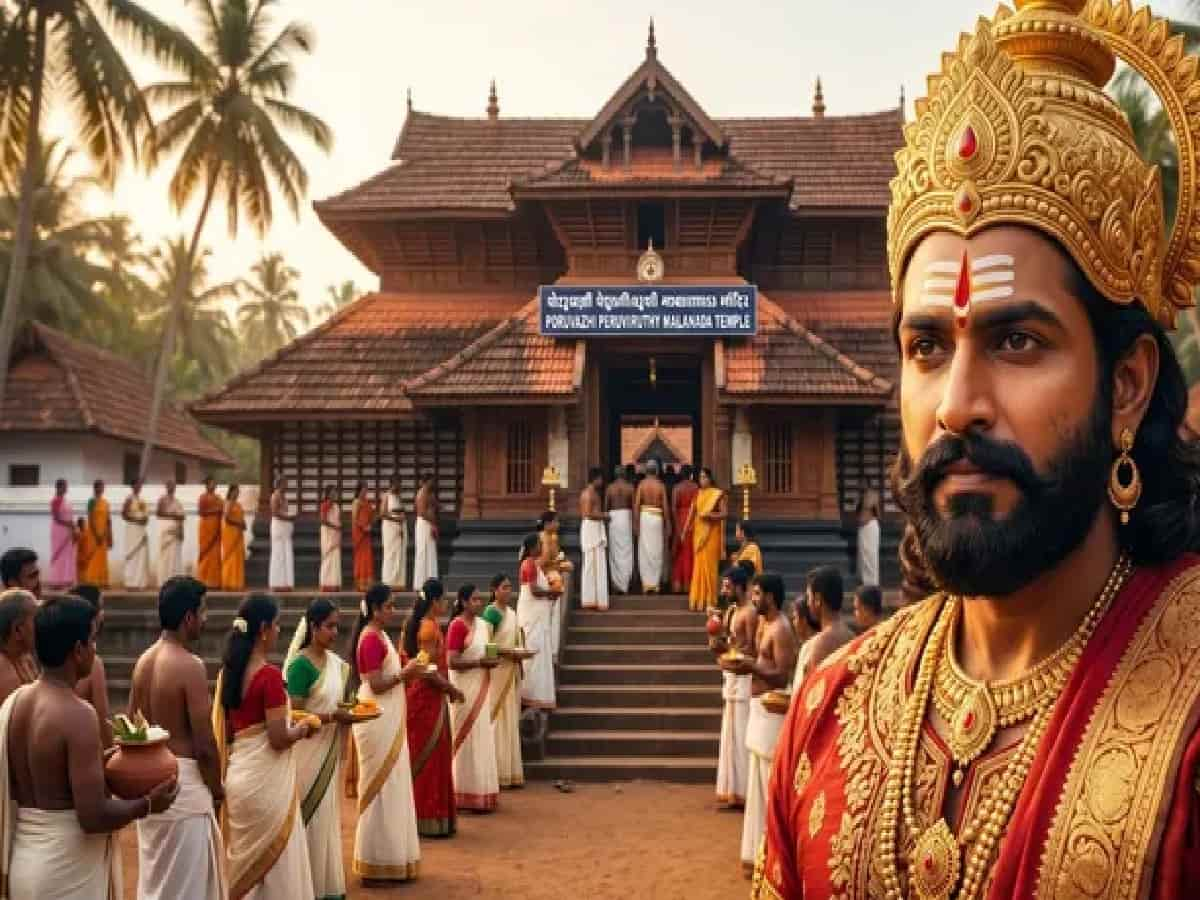
Ravan Dahan: This Kerala Temple Offers Toddy to Duryodhana on Dussehra
While the rest of the nation marks Vijayadashami with the ritual burning of multi-headed effigies of Ravana to symbolize the triumph of righteousness over unrighteousness, a centuries-old shrine in southern Kerala presents a starkly different mythological perspective. Situated in the village of Malanada in Kollam district, the Poruvazhy Peruviruthy Malanada Temple—widely acknowledged as South India's only prominent temple dedicated to the Kaurava monarch Duryodhana—draws thousands of devotees throughout the Navratri festival and on Dussehra. Far from viewing him as an emblem of hubris or moral decline, local worshippers revere Duryodhana as a benevolent king who bestows agricultural prosperity, physical protection, and domestic peace. Despite the temple administration refraining from hosting elaborate liturgical ceremonies during Navratri, winding queues of pilgrims arrive continuously to seek the blessings of the epic figure.
The Legend of Malanada: An Act of Hospitality That Immortalized an Epic Antagonist
The temple's origins are rooted in a foundational folklore episode from the Mahabharata. Local oral tradition recounts that while trailing the Pandavas during their period of exile and concealment, Duryodhana reached the rugged, sun-drenched hills of Malanada exhausted, famished, and severely dehydrated. He sought refuge at the modest dwelling of a local Kurava family, a community belonging to the Scheduled Castes. Unaware of the stranger's royal identity, the family extended warm hospitality, offering him cool water and freshly tapped local toddy (kallu) to quench his thirst. Deeply touched by their genuine benevolence and humble service, the monarch blessed the family, gifted them land, and promised that his divine protection would permanently shield the region. The sacred precinct was subsequently erected around the spot of this encounter, cementing a tradition where Duryodhana is celebrated not for his dynastic wars, but for his capacity for royal gratitude and compassion toward the marginalized.
Sacred Toddy and Social Equality: The Subaltern Heritage of Malanada
The ceremonial offerings at the Malanada shrine mirror the unconventional narrative of the temple. While affluent worshippers occasionally present offerings of gold, silver, miniature bulls, and live roosters, the most revered and quintessential offering remains traditional fermented toddy. Devotees line up in long queues to purchase jars of toddy on the temple premises to present them at the sanctum, reenacting the refreshing beverage offered by the Kurava hosts centuries ago. Beyond its culinary traditions, the temple serves as an enduring monument to social justice and anti-caste egalitarianism: the traditional officiating priests (Uralis) belong exclusively to the Scheduled Caste Kurava community, and the governing shrine council comprises representatives from across diverse social strata. Centuries before statutory temple entry proclamations dismantled orthodox feudal barriers across Travancore, Malanada allowed unrestricted entry and worship to individuals of every caste, standing today as an extraordinary testament to India's pluralistic spiritual landscape.




