







Ramayana to Puranas: The Untold Scriptural Evolution of Lord Rama’s Return into Diwali
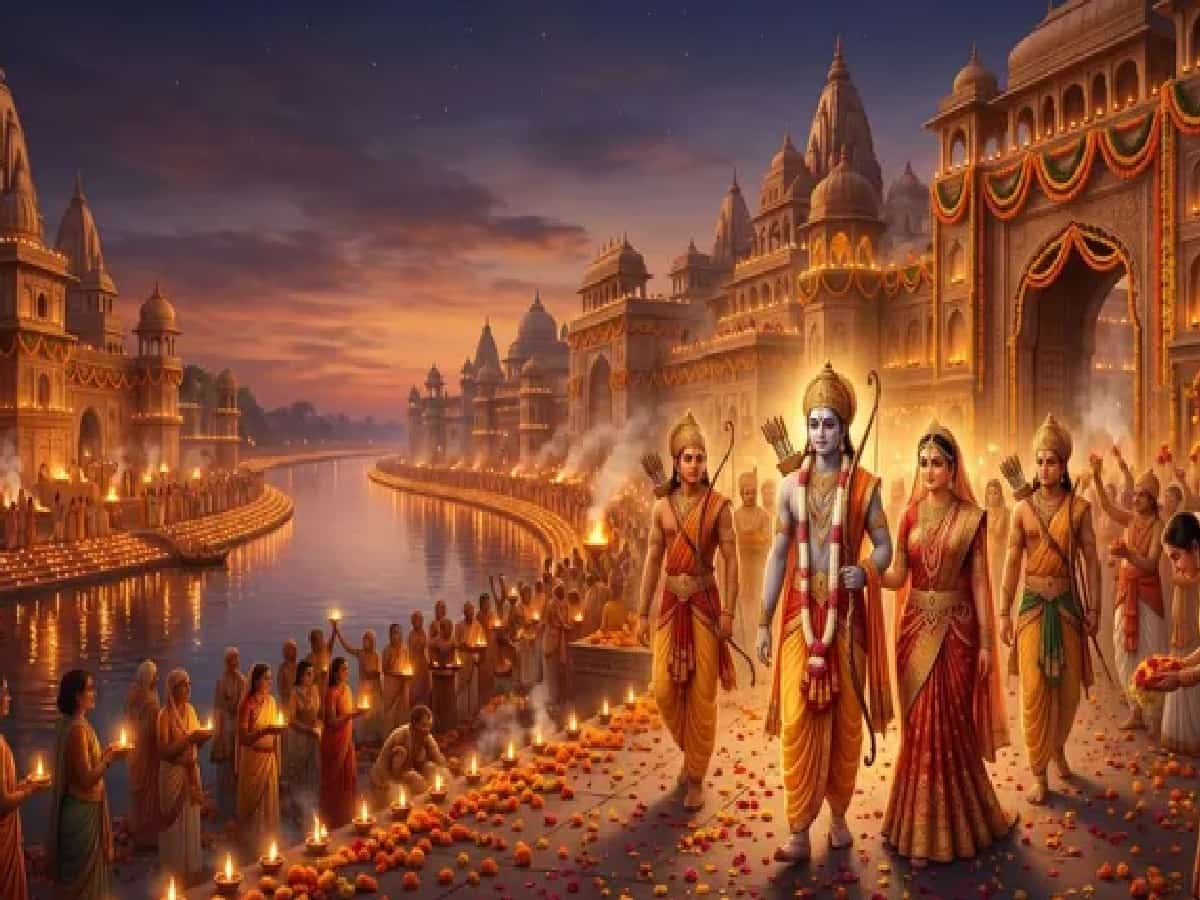
The radiant festival of Diwali remains indelibly etched in the collective consciousness of millions as the triumphant homecoming of Lord Rama, Goddess Sita, and Lakshmana to Ayodhya after 14 grueling years of forest exile and the decimation of the demon king Ravana. According to age-old cultural traditions passed down across generations, the citizens of Ayodhya illuminated the entire capital with rows of earthen oil lamps (diyas) to dispel the pitch-black darkness of Kartik Amavasya and celebrate the return of their rightful king. As Bharata joyfully handed back royal custodianship at Nandigram after governing the realm through Rama’s sacred wooden sandals (charan padukas), the triumphant coronation of Shri Ram heralded an era of righteousness (Ramrajya), turning this historic homecoming into an eternal pan-Indian symbol of the ultimate victory of Dharma over Adharma.
Valmiki Ramayana vs Popular Lore: What Ancient Sanskrit Verses Truly Record
A meticulous reading of classical Sanskrit literature reveals an intriguing distinction between regional oral folklore and foundational epic literature. In Maharishi Valmiki’s original Valmiki Ramayana, the narrative details how Lord Rama, Sita, Lakshmana, Sugriva, and Vibhishana arrived near Ayodhya aboard the celestial Pushpaka Vimana, where the entire citizenry poured into Nandigram to witness the emotional reunion of the brothers. However, scholars note that the epic text does not explicitly mention the word "Diwali" or record a formal celebration termed "Deepavali" featuring rows of lamps; instead, Valmiki describes Ayodhya being adorned with vibrant decorative banners, aromatic garlands, festive festoons, and sacred incense smoke to welcome their monarch. The widespread custom of lighting earthen lamps on this precise night evolved into a pervasive cultural practice across North India, naturally converging with the narrative of Rama’s return to give visible, luminous expression to the city’s uncontainable joy.
Puranic Canonization: How Padma Purana and Skanda Purana Established the Festival of Lights
The formal scriptural codification of Diwali as an expansive multi-day festival of illumination is found extensively in later canonical texts, most notably the Padma Purana and the Skanda Purana. These sacred Puranic scriptures dedicate dedicated chapters to the spiritual merits of observing the festival of light (Deepotsava) on the dark night of Kartik Amavasya, prescribing the worship of Goddess Lakshmi, the ritual offering of lamps (deepa daan), and the symbolic eradication of ignorance. Over centuries, these scriptural guidelines seamlessly merged with the beloved epic history of Lord Rama’s coronation, transforming Ayodhya’s ancient royal celebration into India’s paramount spiritual festival that unites Vedic philosophy, agrarian harvest cycles, and timeless cultural heritage.




