







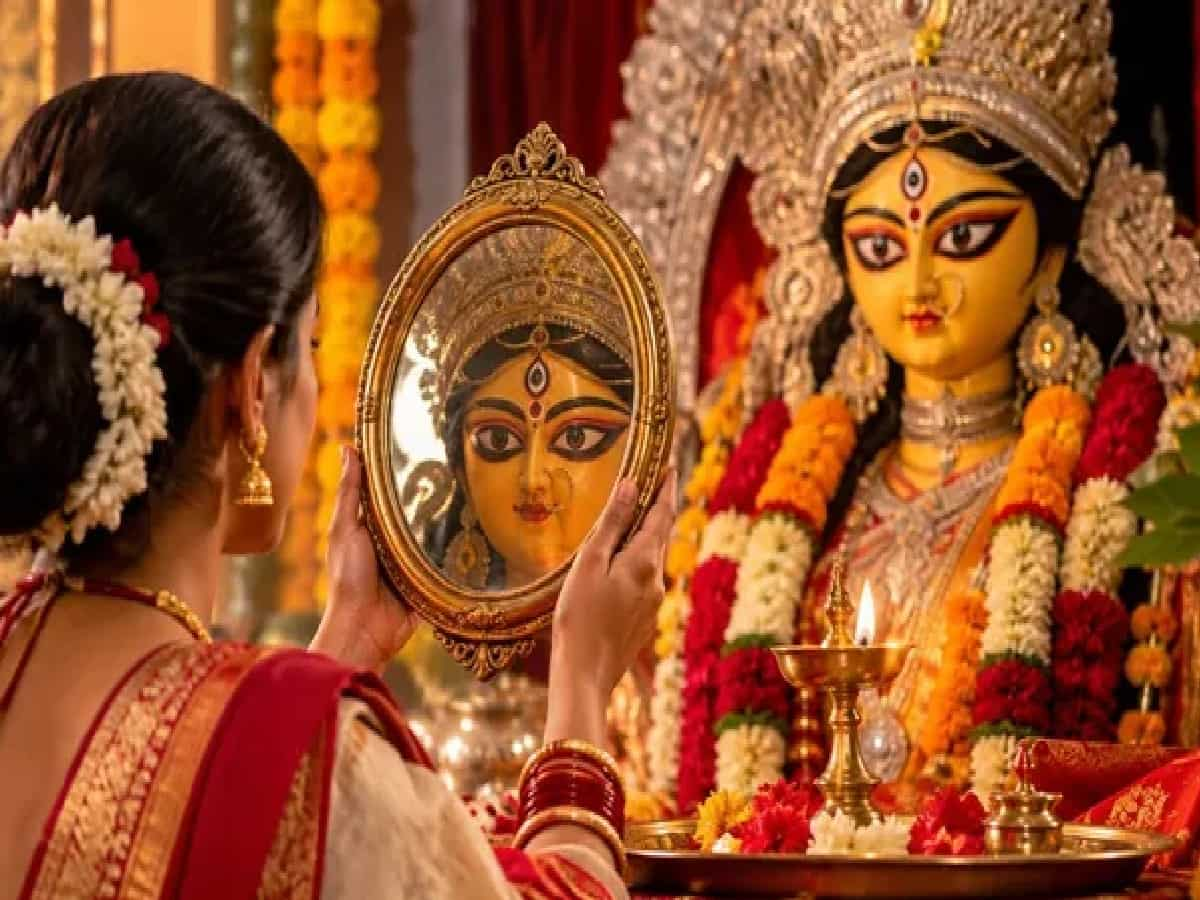
Maa Durga’s Reflection in Mirror Precedes Vijayadashami Immersion
As the autumnal festivities of Sharadotsav culminate on Vijayadashami, an air of deep emotional devotion envelops Durga Puja pandals across Bengal and global diaspora communities during the sacred rite of Darpan Visarjan (mirror immersion). While the colorful and spirited Sindoor Khela marks the celebratory social farewell by married women, the solemn liturgical protocol governing the deity's departure is conducted through a ceremonial brass or silver mirror placed before the sanctum. According to Vedic and Tantric traditions codified in classical puja manuals, the immersion of the clay idol (pratima) cannot proceed until the divine consciousness (prana-pratishtha) infused into the murti on Mahashashthi is reverently withdrawn. By angling a mirror toward the feet of Goddess Durga and submerging its reflection into a vessel of consecrated water, priests execute the metaphysical transition that formally concludes her annual five-day earthly homecoming.
The Philosophy Behind Darpan Visarjan: Immortal Spirit Versus Mortal Clay
The philosophical core of mirror immersion lies in the eternal Hindu distinction between the mortal physical form and the indestructible divine soul. Vedic scriptures explain that God cannot be confined permanently to perishable materials like clay, straw, and organic pigments; rather, the sculpted idol functions as an earthly anchor (adhara) to facilitate human worship and communion. During Darpan Visarjan, the priest holds a mirror so that it reflects the lotus feet of the Ten-Armed Goddess and places a bowl of water—representing the primordial cosmic ocean—beneath it to capture that mirror reflection. Devotees then gaze into the water or onto the mirror surface to catch a glimpse of the Divine Mother’s feet, seeking her blessings for peace, prosperity, and spiritual liberation. This act signifies that while the physical clay body is destined to dissolve back into the elements during river immersion, the divine energy remains eternally alive, indivisible, and forever anchored within the hearts and spiritual aura of the faithful.
Bidding Farewell to Kailash: The Emotional Resonance of the Mirror Ritual
Beyond its metaphysical rigor, Darpan Visarjan carries deep emotional significance within Bengali culture, embodying the bittersweet farewell to a beloved daughter returning to her husband’s home on Mount Kailash. Folk mythology regards Goddess Durga’s annual visit as that of Uma, the daughter of the Himalayas, visiting her maternal home alongside her children—Ganesha, Kartikeya, Lakshmi, and Saraswati—for four brief days. Watching her face recede through the glass mirror evokes the universal ache of bidding adieu to a departing child, heightening the emotional atmosphere of the pandal before the final river procession begins. The ritual leaves worshippers with a powerful spiritual assurance: even though the external idol departs the temple floor, the spiritual grace and protective shield invoked during the festivities remain alive within the household, initiating a devoted year-long wait for her promised return in the next festive cycle.




