







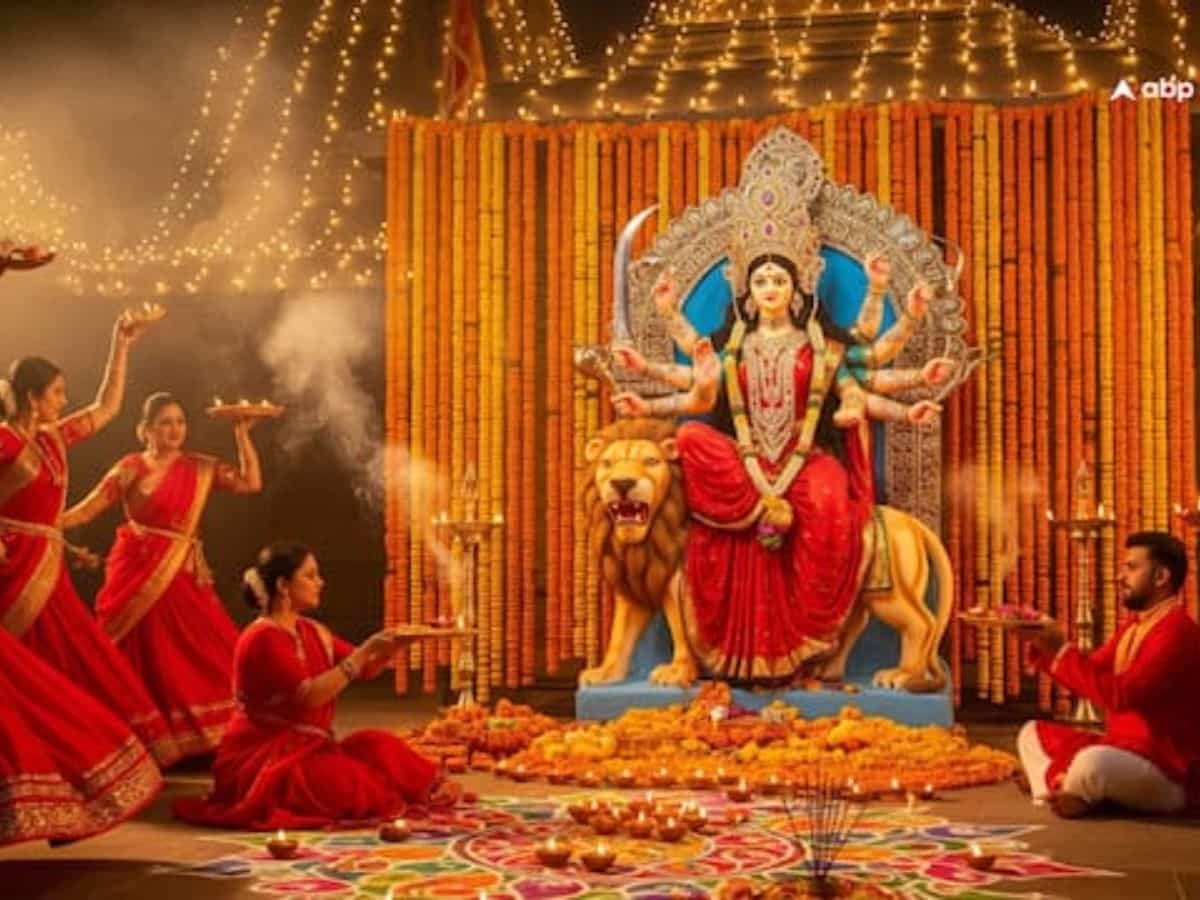
Maa Durga Arrives on Elephant, Departs on Rooster: What Navratri 2026 Omens Mean
The sacred festival of Sharadiya Navratri 2026 is underway in full spiritual grandeur, with devotees marking the second day on Monday, October 12, dedicated to the worship and meditation of Goddess Brahmacharini. While millions observe rigorous fasts across the nine-day observance to seek the divine blessings of Goddess Bhagwati, Vedic astrologers and scriptural scholars are closely analyzing a rare and striking dichotomy in the cosmic signs governing this year’s festival. According to ancient Hindu scriptural traditions, the celestial conveyances—or vahanas—chosen by the Goddess for her annual descent to Earth and subsequent departure hold profound prophetic significance, signaling geopolitical events, climatic patterns, and public welfare for the months ahead. This year, while the Mother Goddess arrived riding a majestic elephant to bestow boundless prosperity, her scheduled departure on a rooster on Vijayadashami has sparked widespread astrological deliberation.
Decoding Maa Durga’s Arrival on an Elephant: Rainfall, Agriculture, and Economic Stability
The vehicle of Goddess Durga's earthly arrival is determined strictly by the weekday of Pratipada Tithi, the inaugural day of Navratri. With Sharadiya Navratri commencing on Sunday, October 11, 2026, classical astrological texts dictate that an arrival on either a Sunday or a Monday manifests on an elephant (Gaja). In Indian cultural and spiritual iconography, the elephant is revered as an enduring emblem of inner strength, deep devotion, unshakable stability, sovereign majesty, and material prosperity. From an agrarian and socio-economic standpoint, the arrival of the Goddess on an elephant is considered extraordinarily auspicious, traditionally forecasting timely monsoon showers, overflowing water reservoirs, bumper agricultural yields, and thriving national harvests that bring widespread relief and economic stability to households.
The Vijayadashami Warning: Why a Tuesday Departure on a Rooster Signals Looming Challenges
In stark contrast to her prosperous entry, the planetary configuration governing the Goddess's departure has raised notable concerns among astrologers. The exit conveyance is calculated based on the weekday of Vijayadashami, or Dussehra, which falls on Tuesday, October 20, 2026. Scriptural doctrine establishes that when the Goddess departs on a Tuesday or a Saturday, her vehicle is a rooster (Charanayudha). In Vedic omens, the rooster is associated with discord, heightened anxieties, social friction, and governance challenges. Classical astrological treatises warn that a departure on this vehicle often foreshadows internal strife, heightened geopolitical tensions, emotional distress, and societal instability across communities.
The Astrological Scriptural Matrix: Weekly Guide to Arrival and Departure Vahanas
The foundational principles dictating the divine vehicles are rooted in centuries-old Sanskrit verses, particularly the celebrated prognostic stanza:
Shashisuryadine yadi sa vijaya mahishagamaneru shokakara.
Yadi Shanibhaumadine sa vijaya charanayudhayankari vikala.
Budhe cha Bhrigau yadi sa vijaya gajavahanaga shubhadavrishtikara.
Surarajagurau yadi sa vijaya naravahanaga shubhasaukhyakara.
This sacred scriptural matrix establishes clear benchmarks for both entry and exit:
-
Arrival Vehicles by Day: Sunday marks an arrival on an Elephant (Prosperity), Monday on an Elephant (Prosperity), Tuesday on a Horse (Political instability and war), Wednesday on a Boat (Fulfillment of wishes and safety), Thursday on a Palanquin (Epidemics and distress), Friday on a Palanquin/Doli (Widespread changes), and Saturday on a Horse (Social upheavals).
-
Departure Vehicles by Day: Sunday and Monday departures take place on a Buffalo (Mahisha), signifying grief, ailments, and public sorrow. Tuesday and Saturday departures occur on a Rooster (Charanayudha), heralding restlessness, conflict, and widespread challenges. Wednesday and Friday departures occur on an Elephant (Gaja), ensuring timely rains and contentment, while a Thursday departure occurs on a Human (Nara Vahana), bringing joy, harmony, and all-around happiness.
While the contrasting vehicles for 2026 suggest a volatile environment marked by initial prosperity followed by social and geopolitical friction, spiritual preceptors emphasize that sincere devotion, collective prayers, and mindful living during the sacred nine nights serve as a powerful cosmic shield against unforeseen adversities.




