







Lord Kubera’s Teaches About Becoming Rich: Wealth Rules of Dhanteras 2026
Beyond buying gold on Dhanteras this Friday, November 6, 2026, worshipping Lord Kubera unlocks masterclasses in modern money management—from emergency wealth accumulation symbolized by his protruding belly to risk management via his mace and portfolio diversification across the Ashta Nidhis.
As households across India prepare to celebrate the auspicious festival of Dhanteras on Friday, November 6, 2026, bustling marketplaces are witnessing the customary rush for gold bullion, silver coins, brass utensils, and new household appliances. While devotees routinely invoke the joint blessings of Goddess Lakshmi, the deity of fortune, and Lord Kubera, the celestial treasurer of the cosmos, ancient Sanatan iconography conceals sophisticated personal finance principles behind Kubera’s distinct physical appearance. Beyond ritualistic offerings, the classical depiction of the Lord of Wealth functions as an enduring masterclass in behavioral economics, illustrating how discipline, patient accumulation, asset protection, and emotional restraint form the true foundation of long-term financial independence.
Accumulation, Compounding, and Stealth Wealth: Decoding Kubera’s Stature and Belly
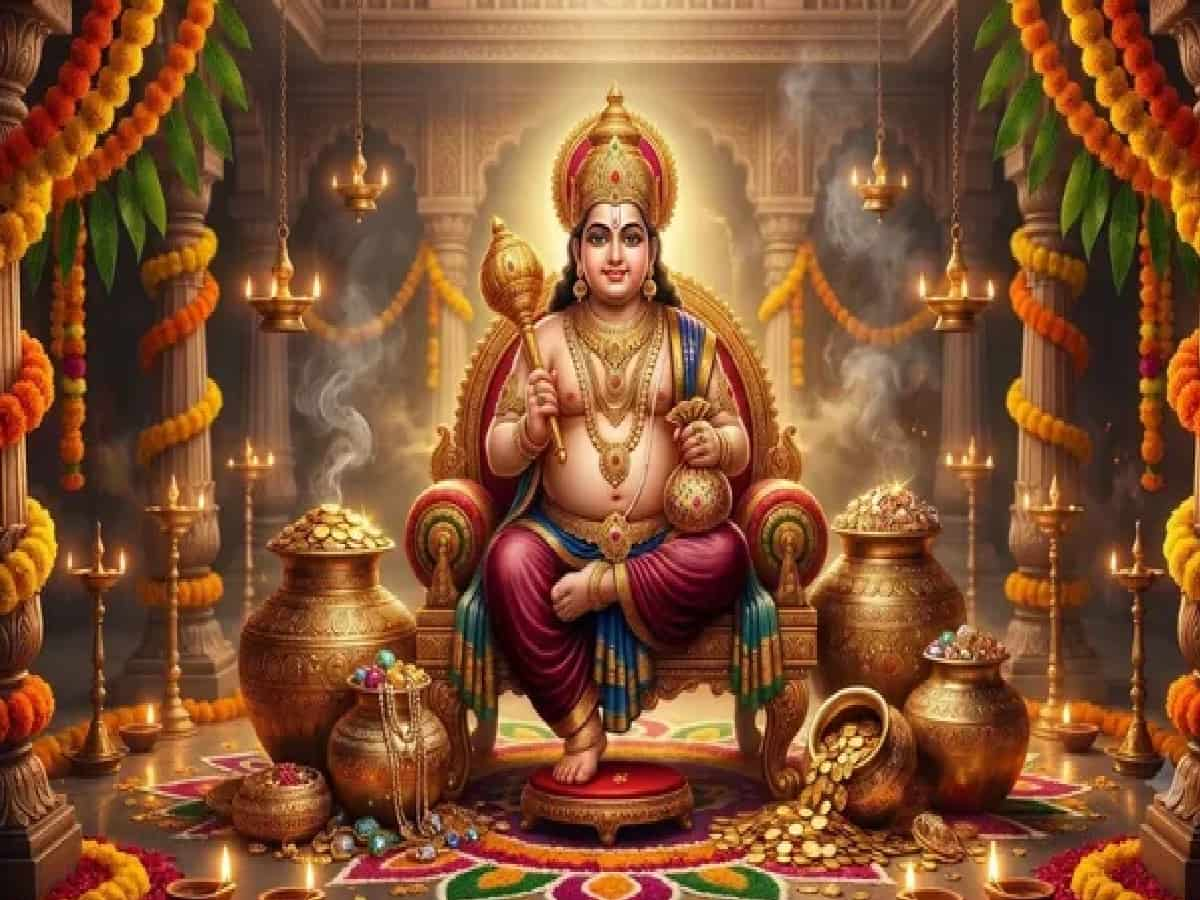
The prominent, protruding belly (Tundil) characteristic of Lord Kubera’s traditional idol is far from a mere artistic detail; it serves as a potent metaphor for economic capacity, the retention of surplus capital, and psychological contentment. In financial management, earning a high income is meaningless without the capacity to absorb and retain capital, and Kubera’s belly symbolizes an individual's ability to patiently accumulate savings, maintain deep emergency reserves, and harness the mathematical power of compound interest. A well-capitalized financial foundation ensures that household balance sheets remain insulated against unexpected macroeconomic crises or medical emergencies. Furthermore, despite governing universal riches, Kubera is iconographically depicted with a modest, unpretentious physical stature. This juxtaposition provides a powerful lesson in building "stealth wealth"—the discipline of letting net worth compound quietly in the background without succumbing to lifestyle inflation, conspicuous consumption, or the urge to project ostentatious affluence to society.
The Protective Mace and Ashta Nidhis: Risk Management and Multi-Asset Diversification
In addition to wealth retention, Kubera’s sacred attributes provide a clear blueprint for portfolio defense and strategic allocation. The heavy mace (gada) clutched in the deity’s hand serves as a spiritual reminder that generating wealth is only half the battle; the harder discipline lies in defensive capital preservation. In practical investment terms, the mace represents rigorous risk mitigation, hedging against downside volatility, maintaining adequate life and health coverage, and preventing capital erosion from predatory schemes or unchecked speculative risks. Moreover, scriptural tradition associates Lord Kubera not with gold alone, but with the guardianship of the Ashta Nidhis (Eight Divine Treasures), symbolizing comprehensive asset diversification. Rather than concentrating liquidity in a single speculative basket, modern investors can reflect Kubera’s stewardship by spreading capital across diverse asset classes—such as physical bullion, real estate, productive equities, and fixed-income debt instruments—to engineer durable, multi-generational wealth channels. When integrated with the fluid cash-flow dynamics and ethical abundance represented by Goddess Lakshmi, meditating upon Kubera’s sacred symbols transforms Dhanteras from a day of festive spending into a lifelong blueprint for financial wisdom.




