Krishna Janmashtami 2026: Step-by-Step Guide on How to Beautifully Adorn Laddu Gopal
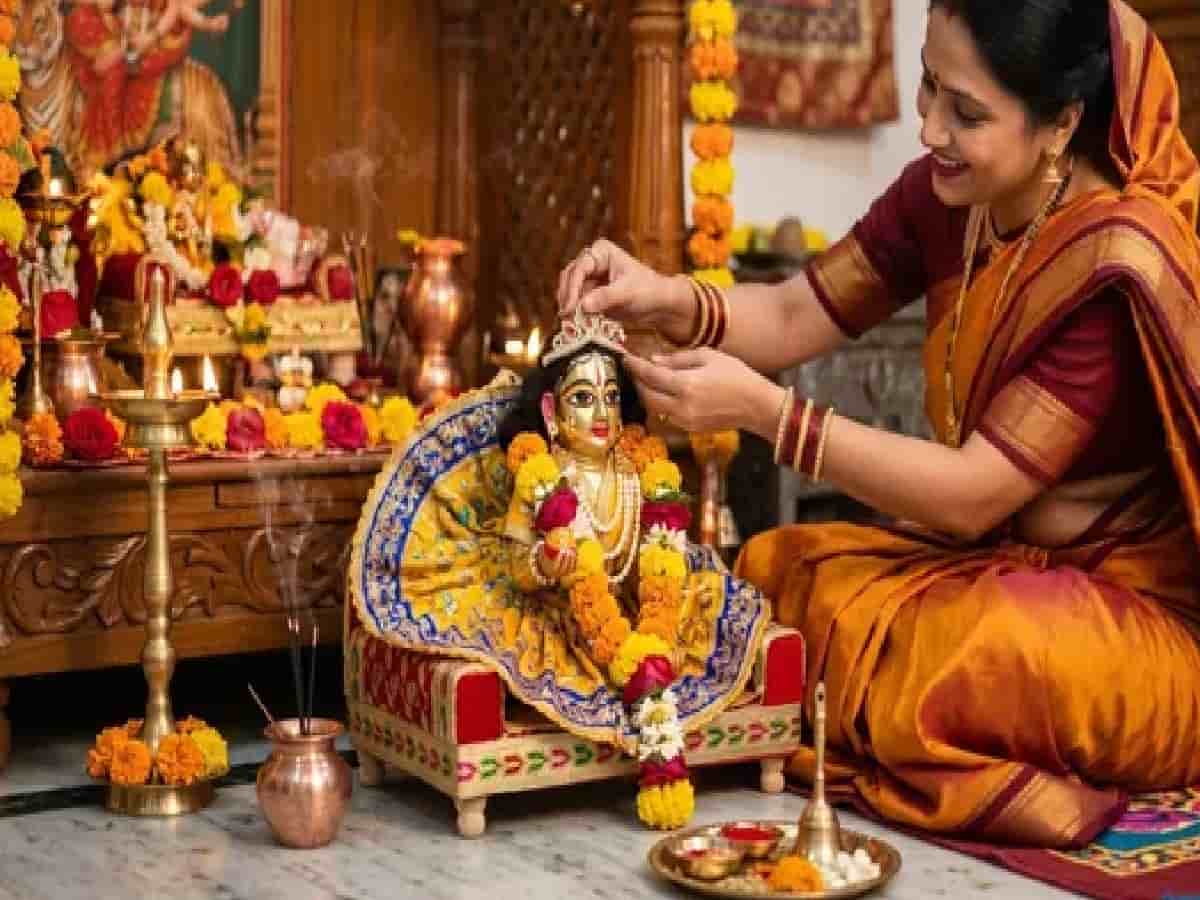
The joyous festival of Krishna Janmashtami, marking the sacred birth anniversary of Lord Krishna, fills homes and temples with divine devotion, festive chants, and sweet celebrations. A central and deeply cherished ritual of this auspicious day is the elaborate adornment (shringar) of Laddu Gopal—the endearing child form of the Lord. Devotees lovingly groom and dress their beloved Kanha like a royal infant, offering fresh garments, shimmering jewelry, crowns, and his signature instruments of grace. Dressing Laddu Gopal with meticulous love and devotion invites divine energy and prosperity into the household.
Dressing Laddu Gopal in Auspicious Yellow Attire
The choice of clothing sets the foundation for Laddu Gopal’s festive look. While Lord Krishna can be dressed in various vibrant colors, yellow holds special significance as it is believed to be his absolute favorite hue. On Janmashtami, dressing Bal Gopal in a gorgeous yellow, golden, or cream-colored outfit adorned with traditional zari work or delicate embroidery is considered highly auspicious. Selecting clothes that fit the exact size of the idol ensures that the child form looks comfortable, radiant, and regal.
The Indispensable Crown and Peacock Feather (Mor Pankh)
No adornment of Laddu Gopal is complete without a crown (mukut). For Janmashtami, devotees can choose a small, exquisitely crafted crown embellished with shining pearls, kundan stones, or fresh flower petals.
Crucially, the crown must feature a peacock feather (mor pankh). The peacock feather is universally synonymous with Lord Krishna’s divine identity, originating from timeless legends of the Vrindavan forests. Tucking a vibrant peacock feather into his crown instantly completes his enchanting and captivating appearance.
Adorning Kanha with Delicate Jewellery and Ornaments
To enhance the royal child look, Bal Gopal can be decorated with lightweight, miniature ornaments. Thoughtfully chosen pieces such as tiny necklaces, earrings, bracelets, armlets (bazuband), and waistbands (tageti) add immense charm.
Dainty little anklets (payal) tied around his feet produce a soft, imagined musical tinkling that brings his playful infant form to life. Care should always be taken to choose ornaments that match the color scheme of his outfit and comfortably fit the idol without causing any friction.
The Sacred Addition of Tulsi or Vaijayanti Garlands
The worship of Lord Krishna is incomplete without the inclusion of Tulsi. When finishing the adornment, placing a fresh Tulsi garland (Tulsi Mala) or a traditional Vaijayanti garland around Laddu Gopal’s neck is essential. Sacred scriptures note that Lord Krishna is deeply pleased by offerings of Tulsi, making its presence in his daily worship and festival shringar mandatory for divine grace.
Applying Sandalwood Tilak, Flute, and Fragrant Perfume
The final touches of the shringar bring out the divine glow of the deity:
-
The Auspicious Tilak: Apply a cooling tilak on Laddu Gopal’s forehead using pure sandalwood (chandan), saffron (kesar), or ashtagandha, accompanied by a tiny grain of unbroken rice (akshat).
-
The Divine Flute: Lord Krishna is eternally incomplete without his music. Place a small, decorated flute in his hands, tucked near his arm or waist, to symbolize his playful pastoral leelas.
-
Mild Fragrance: Complete the ritual by offering a touch of mild, natural-scented perfume (attar), keeping applications light and pure to maintain the sanctity of the idol.