







Kanya Pujan 2026: Auspicious Gifts, Bhog Menu, and Exact Ashtami-Navami Timings
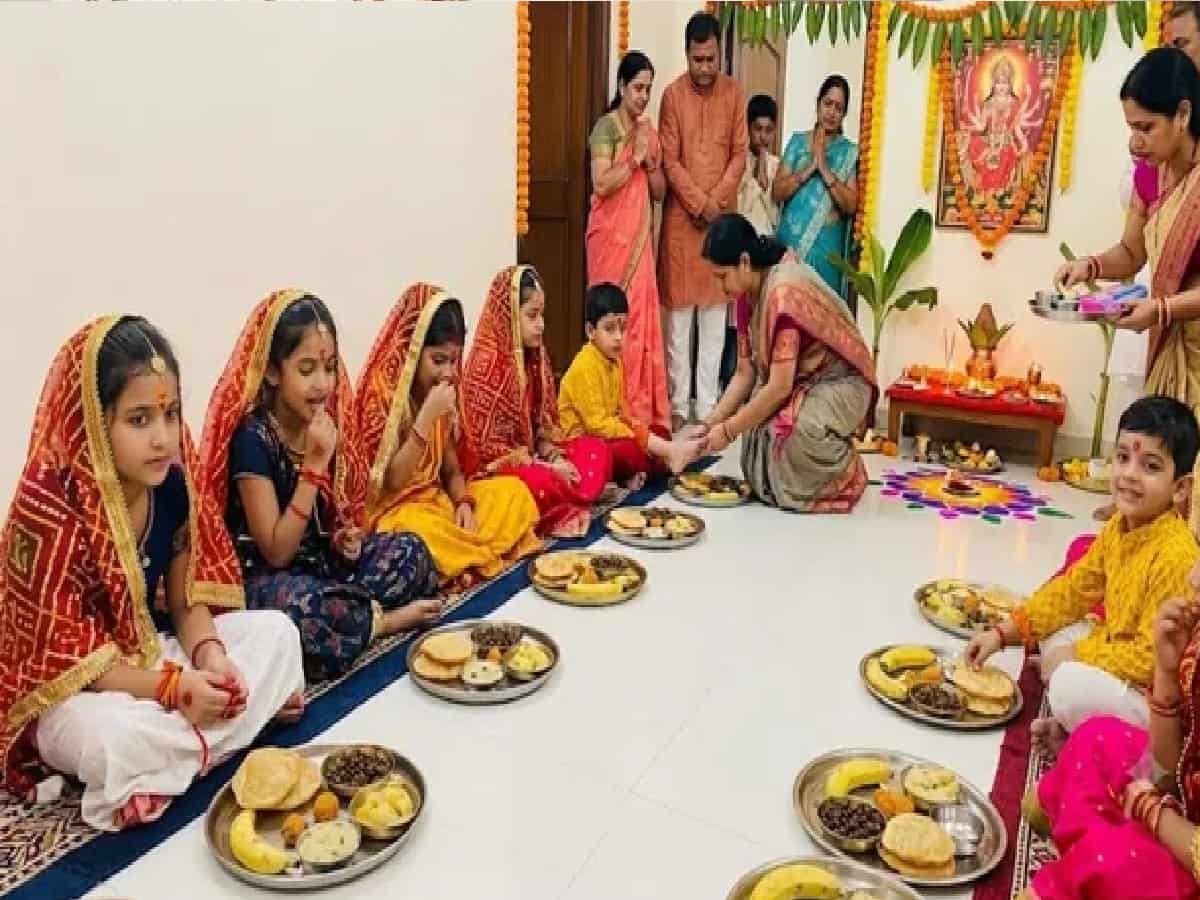
As the sacred nine-day festival of Sharadiya Navratri reaches its spiritual zenith, millions of households across India are preparing to observe the auspicious rites of Kanya Pujan on Maha Ashtami and Maha Navami. Regarded as one of the most revered traditions in Sanatana Dharma, Kanya Pujan involves welcoming young girls into sanctified households and worshipping them as living embodiments of Goddess Durga's divine energy. According to Vedic scriptures, feeding and honoring these young maidens is essential to successfully completing the nine-day Navratri fast, channeling prosperity, domestic harmony, and divine protection into the family home. Beyond simply serving a festive meal, the tradition calls for specific ceremonial courtesies, deliberate gift selections, and strict adherence to scriptural timings to ensure the young guests depart with joy and bestow their heartfelt spiritual blessings.
Auspicious Gifts and Dakshina: From Saraswati-Blessed Stationery to Sacred Red Chunaris
Selecting the right offerings for Kanya Pujan plays a vital role in demonstrating devotion and invoking specific planetary and divine graces. Astrological and ritual traditions recommend presenting each young girl with a vibrant red scarf (chunari), symbolizing the protective aura of the Mother Goddess, alongside traditional auspicious adornments (shringar) like red bangles or bindis. Offering small, durable stainless steel utensils—such as glasses, bowls, or plates—is considered equally favorable, as clean metals represent lasting household abundance. To invoke the intellectual blessings of Goddess Saraswati, devotees are increasingly gifting practical educational materials, including pens, pencil boxes, sketchbooks, and watercolor kits, fostering the children's learning and creativity. Crucially, no Kanya Pujan is complete without offering monetary tokens (dakshina) placed reverently in their hands before departure, symbolizing unconditional gratitude and ensuring that the ritual closes on an auspicious note of mutual joy.
Sacred Bhog Menu and Protocol: Honoring the Navadurgas and Batuk Bhairav
The preparation of the consecrated feast (bhog) adheres to precise culinary guidelines designed to provide pure, sattvic nourishment. Devotees traditionally cook a classic celebratory menu featuring rich semolina (sooji) or whole wheat halwa prepared in pure desi ghee, freshly fried puris, and dry-spiced black gram curry (sukha kala chana). Families can enrich the sacred spread by serving slow-cooked rice kheer, seasonal whole fruits like apples and bananas, and milk-based sweets to delight the children. Liturgical norms specify that the ideal assembly consists of nine young girls—each representing one of the nine manifestations of Goddess Durga (Navadurgas)—accompanied by one young boy who represents Batuk Bhairav, the fierce guardian deity whose presence is mandatory to complete and protect the spiritual sanctity of Devi rituals.
Exact Shubh Muhurat and Tithi Timings: Planning Ashtami and Navami Pujan on October 18-19
Timing is paramount when performing Kanya Pujan to ensure the rites align with Vedic lunar transitions. For the year 2026, the Ashtami Tithi of the Shukla Paksha in the month of Ashwin begins on Sunday, October 18, at 08:27 AM and concludes on Monday, October 19, at 10:51 AM. Following the Vedic calendar's Udaya Tithi rule, Maha Ashtami will be formally observed on Sunday, October 18, with Kanya Pujan rituals commencing immediately after the tithi takes effect at 08:27 AM. Subsequently, the Mahanavami Tithi commences on Monday, October 19, at 10:51 AM and remains active until Tuesday, October 20, at 12:50 PM. Consequently, devotees observing Navami vows will perform their Kanya Pujan on Monday, October 19, ensuring that the sacred rites are executed within their corresponding astrological periods.




