







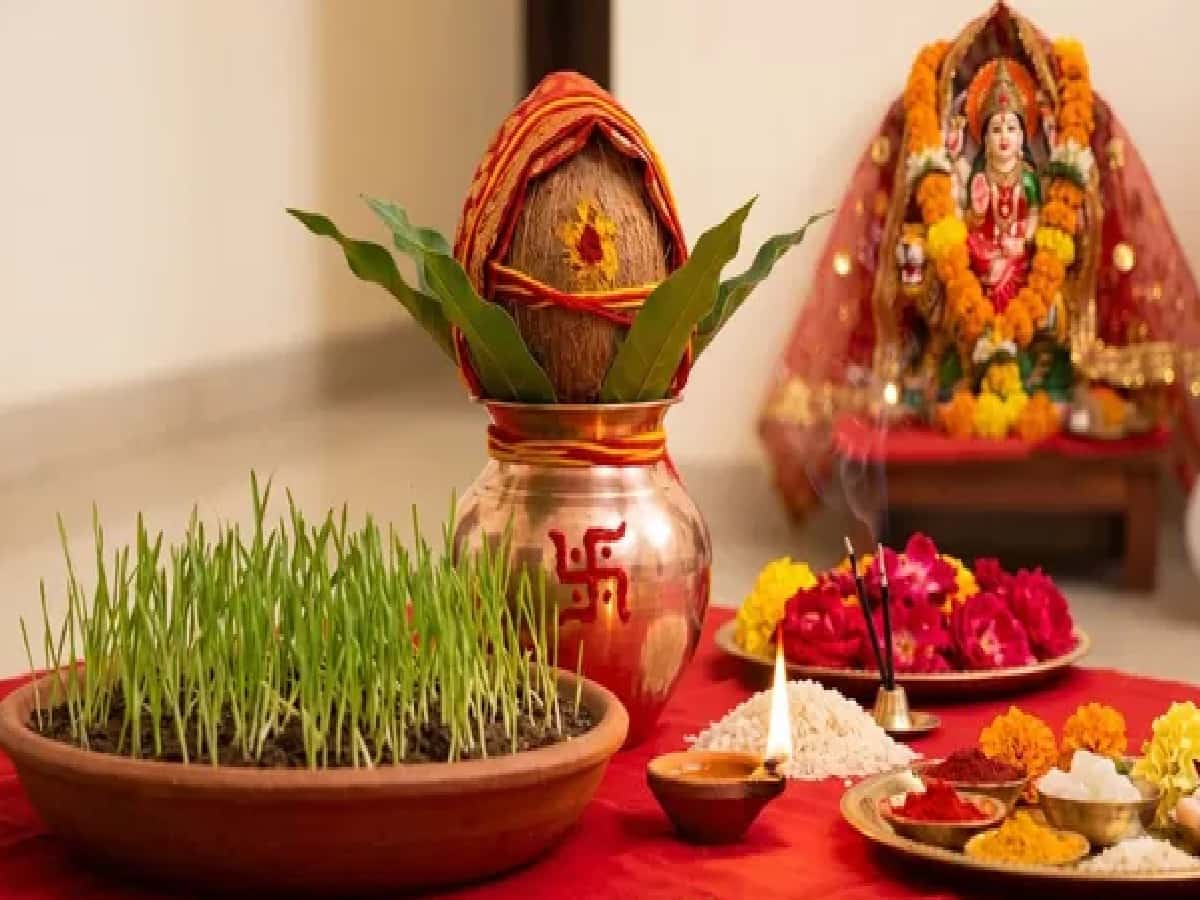
Kalava Tied on the Kalash in Navratri, Secret Behind Ghatasthapana's Sacred Thread
During the sacred nine nights of Sharadiya Navratri, millions of Hindu households initiate their worship through Ghatasthapana, the consecrated ritual of establishing the holy water pot, or Kalash, to invoke the divine presence of Goddess Durga. Consecrated on the inaugural day of the festival alongside the continuous burning of the Akhand Jyoti (eternal flame), the Kalash is far more than a ceremonial metallic or earthen vessel; in Vedic scriptures, it represents the sanctified seat of the supreme deities and a living micro-cosmos embodying the entire universe. While the invocation marks the ceremonial arrival of Goddess Durga into the devotee's domestic space, one non-negotiable ritual that accompanies the setup is binding the sacred crimson-and-yellow cotton thread—known variously as Kalava, Mauli, or Raksha Sutra—around the neck of the pot, a practice holding deep astrological and metaphysical significance that remains widely misunderstood by the broader public.
Navagraha Alignment and Cosmic Purity: Activating the Nine Planetary Energies
The primary spiritual objective of wrapping the Kalava around a copper, brass, or clay Kalash during Ghatasthapana is the preservation of absolute ritual purity and the insulation of the consecrated vessel from environmental impurities and negative astral energies. According to ancient astrological doctrines, the consecrated Kalash becomes the earthly residence of the Navagrahas (the nine celestial planets) for the entire nine-day duration of Navratri. Encircling the vessel with the consecrated cotton thread acts as an energetic conduit, awakening and radiating the benevolent vibrational frequencies of all nine planets across the premises while neutralizing hostile or dissonant energies lingering in the immediate environment. This cosmic alignment purifies the spiritual atmosphere of the home, paving the way for auspicious life events, mental serenity, and domestic prosperity for the family performing the installation.
The Divine Protective Shield: Why Ghatasthapana Remains Incomplete Without Raksha Sutra
In Hindu tradition, just as a Raksha Sutra is tied around an individual’s wrist to confer an impenetrable shield of health and safety against misfortune, wrapping the sacred thread around the Kalash creates an unbroken spiritual barrier that protects the sanctified vessel against adverse external influences. The Kalava functions as a profound symbolic bridge, signifying the eternal, unbroken covenant of devotion and surrender established between the devotee and the Divine Mother. It unifies all five cosmic elements invoked into the vessel and affirms the worshiper's sacred vow to observe the multi-day rites with uncompromising sanctity. Because the vessel absorbs and radiates the direct grace of Goddess Bhagwati throughout the festival, ritual treatises and learned pandits emphasize that establishing a Kalash without tying the Kalava leaves the installation vulnerable and fundamentally incomplete, depriving the worshiper of the complete spiritual fruits of their Navratri penance.




