







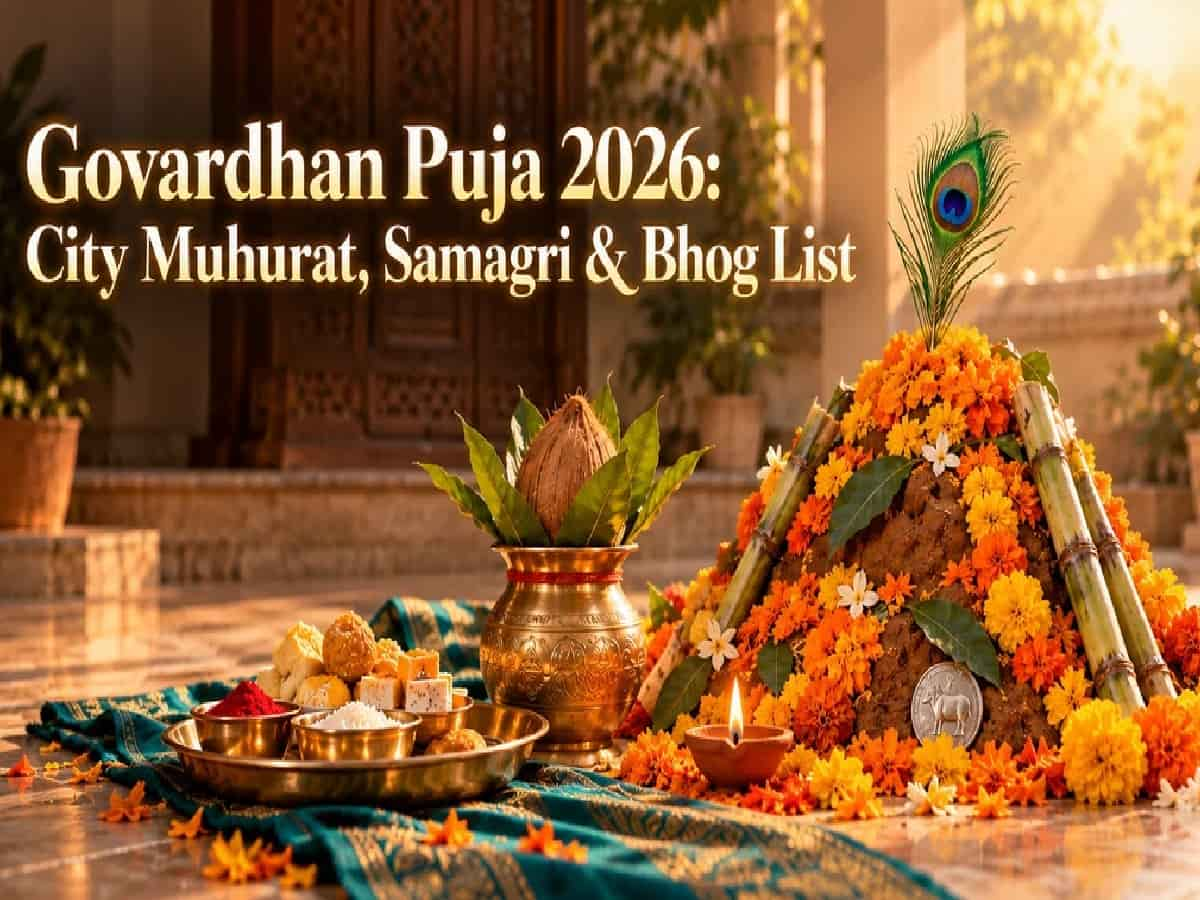
Govardhan Puja 2026 Date Cleared: Celebrate on November 9 or 10
Clearing days of calendar ambiguity among devotees nationwide, Vedic scholars and panchang experts have confirmed that the sacred festival of Govardhan Puja—also celebrated across India as Annakut—will be formally observed on Tuesday, November 10, 2026. Falling annually on the Pratipada Tithi of Shukla Paksha in the month of Kartik right after the Diwali festivities, the festival commemorates the historic episode from the Dwapar Yuga when Lord Krishna lifted the colossal Govardhan Hill on his little finger to shield the inhabitants and cattle of Braj from the wrathful torrential downpours unleashed by Lord Indra. The date dilemma arose due to the tithi spanning two solar days; however, in accordance with the foundational Vedic rule of Udaya Tithi (the prevailing tithi at sunrise), the religious observances, community Annakut feasts, and ritualistic veneration of Mount Govardhan are designated for November 10.
Tithi Breakdown and Exact Muhurat: Why November 10 Holds the Auspicious Window
According to precise astrological calculations from the Hindu Vedic calendar, the auspicious Kartik Shukla Pratipada Tithi commences on Monday, November 9, 2026, at 12:31 PM and remains in effect until Tuesday, November 10, 2026, at 2:00 PM. Because sunrise on November 10 falls within the Pratipada phase, that day retains complete religious sanction for the festivities. The most auspicious morning time window for conducting the Govardhan Puja rituals on November 10 is scheduled between 6:40 AM and 8:50 AM, offering devotees a prime two-hour window for prayers. Additional auspicious intervals through the day include the early morning Brahma Muhurta from 5:00 AM to 5:51 AM, the Vijay Muhurta from 2:06 PM to 2:50 PM, the evening Twilight/Godhuli Muhurta from 5:57 PM to 6:13 PM, and the nocturnal Nishita Muhurta spanning 11:49 PM to 12:41 AM, providing ample sacred alignment for household and temple ceremonies.
Step-by-Step Puja Vidhi: From Cow Dung Parvat and Chhappan Bhog to Gau Mata Seva
The performance of Govardhan Puja follows an ancient agrarian and spiritual protocol that celebrates the natural ecosystem and animal welfare. Devotees construct a symbolic horizontal representation of Govardhan Parvat in their courtyards or altars using fresh, purified cow dung, adorning the formation with vibrant seasonal blooms, marigold garlands, and holy basil leaves. Essential puja samagri includes roli, raw unbroken rice (akshat), sacred Gangajal, a brass kalash, fresh milk, curd, honey, rock sugar candy (mishri), desi ghee lamps, fragrant incense, and coconut. Devotees circumambulate the sculpted Govardhan figure seven times (sapta parikrama), performing devotional aartis while offering Chhappan Bhog—a traditional feast of fifty-six vegetarian delicacies and freshly prepared rice-based kheer. Crucially, the festival emphasizes Gau Seva (veneration of mother cows), prompting families to wash, decorate, and feed cows green fodder and jaggery before reciting prayers to Govardhan Maharaj for familial tranquility, abundant harvests, and seeking forgiveness for any unintended ceremonial omissions.




