







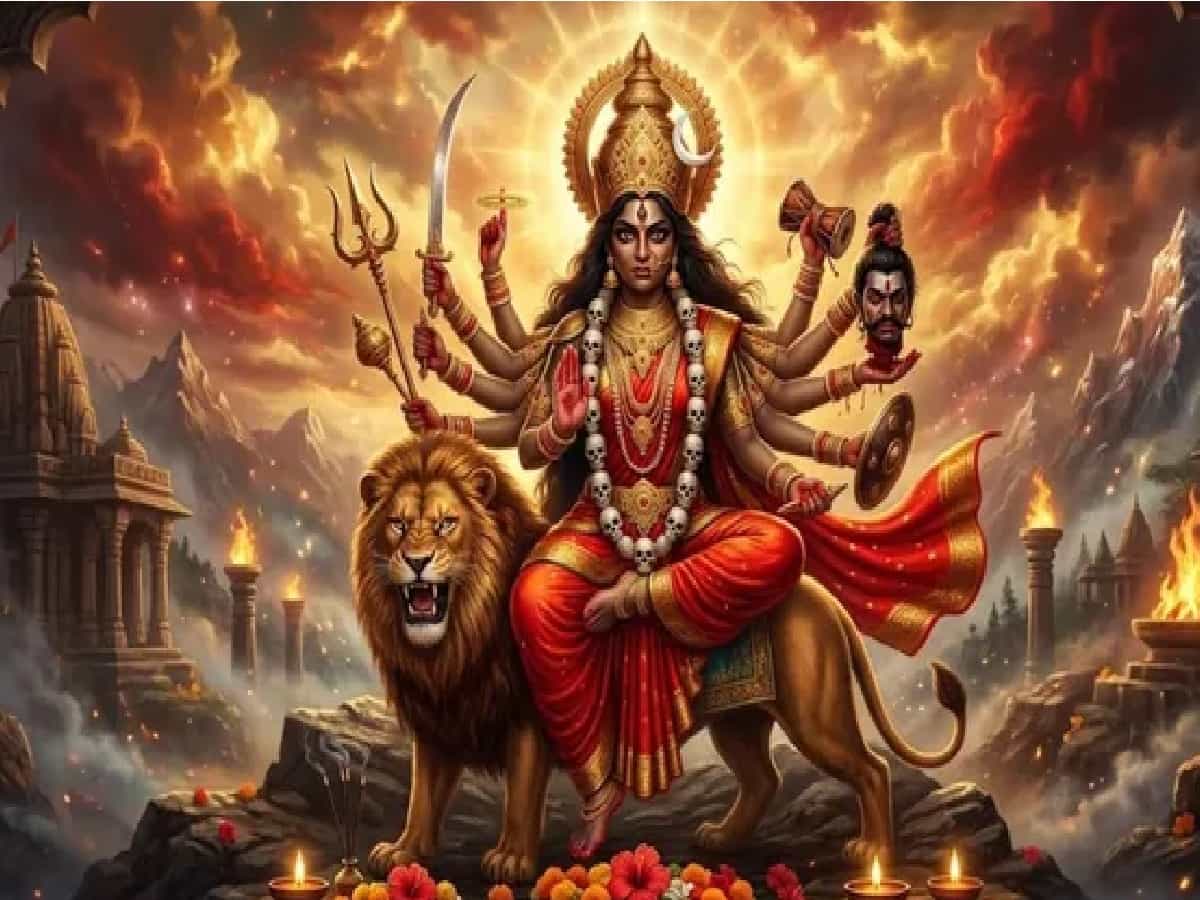
Goddess Durga Manifested as Maa Chamunda to Slay Chanda and Munda
In Hindu theology, the various manifestations of Goddess Durga embody distinct aspects of divine energy, ranging from gentle, maternal grace to ferocious, cosmic retribution against existential evil. Among these sacred forms, Goddess Chamunda stands out as one of the most formidable and revered representations of divine Shakti. Worshipped extensively across Indian states—from the grand pandals of Kolkata to the hill shrines of Himachal Pradesh and the ancient temples of Gujarat—Goddess Chamunda is revered by millions of devotees for incinerating fear, neutralizing malevolent spiritual forces, and dissolving systemic obstacles to household peace and prosperity. Documented elaborately within the classical verses of the Markandeya Purana and the sacred recitations of the Devi Mahatmya (Durga Saptashati), the divine title "Chamunda" carries a definitive mythological origin directly linked to an ancient celestial warfare waged against demonic tyranny.
The Tyranny of Shumbha-Nishumbha: How Deva Prayers Manifested Goddess Kaushiki
The sacred chronicle traces back to an epoch when two arrogant Asura brothers, Shumbha and Nishumbha, unleashed unprecedented havoc across the three realms (Triloka), unseating the deities and usurping control over the celestial heavens (Swarga). Defeated and stripped of their cosmic domains, the distressed Devas sought sanctuary before Lord Vishnu, recounting the relentless atrocities committed by the demon siblings. Acknowledging that the boon protecting the demon kings required divine feminine intervention, Lord Vishnu directed the gods to seek the supreme protection of Goddess Parvati. Responding to the intense penance and devotional hymns of the deities, Goddess Parvati inquired into their distress. As the gods pleaded for liberation from the unbearable oppression, a blinding, radiant goddess emerged directly from the cellular sheath and luminescence of Goddess Parvati’s divine body—manifesting as Goddess Kaushiki, a luminous warrioress destined to spearhead the downfall of the Asura regime.
The Duel of Chanda and Munda: The Birth of Chamunda and the Power of Sandhi Puja
Upon learning of the magnificent and peerless goddess residing in the Himalayas, Shumbha and Nishumbha dispatched their fiercest commanders, the demon generals Chanda and Munda, with strict orders to subjugate and capture her. When the haughty generals marched their massive legions and attempted to use brute force against Goddess Kaushiki, divine outrage surged within her. From the intense furrow of Kaushiki's brow and the concentrated radiant fury of her countenance, there emerged a terrifying, dark-complexioned goddess bearing a crescent moon, brandishing sacred weaponry, and embodying unbridled destruction. In a ferocious engagement, this warrior goddess decimated the demonic armies, ultimately beheading both Chanda and Munda on the battlefield. When she presented the severed heads of the demon generals to Goddess Kaushiki, the supreme Devi proclaimed that because she had vanquished Chanda and Munda, she would forever be venerated across all worlds by the holy name of "Chamunda." This climactic confrontation holds profound liturgical significance in contemporary worship, forming the spiritual centerpiece of the sacred Sandhi Puja during Durga Puja—the critical 48-minute celestial window transitioning between Maha Ashtami and Maha Navami, where devotees invoke Maa Chamunda's unyielding grace to annihilate inner demons and external adversities alike.




