







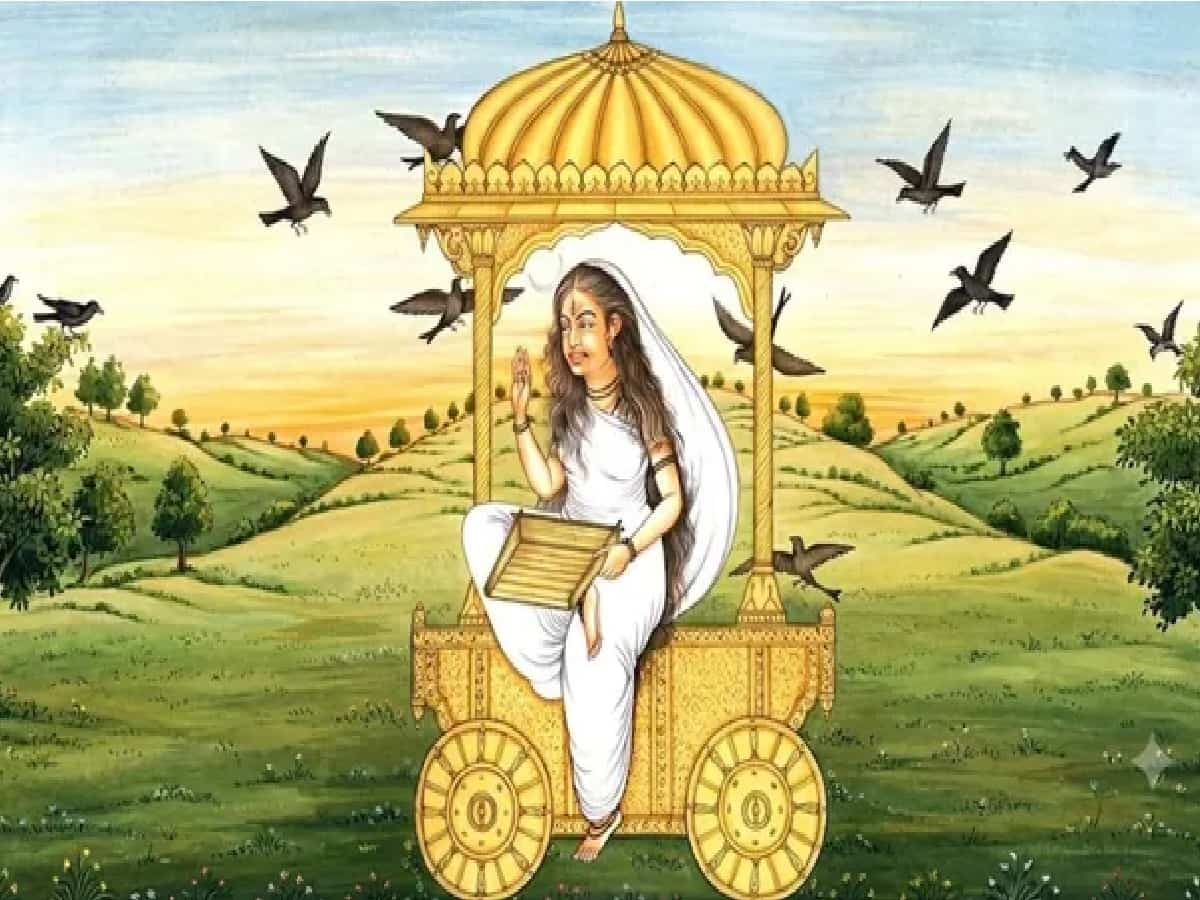
Goddess Alakshmi: The Story of Lakshmi's Sister of Poverty
As the festive radiance of Diwali sweeps across millions of households in India and around the globe, families immerse themselves in an ancient annual ritual of meticulous house cleaning, dusting forgotten corners, painting weathered walls, and adorning entryways with vibrant floral torans and radiant clay lamps. From bustling metropolises to quiet rural hamlets, the universal objective of this thorough seasonal overhaul is to prepare a pure, immaculate dwelling worthy of receiving Goddess Lakshmi, the divine arbiter of wealth, auspiciousness, and domestic serenity. Yet, concealed behind the dazzling gleam of brass diyas and the fragrant aroma of festive delicacies lies an enigmatic Puranic legend that few modern celebrants pause to examine. Scriptural lore reveals that Goddess Lakshmi has an elder sibling named Alakshmi, revered as the presiding deity of misfortune, destitution, sorrow, and bitter domestic discord. While Diwali worship centers enthusiastically on inviting Lakshmi across the threshold, the very act of banishing dirt, darkness, and household chaos is an ancient spiritual safeguard designed to ensure that her formidable elder sister finds no place to dwell.
Born of the Cosmic Ocean: The Churning of Samudra Manthan
The origin of Alakshmi is intimately bound to one of the most foundational events in Hindu cosmology: the great Samudra Manthan, or the churning of the primordial Milk Ocean (Kshira Sagara). According to ancient Puranic texts, including the Padma Purana and the Linga Purana, the Devas (celestial beings) and the Asuras (demonic forces) joined hands to churn the cosmic waters using Mount Mandara as the churning rod and the serpent king Vasuki as the rope, seeking to extract Amrita, the nectar of immortality. Before the ocean yielded its most precious treasures, it brought forth primal manifestations representing the polar forces of existence.
Long before the celestial cow Kamadhenu, the divine horse Uchchaihshravas, or Goddess Lakshmi herself appeared, the churning ocean brought forth an imposing, somber female entity. Characterized in the scriptures by her disheveled locks, sunken eyes, withered frame, and dark, brooding demeanor, she was Alakshmi, the embodiment of unmanifested decay and spiritual gloom. Moments later, from the frothing waves emerged the breathtaking, lotus-seated Goddess Lakshmi, resplendent in gold, draped in crimson, and radiating grace and beauty. Because Alakshmi surfaced prior to Lakshmi during the churning process, the sacred texts acknowledge her as Jyeshtha—the elder sister. This mythical sequence illustrates that in the cycle of creation, scarcity, hardship, and chaos naturally precede order, abundance, and illumination.
Contrasting Sisters: The Polar Opposites of Fortune and Strife
In Sanatan Dharma’s rich symbolic framework, Goddess Lakshmi and Goddess Alakshmi represent two irreconcilable states of physical environment, psychological orientation, and moral behavior. Goddess Lakshmi thrives in environments defined by Satva—spaces characterized by cleanliness, hygiene, tranquility, mutual respect, ethical commerce, and earnest spiritual devotion. Where words of kindness are spoken, where debts are honored, and where food is shared with humility, the presence of Lakshmi settles naturally, bestowing sustainable prosperity (Shri) upon the household.
In direct and stark contrast, Alakshmi is drawn to environments steeped in Tamas—the gravitational pull of inertia, decay, and confusion. Scriptural verses warn that Alakshmi does not require an invitation; she enters unannounced wherever there is physical uncleanness, unchecked laziness, foul language, deceit, and persistent domestic fighting. Broken glassware, rusted metal junk, cluttered storage spaces, stagnant water, and unwashed utensils left overnight in the kitchen serve as welcoming invitations for her heavy presence. When Alakshmi settles into a dwelling, traditional belief holds that despite substantial financial earnings, the household experiences relentless financial leakage through medical emergencies, speculative losses, and acrimonious family legal disputes.
The Secret of Nimbu-Mirchi: Why Sour Offerings Protect the Threshold
The eternal coexistence of these two divine sisters provides the theological explanation for one of India's most ubiquitous street sights: the hanging of seven green chilies and a single fresh lemon (nimbu-mirchi) above the main doorways of shops, offices, and homes. While contemporary observers often dismiss the talisman as mere superstition, its origins lie rooted in the specific culinary and energetic preferences of the two goddesses.
Puranic folklore notes that while Goddess Lakshmi has an affinity for sweets, milk, ghee-laden laddoos, and fragrant fruits, her elder sister Alakshmi relishes sour, pungent, bitter, and spicy foods. Knowing that Alakshmi wanders during twilight hours searching for entry into mortal homes, ancient householders devised a clever hospitable boundary. By hanging lemons and chilies on the exterior threshold, they offer Alakshmi her favored sustenance before she ever steps inside. Finding her cravings satisfied at the doorway, Alakshmi consumes the pungent offering and departs without crossing into the living quarters, leaving the inner sanctum clean, sweet, and welcoming for Goddess Lakshmi to enter unhindered.
The Philosophy of Diwali Cleaning: Dispelling Clutter and Negative Energy
Viewed through this spiritual and psychological lens, the intense pre-Diwali cleaning spree reveals itself as a profound metaphysical defense mechanism. Across Indian households, the festival season begins weeks before Amavasya with the systematic clearing out of accumulating household debris. Discarded electronics, broken clocks, cracked mirrors, chipped crockery, and torn fabrics are systematically thrown away or recycled. In Vedic architecture (Vastu Shastra), stagnant physical clutter is viewed as a physical trap for stagnant emotional energy, breeding mental lethargy, anxiety, and interpersonal friction among family members.
The cleaning ritual extends into the sacred veneration of the broom during Dhanteras and Diwali. Known as Jhadu Pujan, the humble broom is celebrated as the physical instrument of Goddess Lakshmi because it carries the power to sweep away the dust, grime, and physical traces of Alakshmi. By lighting lamps in every shadowed corner of the house—including balconies, storage lofts, and plumbing drains—devotees consciously eliminate the shadows where stagnation festers. The thorough sweeping, washing, and repainting of the domestic perimeter serves as a collective reset, purging accumulated negativity and establishing a clean slate for the incoming year.
Cultivating Peace Within: Preventing Alakshmi’s Dwellings in Modern Life
Beyond physical brooms and lemon-chili charms, the wisdom of the Alakshmi narrative delivers an urgent moral lesson for modern living. Ancient sages emphasized that external cleanliness is entirely meaningless if the internal environment of the home remains contaminated by arrogance, jealousy, deceit, and verbal abuse. A luxurious penthouse adorned with expensive marble and designer furnishings remains vulnerable to Alakshmi’s influence if its occupants live in perpetual discord, exploit the vulnerable, or treat domestic workers with cruelty.
True Diwali preparation demands an inner decluttering of the human heart. To truly welcome Goddess Lakshmi and close the door on Alakshmi, individuals must sweep away the mental dust of ancient grudges, extinguish the flames of ego during family discussions, and practice conscious gratitude. Wealth that arrives through deceit or ethical compromise carries the shadow of Alakshmi, bringing sleepless nights and emotional ruin in its wake; only wealth earned through righteous action (Dharma) and managed with humility invites the lasting, peaceful grace of Lakshmi. As the earthen lamps flicker on Diwali night, the story of Alakshmi serves as an enduring reminder: prosperity is not merely an accumulation of gold in a vault, but a deliberate daily choice to cultivate light, cleanliness, peace, and generosity in every corner of life.




