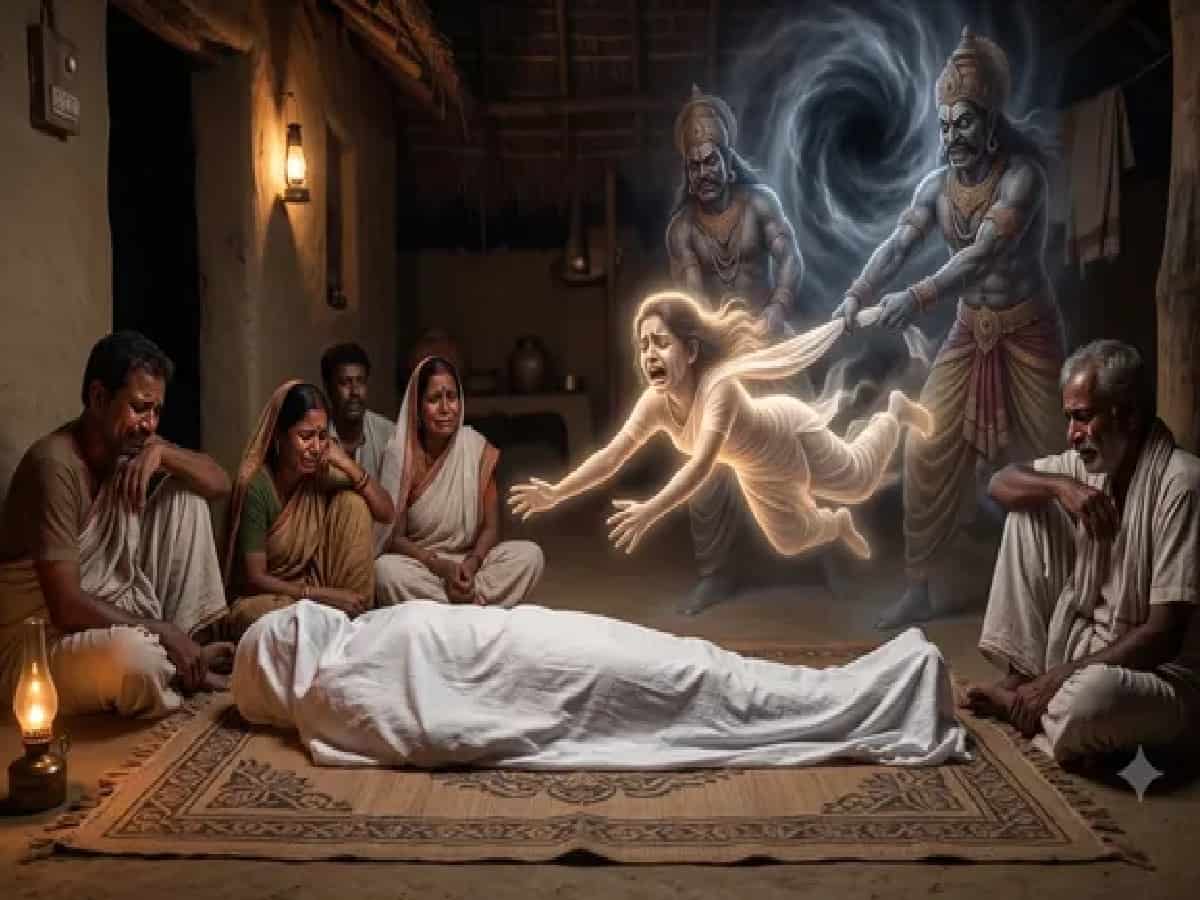
Garuda Purana Secrets: Terrifying Afterlife of Souls Who Commit Suicide Revealed
In classical Hindu philosophy, human existence is regarded as the most sacred and rare gift bestowed by the divine, granting an individual the unique consciousness required to perform righteous karma, cultivate patience through worldly trials, and attain spiritual liberation. Because mortal life serves as an indispensable bridge toward moral elevation, terminating it through unnatural means is classified in traditional scriptures as a profound transgression against cosmic order. The sacred Garuda Purana, renowned for detailing the metaphysical journey of the jiva (soul) following bodily demise, dedicates specific discourse in its Preta Khanda to the aftermath of suicide, laying bare the grave consequences and lingering spiritual agony endured by souls that sever their mortal ties before their destined lifespan concludes.
Why Suicide Is Fundamentally Distinct from Natural Death in Hindu Scriptures
Scriptural teachings draw an uncompromising distinction between a natural, karmically timed transition and death by self-destruction. In standard passing, the physical form ceases to function in alignment with an individual’s pre-ordained lifespan (ayush karma), allowing the subtle body to separate smoothly and proceed toward ancestral realms or immediate rebirth based on accumulated deeds. Conversely, when a person commits suicide, the physical vessel is forcefully destroyed long before its karmic accounting is concluded. As a consequence, the soul remains burdened with raw, unresolved desires, lingering attachments, and heavy emotional residues that cannot be satisfied without a physical body, trapping the entity in a disembodied, restless purgatory between physical and astral planes.
The Tortuous Passage: Traversing the Seven Hells of the Preta Khanda
The Garuda Purana outlines a grueling, agonizing progression for souls that willfully reject their earthly duties. Rather than receiving standard ritual passage or seamless transition, such souls are said to navigate terrifying lower astral spheres, frequently conceptualized across sacred verses as seven distinct subterranean or infernal states (narakas). Each transitional realm subjects the tormented soul to acute sensory, emotional, and psychological repercussions reflecting the despair and disruption caused by its unnatural act. Classical texts emphasize that traversing these dense regions is an arduous process requiring vast spans of cosmic time before the soul can exhaust the heavy negative debt incurred by abandoning its mortal duties.
Decades of Restless Wandering: Karmic Consequences and Lower Rebirths
A particularly harrowing aspect preserved in ancient folklore and scriptural narratives surrounding the Preta Khanda is the extended duration of suffering attributed to this karmic breach, traditionally described as enduring for tens of thousands of subjective astral years. During this period, the entity exists as a spectral wanderer (preta), retaining acute worldly memory and emotional perception without the faculty of physical intervention. It watches over the living world and witnesses the sorrow of its loved ones, yet remains entirely powerless to interact, find nourishment, or receive conventional funerary oblations (pinda daan). Only after this intense cycle of spiritual wandering and karmic restitution is completed is the soul granted permission to re-enter Samsara, often cycling through humble, lower life forms to gradually rebuild the spiritual credit required for human rebirth.