







First-Time Kanya Pujan This Navratri: Threshold Welcome to Bhairav Prasad You Must Know
Across millions of Hindu households observing the sacred festival of Sharadiya Navratri, the nine-day spiritual observance culminates in the profound tradition of Kanya Pujan, also revered as Kanjak Puja, celebrated on the auspicious tithis of Maha Ashtami and Maha Navami. According to sacred Vedic scriptures, young girls aged between two and ten years are honored as living embodiments of Goddess Durga and her nine maternal forms, known collectively as the Navadurgas. For families and devotees organizing this sacred ritual for the very first time in their households or newly established homes, observing time-tested shastric protocols ensures that the worship remains pure, auspicious, and spiritually rewarding. Fundamental to the ritual is assembling nine young girls to represent the nine divine aspects of Shakti, accompanied mandatorily by at least one young boy who is venerated as Batuk Bhairav or Langur, reflecting the guardian presence of Lord Shiva without whom the goddess worship is deemed incomplete. In situations where arranging nine girls proves challenging, scriptures permit seating one, three, five, or seven young girls, though the presence of the young boy representing Bhairav remains strictly non-negotiable for the rites to bear full spiritual merit.
Threshold Sanctification: Washing Sacred Feet, Applying Alta, and Seating the Little Deities
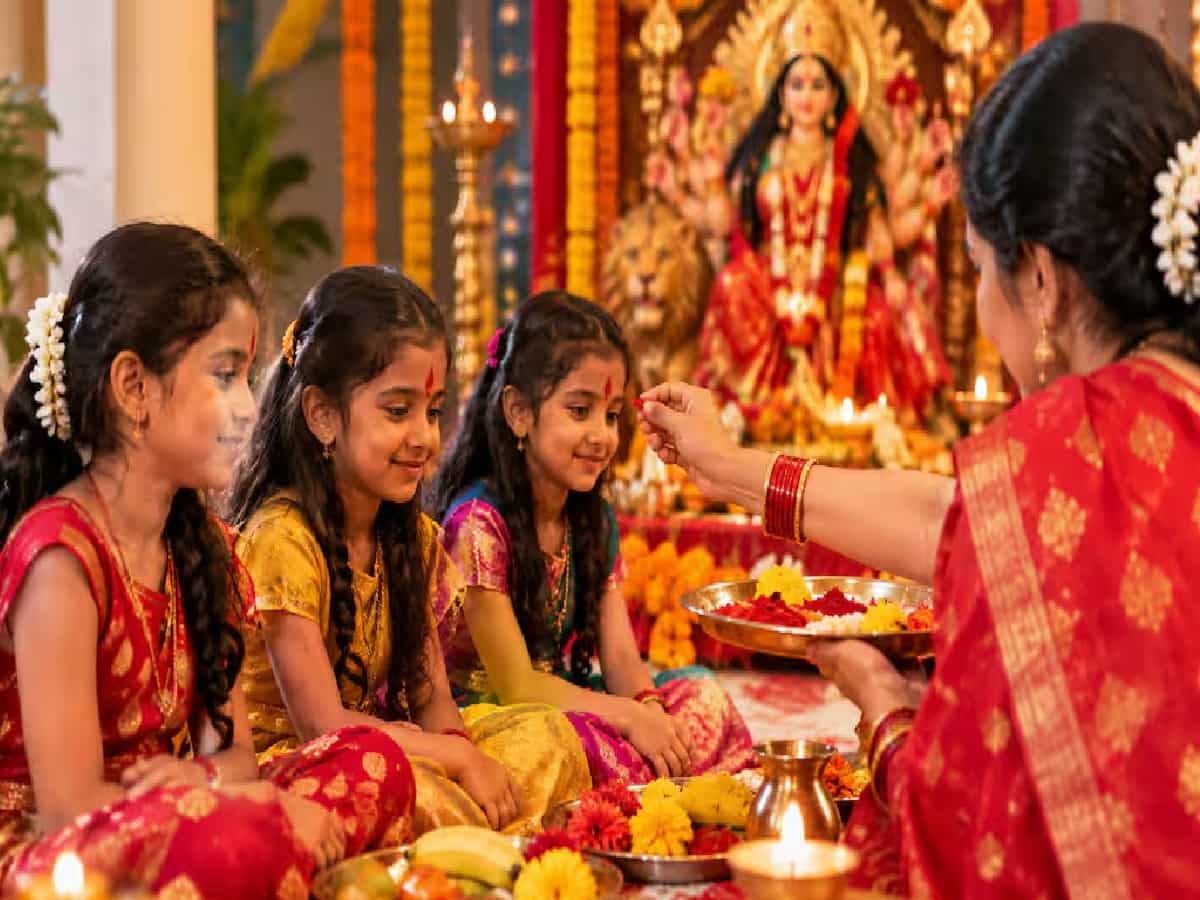
The ceremonial worship begins right at the threshold of the home, transforming the entryway into a sanctified altar as the invited children arrive. In accordance with traditional ritual decorum, the host must respectfully greet the girls at the front door, touching their feet in reverence before they cross into the living quarters. Devotees are required to gently wash the feet of each young guest with clean water and milk in a brass or bronze vessel placed near the main doorway, tenderly drying them before applying traditional red alta or mahavar along the edges of their feet as an auspicious mark of divine feminine grace. Once purified and welcomed inside, the girls and the young Batuk Bhairav should be seated comfortably on clean, dedicated cloth mats (aasans). Before proceeding, the householder must take a silent mental resolution, or sankalpa, acknowledging the divine presence of Maa Jagadamba in every child and praying for domestic tranquility, health, and prosperity. Devotees then tie a sacred red chunari or protective scarf around the heads of the girls, followed by applying an auspicious vermilion kumkum and akshat (unbroken rice grain) tilak onto their foreheads.
Bhog to Farewell: Serving Kanya Bhojan, Dakshina Etiquette, and the Sacred Vidai Ritual
The central phase of the ceremony focuses on the offering of satvik prasad, which traditionally features warm halwa, fluffy puris, and seasoned black gram (sukha kala chana) prepared in a purified kitchen without onion or garlic. The meal commences collectively with the joyous chanting of Jai Mata Di, with the host serving each child attentively and with genuine affection. Ritual etiquette emphasizes that hosts must actively offer second helpings, ensuring that every girl eats contentedly to her heart's satisfaction rather than treating the feast as a hurried obligation. Following the completion of the meal, devotees present dakshina in the form of monetary tokens alongside age-appropriate gifts such as fruits, red ribbons, sweets, or educational stationery, strictly according to family means and free of ostentation. The grand conclusion of Kanya Pujan demands seeking divine grace by touching the feet of each girl and the Batuk boy, humbly asking for forgiveness (Kshama Prarthana) for any inadvertent lapses committed during the ceremony. The children are then draped in sacred red chunaris and ceremoniously bid farewell at the doorstep with deep gratitude, sealing an auspicious invocation that invites Maa Durga’s enduring protection, harmony, and abundance into the household for the year ahead.




