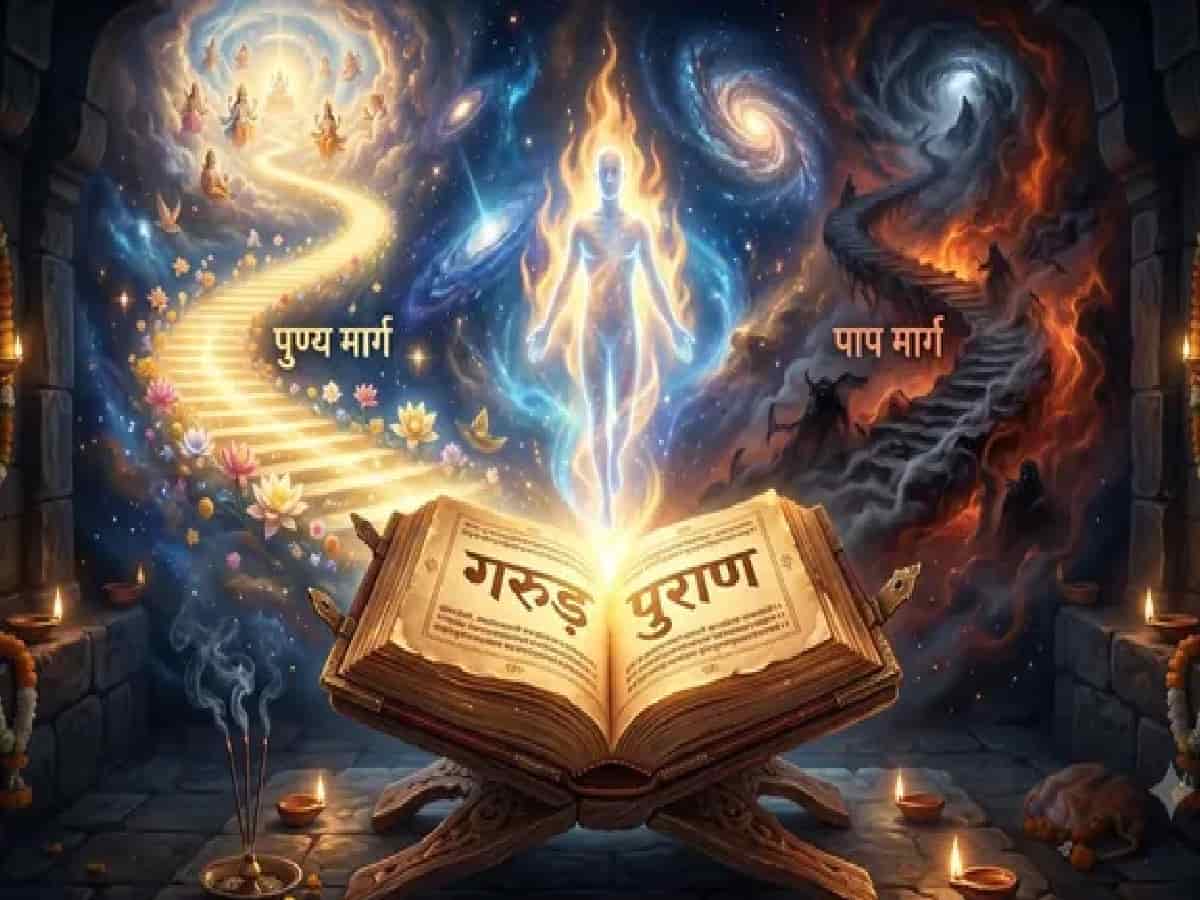
Eyes, Mouth, or Lower Gates, Where the Soul Exits at Death Reveals Heaven or Hell
In Sanatana Dharma, the physical body is understood as a temporary mortal vessel that dissolves at the time of death, while the eternal conscious soul (Atman) departs to undertake its next karmic journey. The sacred Garuda Purana, an authoritative Vedic text detailing the esoteric science of death, the afterlife, and post-mortem rituals, presents a dialogue between Lord Vishnu and His celestial mount, Garuda. Within these teachings, the human anatomy is described as a nine-gated fortress (Nava-Dvara Pura). At the precise instant of physical demise, the subtle life force (Prana) together with the soul must exit through one of these distinct physiological apertures, and the specific portal chosen serves as a direct indicator of whether the departing entity is destined for higher celestial planes or darker infernal realms.
The Nine Gateways of the Mortal Frame: How the Body Prepares for the Soul's Departure
The Garuda Purana enumerates nine physical openings that serve as potential exit routes for the life force: the two eyes, the two ears, the two nostrils, the mouth, and the two lower excretory organs. As the vital breaths converge during the final moments of earthly existence, the dominant karmic impressions accumulated over a lifetime determine the trajectory of the Prana. Classical scriptures note that an exit through the upper cranial gates signifies spiritual elevation, detachment, and virtuous living, whereas an exit forced through the lower apertures reflects severe sensory attachments, unresolved moral debts, and descending karmic momentum.
Ascending to Svarga: Signs of Righteous Souls Departing via the Upper Doors
Souls that have consistently dedicated their worldly existence to noble duties (dharma), selfless charity, and sacred devotion typically leave the mortal realm through the upper openings of the body. An exit through the mouth, the nostrils, the ears, or the eyes indicates passage toward heavenly dimensions (Svarga Loka) or a superior rebirth among enlightened beings. In high spiritual adepts and enlightened sages, the Prana may even pierce the crown of the head (Brahmarandhra), granting direct spiritual liberation. Furthermore, when individuals pass away with their eyes wide open, scriptures frequently interpret this as a lingering manifestation of intense familial affection and deep emotional attachments to loved ones, reflecting a desire to witness their kin one final time before crossing the threshold.
Descending to Naraka: Painful Departures Through the Lower Organs for Unrighteous Deeds
Conversely, individuals who spent their lifetimes indulging in deceit, violence, exploitation, and unrighteous conduct face an agonizing physical and metaphysical departure. The Garuda Purana explains that the life breath of sinful individuals descends involuntarily and is forced to exit through the lower excretory passages. This mode of departure is accompanied by intense physical distress, severe convulsions, and spiritual terror as negative karmic forces pull the entity downward toward punitive realms (Naraka). Vedic scholars emphasize that while the outward manifestations at the moment of passing are visible signs, the underlying determinant remains solely the moral weight of an individual's conscious actions and ethical choices.