







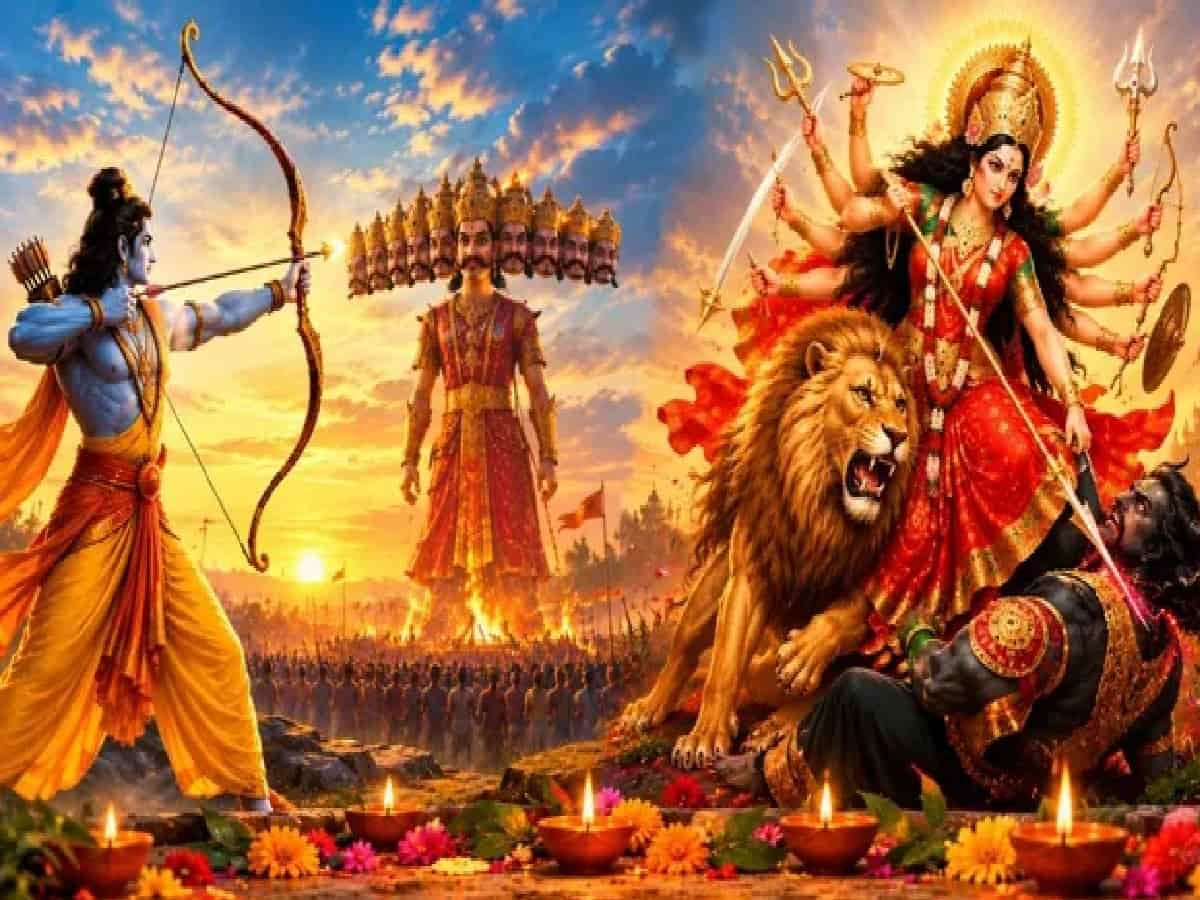
Dussehra or Vijayadashami: The Sacred Tales, Demon Battles, and Shami Tree
Celebrated on the tenth day of the bright fortnight in the sacred Hindu month of Ashwin, the dual observances of Dussehra and Vijayadashami represent two distinct theological triumphs frequently perceived as a single festival. While popular regional discourse often associates the day primarily with Lord Shri Ram's battlefield conquest over Lanka's demon monarch Ravana, ancient scriptures establish a profound scriptural division between Dussehra and Vijayadashami. Rooted in two separate epochs of Sanatana Dharma, the date commemorates both the feminine divine energy vanquishing cosmic chaos and the avatar of Vishnu upholding righteousness on earth, woven together with epic narratives from the Mahabharata and royal legends of Ayodhya that gave birth to lasting cultural rituals across the Indian subcontinent.
Mahishasura Mardini vs. The Fall of Lanka: Cosmic Shakti and the Defeat of Ravana
The spiritual origin of Vijayadashami belongs to the Devi Mahatmya, celebrating the fierce Katyayani manifestation of Goddess Durga annihilating the buffalo-demon Mahishasura. Having secured an invulnerability boon from Lord Brahma stipulating that his death could only be orchestrated at the hands of a woman, the demon king Rambhasura's son subjugated the three realms until the concentrated radiance of the Holy Trinity and the celestial pantheon manifested as supreme Mahashakti. Mounted on a celestial lion gifted by King Himavan and armed with the gods' cosmic weaponry, the Goddess waged an unyielding war lasting nine ferocious nights, decapitating the Asura on the tenth day—a climactic victory immortalized as Vijayadashami. In clear contrast, Dussehra specifically marks the culmination of the Treta Yuga epic, where Lord Shri Ram, enduring 14 years of forest exile alongside brother Lakshmana and wife Sita, marched upon Lanka with the Vanar Sena led by Hanuman, Sugriva, and Jambavan after Sita was abducted from Panchavati on the banks of the Godavari. Slaying Ravana on the tenth day following protracted warfare, Lord Ram restored cosmic order, an event memorialized each autumn through the ritual incineration of towering effigies of Ravana, Kumbhakarna, and Meghnad to dramatize the inevitable triumph of righteousness over pride.
Pandavas’ Hidden Astras and Kubera’s Gold: Why Millions Worship the Sacred Shami Tree
Beyond the battles against Mahishasura and Ravana, the day is deeply intertwined with ancient traditions surrounding the revered Shami tree, representing warrior empowerment and sudden prosperity. According to the Mahabharata, the Pandava princes concluded their compulsory one-year incognito exile (Agyatvas) by retrieving their celestial weapons concealed within the hollows of a Shami tree, launching an immediate offensive to rout the Kaurava army attempting to pillage King Virata’s cattle and initiating the Aparajita and Shami Puja rituals observed by martial traditions. Complementing this warrior lore is the legendary tale of Ayodhya’s King Raghu, who, having given away his entire treasury during the Vishwajit Yagna, prepared to march on Kubera to help a destitute Brahmin disciple named Kautsa fulfill his guru's demand of 140 million gold coins. Overawed by the righteous king, the celestial treasurer rained torrents of pure gold across the local Shami and Ashmantaka trees, enabling Kautsa to claim his exact gurudakshina while the surplus was distributed among grateful citizens. Parallel temple folk narratives similarly recount celestial visions where deities converted Shami foliage into precious metal overnight to relieve royal debts, forever cementing the timeless regional custom of distributing vibrant Shami leaves as symbolic offerings of gold during festive Dussehra greetings.




