







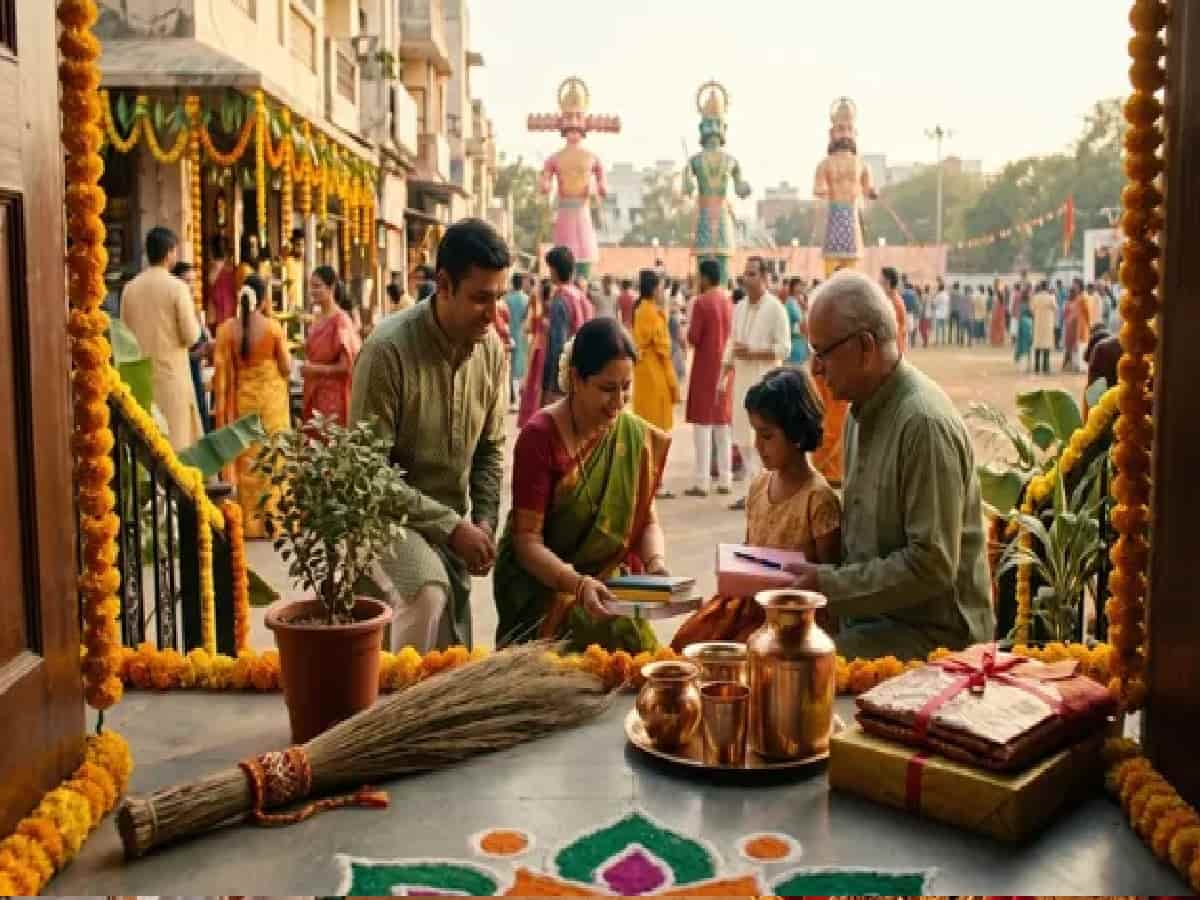
Dussehra: 5 Auspicious Items to Buy Before Ravan Dahan & 4 Taboos to Avoid
Marking the conclusion of Sharadiya Navratri on October 20, 2026, Vijayadashami brings strict Vedic and Vastu shopping traditions. Discover why purchasing gold, copper utensils, Shami plants, and brooms invites prosperity, while buying black garments, leather, and sharp iron items remains strictly forbidden before Ravan Dahan.
Celebrated across India on Tuesday, October 20, 2026, the auspicious festival of Vijayadashami—widely known as Dussehra—marks the triumph of virtue over wickedness on the tenth day (Dashami tithi) of the bright fortnight of the Hindu lunar month of Ashwin. Synchronized with the ceremonial culmination of Sharadiya Navratri, the occasion commemorates Lord Rama’s victory over the demon king Ravana as well as Goddess Durga’s triumph over Mahishasura. Beyond attending the evening burning of Ravana effigies and participating in weapon-worship (Shastra Puja), classical Vedic astrology and Vastu Shastra emphasize that timing household acquisitions on this victorious day can either invite lasting prosperity or attract astrological disharmony, making pre-Ravan Dahan purchases a critical ritual for households nationwide.
Auspicious Purchases: Attracting Lakshmi With Gold, Copper Utensils, Shami Plants, and Sacred Brooms
To channel the triumphant energy of Vijayadashami, tradition encourages families to invest in enduring household assets that symbolize purity, endurance, and divine favor. Purchasing gold and silver ornaments or consecrated bullion coins is regarded as an ideal invocation to Goddess Lakshmi, ensuring stable wealth across the coming year. For households seeking budget-friendly alternatives to precious metals, buying pure copper or brass culinary utensils provides equivalent spiritual merit, as these traditional base metals are considered energetically pure and capable of repelling stagnant household vibrations. Astrologers and Vastu practitioners also emphasize the purchase of a new natural broom (jhadu); reverenced in folk customs as an earthly embodiment of Lakshmi’s cleansing power, bringing a new broom into the residence on Dussehra is believed to eradicate poverty, remove residual negativity, and purify domestic grounds. Furthermore, planting or bringing home a sacred Shami plant (Prosopis cineraria) holds immense astrological importance, as the botanical specimen pacifies Saturn (Shani Dev) and commemorates the legendary tree where the Pandavas safeguarded their celestial weapons during exile. Families with school-going children are encouraged to purchase fresh stationery, books, and pens to invoke the blessings of Goddess Saraswati for academic intellect, alongside presenting new garments to elder family members as a gesture of filial reverence.
The 4 Taboo Purchases: Why Black Clothes, Leather, Sharp Iron, and Tamasic Items Are Strictly Forbidden
While Vijayadashami is universally considered an auspicious date (Abujh Muhurat) for fresh beginnings, scriptural customs strictly prohibit four categories of transactions to prevent spiritual setbacks. First, devotees must strictly avoid buying black-colored clothing or domestic tapestries on this day; in planetary cosmology, black is associated with the shadow planets Rahu and Ketu, which can provoke domestic strife, confusion, and melancholic energy when introduced during solar celebrations. Second, purchasing black footwear, shoes, slippers, or commercial leather accessories must be avoided, as leather and degraded footwear carry tamasic properties that conflict with the festival's sanctified atmosphere. Third, the immediate post-Navratri consumption or purchase of meat, poultry, seafood, and alcohol is considered spiritually damaging; breaking sacred Navratri austerities with intoxicating substances or non-vegetarian feasts immediately on Dashami disrupts the subtle energetic cleansing cultivated over the preceding nine nights. Finally, buying sharp cutting tools, blades, iron hardware, or disposing of household scrap and junk is considered inauspicious on Dussehra. Because the festival incorporates Ayudha Puja—the sacred consecration of tools, machinery, and defense armaments—handling raw iron scrap or trading in cutting instruments during the puja window is believed to invite domestic discord and financial drain.




