







Durga Puja’s Emotional ‘Sindoor Khela’ Is Far More Than a Celebration
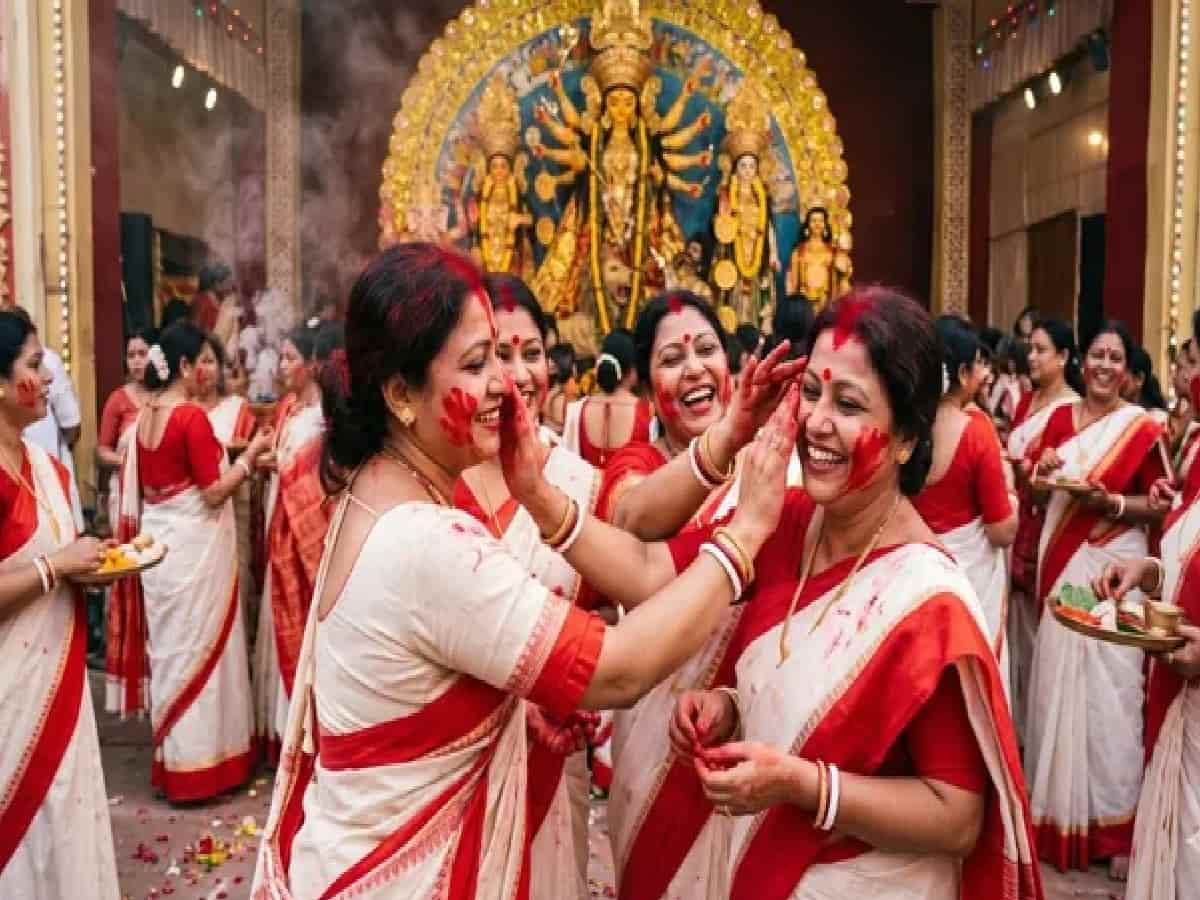
As the triumphant beats of the dhak give way to bittersweet melodies on Vijayadashami, Durga Puja pandals across West Bengal and Bengali diaspora communities worldwide transform into oceans of scarlet and ivory for the sacred ritual of Sindoor Khela. Dressed in traditional red-bordered white or cream silk saris (lal-paar saree), married women gather before the grand sanctum to enact one of Indian cinema and culture's most visually striking and emotionally poignant farewell traditions. Marking the formal conclusion of the five-day Sharadotsav festival, the ritual of playing with vermilion (sindoor) before the idol’s immersion (visarjan) transcends simple revelry, functioning as an ancient spiritual benediction, a celebration of womanhood, and a tender farewell to Goddess Durga before she departs for her celestial abode.
Bidding Adieu to Uma: The Daughter’s Journey Back to Mount Kailash
The profound emotional resonance of Sindoor Khela originates in Bengali mythological folklore, where Goddess Durga is revered not merely as an invincible cosmic warrior who vanquished Mahishasura, but intimately as Uma, the cherished daughter of the Himalayas. According to sacred tradition, her annual autumn arrival marks a brief, joyful homecoming (baper bari) alongside her four children—Ganesha, Kartikeya, Lakshmi, and Saraswati. On the morning of Vijayadashami, this cherished stay comes to an end as she prepares to return to her marital home with Lord Shiva on Mount Kailash (shoshur bari). Before the clay idol is moved from the altar, married women perform the ceremonial farewell known as Devi Boron. Using betel leaves and consecrated sweets (sandesh), they touchingly wipe the face of the Goddess, feed her ceremonial delicacies, and lovingly apply vermilion to her forehead and feet, mirroring the protective, bittersweet rituals performed by Indian mothers sending their married daughters back to their in-laws with prayers for enduring prosperity.
Crimson Sisterhood: The Sacred Symbolism of Saubhagya, Unity, and Matriarchal Strength
Once the Divine Mother has been anointed, the ritual seamlessly expands into a lively, collective celebration among the women gathered in the pandal. Participants joyfully smear vermilion on each other’s foreheads, cheeks, and sacred matrimonial bangles (shankha-pola), sharing traditional Bengali sweets and festive greetings. This communal anointing is an invocation for saubhagya—enduring marital happiness, longevity of spouses, and domestic well-being. Beyond marital prayers, Sindoor Khela serves as a powerful instrument of social harmony and female bonding, actively dissolving social distinctions, age barriers, and family rivalries under a shared shower of sacred crimson powder. In Vedic and regional ethos, women are honored as the spiritual foundation (Grihalakshmi) and the direct earthly channel to the Supreme Mother (Adi Parashakti). By sanctifying one another with vermilion amidst the reverberation of conch shells (shankha) and ululations (ulu dhwani), the ceremony transforms an otherwise somber parting into an uplifting celebration of unity, resilience, and the eternal promise of the Divine Mother’s return next autumn.




