







Diwali Nishith Kaal: Why Lakshmi Visits Earth at Midnight
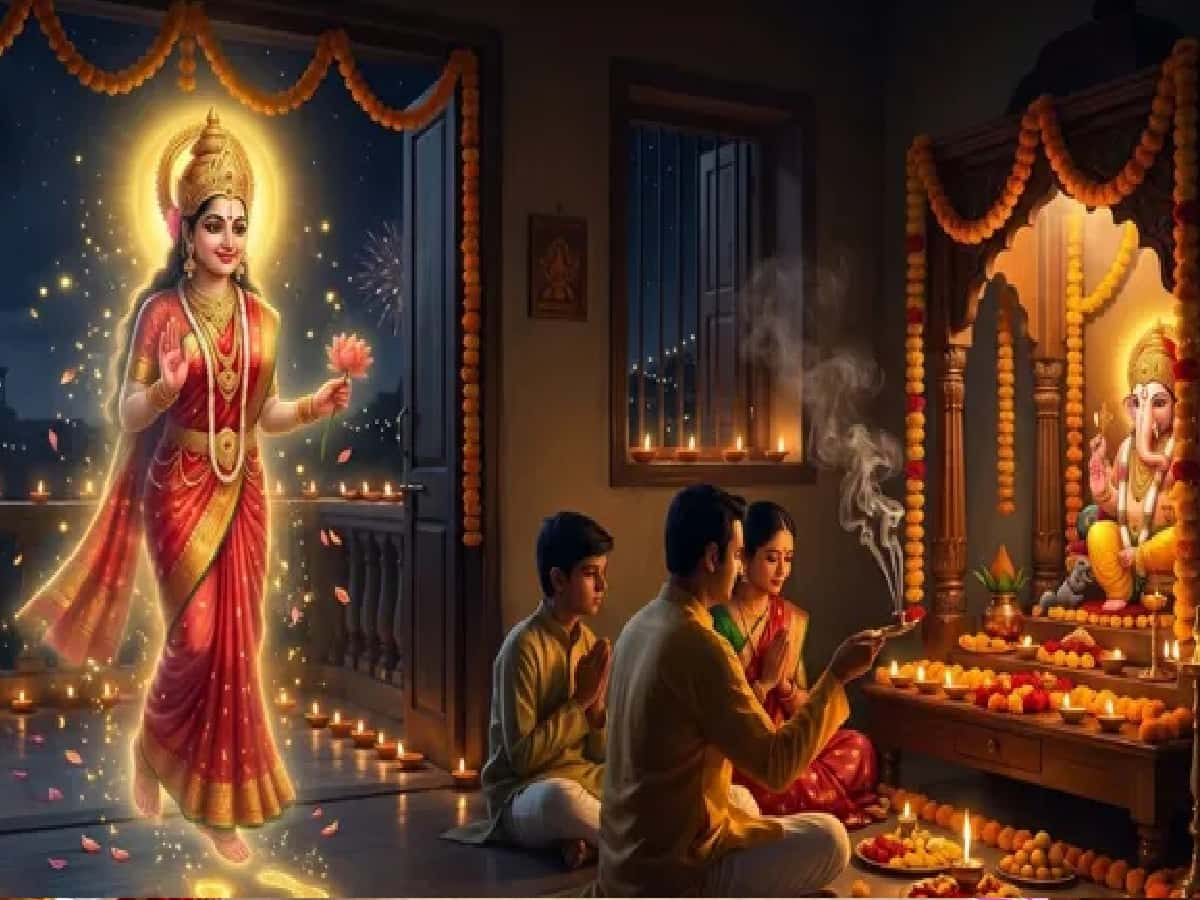
While millions of households across the country conclude their traditional evening prayers during Pradosh Kaal, setting rows of earthen diyas along windowsills and courtyards, an ancient esoteric tradition comes alive as the clock approaches the midnight hour. In Hindu scriptural lore, the dark new moon night of Kartik Amavasya is not merely a festive holiday; it is revered across classical texts as Mahanisha (the Great Night) and Kaalratri (the Night of Time), a cosmic window when the physical and metaphysical planes converge. According to Vedic astrologers and scriptural scholars, Goddess Lakshmi, the supreme harbinger of fortune, prosperity, and spiritual grace, descends to traverse the mortal realm during the quietest hours of the night. For spiritual aspirants, temple priests, and disciplined householders, the midnight period known as Nishith Kaal—spanning roughly from 11:30 PM to 12:30 AM—represents the most potent hour of the entire year to conduct Lakshmi Sadhana, chant sacred mantras, and anchor permanent prosperity (Sthir Lakshmi) within the domestic sphere.
The Mystery of Nishith Kaal: The Cosmic Midnight Window
In the architecture of Vedic astrology (Jyotisha), a 24-hour solar cycle is divided into thirty equal muhurats of approximately 48 minutes each, with fifteen governing the day and fifteen governing the night. Among these nocturnal divisions, the eighth muhurat—occurring at the exact midpoint between sunset and sunrise—is designated as Nishith Kaal. Astropatri astrologer Chandresh Sharma explains that while common household rituals take place during the dusk window of Pradosh Kaal when fixed signs like Taurus (Vrishabha Lagna) prevail, the energy of Nishith Kaal operates on a different frequency.
During this midnight hour, the superficial sensory distractions of the daytime world completely fade away, leaving the atmospheric prana in a state of stillness. Planetary configurations during Kartik Amavasya align to create a subtle electromagnetic vortex where sacred acoustic vibrations resonate with heightened clarity. It is within this concentrated window, typically falling between 11:30 PM and 12:30 AM, that the divine feminine energy manifests in its most receptive aspect. Astrologers emphasize that spiritual practices, meditative contemplations, and scriptural invocations executed during Nishith Kaal bypass ordinary mental resistance, establishing a direct bridge between the devotee’s consciousness and cosmic abundance.
The Legend of the Midnight Descent: Lakshmi Wanders the Earth
The belief that Goddess Lakshmi travels across the earth at midnight is deeply rooted in Puranic literature, particularly the Skanda Purana and the Padma Purana. Ancient accounts recount that on the night of Amavasya, following her emergence from the churning of the cosmic ocean (Samudra Manthan), Goddess Lakshmi roams the earthly realms under the cover of darkness to inspect the homes of mortals. Seeking dwelling places marked by cleanliness, luminous lamps, sweet fragrances, and sincere devotion, she enters without hesitation, showering unconditional blessings upon the inhabitants.
Crucially, the midnight hour acts as a spiritual filter between two opposing forces: Goddess Lakshmi and her elder sibling, Alakshmi, the presiding deity of poverty, discord, and stagnation. While careless households often extinguish their lights early, leaving their living spaces dark and welcoming for the shadows of lethargy, disciplined devotees keep a single four-faced mustard oil or cow-ghee lamp burning through the night. When Goddess Lakshmi encounters an illuminated threshold, resonant with Vedic hymns and fragrant with dhoop and lotus petals, she is believed to settle permanently, granting what scriptures describe as Akshaya Dhan—wealth that neither diminishes nor brings karmic affliction in its wake.
Mahanisha and Kaalratri: Tantric Sadhana and the Power of Mantras
Within the esoteric traditions of Tantra Shastra, Diwali night is celebrated as one of the four legendary "Great Nights" of the cosmos, alongside Moharatri (Janmashtami), Shivaratri (Maha Shivaratri), and Darunratri (Holi). Termed Mahanisha, this night is consecrated not only to Mahalakshmi, but also to the unified trinity of the Divine Mother—Mahakali, Mahalakshmi, and Mahasaraswati.
Because Amavasya strips away the physical light of the moon, the night represents the void of cosmic dissolution from which all manifest reality is continually reborn. Tantric texts assert that any mantra chanted, any stotra recited, or any charitable intention formed during Nishith Kaal carries an exponential multiplier effect, yielding results dozens of times greater than rituals conducted during ordinary calendar days. For centuries, spiritual seekers and renunciates have gathered in sacred pilgrimage centers—from the ghats of Kashi to the banks of the Narmada—to engage in night-long japa, utilizing the intense stillness of Mahanisha to neutralize negative astrological afflictions (graha doshas), conquer lingering inner fears, and awaken the dormant spiritual potential within.
Sacred Rituals and Mantras for Midnight Lakshmi Puja
Executing the midnight puja does not require elaborate outward ostentation; rather, it demands absolute purity of intent, physical cleanliness, and quiet focus. Devotees intending to worship during Nishith Kaal should prepare their puja space before 11:30 PM, donning clean, satvik attire in auspicious shades of yellow, crimson, or saffron, while strictly avoiding black clothing. A wooden chowki covered in fresh red silk should be consecrated with idols or images of Goddess Lakshmi and Lord Ganesha, flanked by a Kalash filled with sacred water, betel nuts, and mango leaves.
The central component of the midnight worship is the lighting of a dedicated Akhand Diya—preferably an earthen or brass lamp filled with pure cow ghee or cold-pressed sesame oil. Devotees then offer fresh red lotus flowers, unboiled raw milk sweets, pomegranates, and aromatic sandalwood paste to the goddess. Seated on a kusha grass or woolen mat facing the East or North, the worshipper should undertake the focused recitation of foundational hymns. Reciting the Shree Suktam, the sixteen verses of the Rigvedic hymn dedicated to the cosmic feminine, alongside Adi Shankaracharya’s Kanakadhara Stotram, is considered especially potent. For those practicing mantra japa, chanting the Kamalatmika or Lakshmi Beej Mantra—Om Shreem Hreem Shreem Kamale Kamalalaye Praseed Praseed Shreem Hreem Shreem Om Mahalakshmaye Namah—using a lotus seed rosary (Kamal Gatta Mala) during the Nishith window creates an aura of sustained peace and mental clarity.
Inviting Sthir Lakshmi: Spiritual Transformation for the Year Ahead
The deeper philosophical beauty of the midnight Diwali worship lies in its ability to transform the seeker's understanding of true prosperity. In consumer-driven societies, wealth is frequently mistaken for transient material accumulation, speculative cash windfalls, or ostentatious luxury—assets that often vanish as quickly as they arrive, leaving anxiety and discord behind. By staying awake into the sacred hours of Nishith Kaal to meditate on Goddess Lakshmi, the devotee seeks Sthir Lakshmi—stable, righteous, and sustainable abundance that supports righteous living, family harmony, physical vitality, and generous philanthropy.
As the quiet hours of Mahanisha envelop the earth, the flicker of the midnight lamp stands as an enduring symbol of spiritual vigilance. It reminds the human spirit that light does not depend on the external radiance of the sun, but on the conscious resolve to cultivate purity, truth, and devotion within the self. When the bells chime at midnight on Diwali, those who welcome the Divine Mother with folded hands and humble hearts do not merely complete an ancient ritual; they align their lives with the timeless laws of cosmic grace, stepping into the incoming Samvat year protected, nourished, and spiritually renewed.




