







Diwali 2026: 5 Sacred Places to Light Diyas for Wealth
As the dusk of Kartik Amavasya envelops the nation, the sacred night of Diwali transforms millions of households into radiant beacons of light, warmth, and hope. While common tradition centers around illuminating the primary family prayer altar and lining boundary walls with sparkling clay lamps, scriptural scholars and Vastu Shastra experts affirm that the placement of earthen lamps (deepams) is an exact spiritual science. On this auspicious night, when Goddess Lakshmi, Lord Ganesha, and the divine celestial treasurer Lord Kubera roam the mortal plane, the physical positioning of light serves as a spiritual compass guiding positive cosmic prana into the home. Illuminating specific energetic junctions across the domestic perimeter not only dispels physical darkness but actively dissolves deep-seated Vastu afflictions, neutralizes negative vibrational fields, and anchors lasting financial stability (Sthir Lakshmi). By intentionally placing sacred lamps in five pivotal corners beyond the traditional temple room, householders can cultivate an atmosphere of boundless abundance and domestic tranquility throughout the incoming Samvat year.
The Main Threshold: Welcoming Goddess Lakshmi at the Royal Entryway
In the architectural and spiritual framework of Vastu Shastra, the main entrance of a house, known classically as the Simha Dvara, is regarded as the energetic mouth through which all cosmic life force, wealth, and divine beings enter the dwelling. Religious folklore affirms that when Goddess Lakshmi descends on the dark night of Diwali, she approaches the main entrance first, observing whether the threshold is clean, fragrant, and welcoming. Leaving the exterior doorway in semi-darkness or cluttered with footwear is believed to redirect divine fortune away, inviting the shadow of stagnation instead.
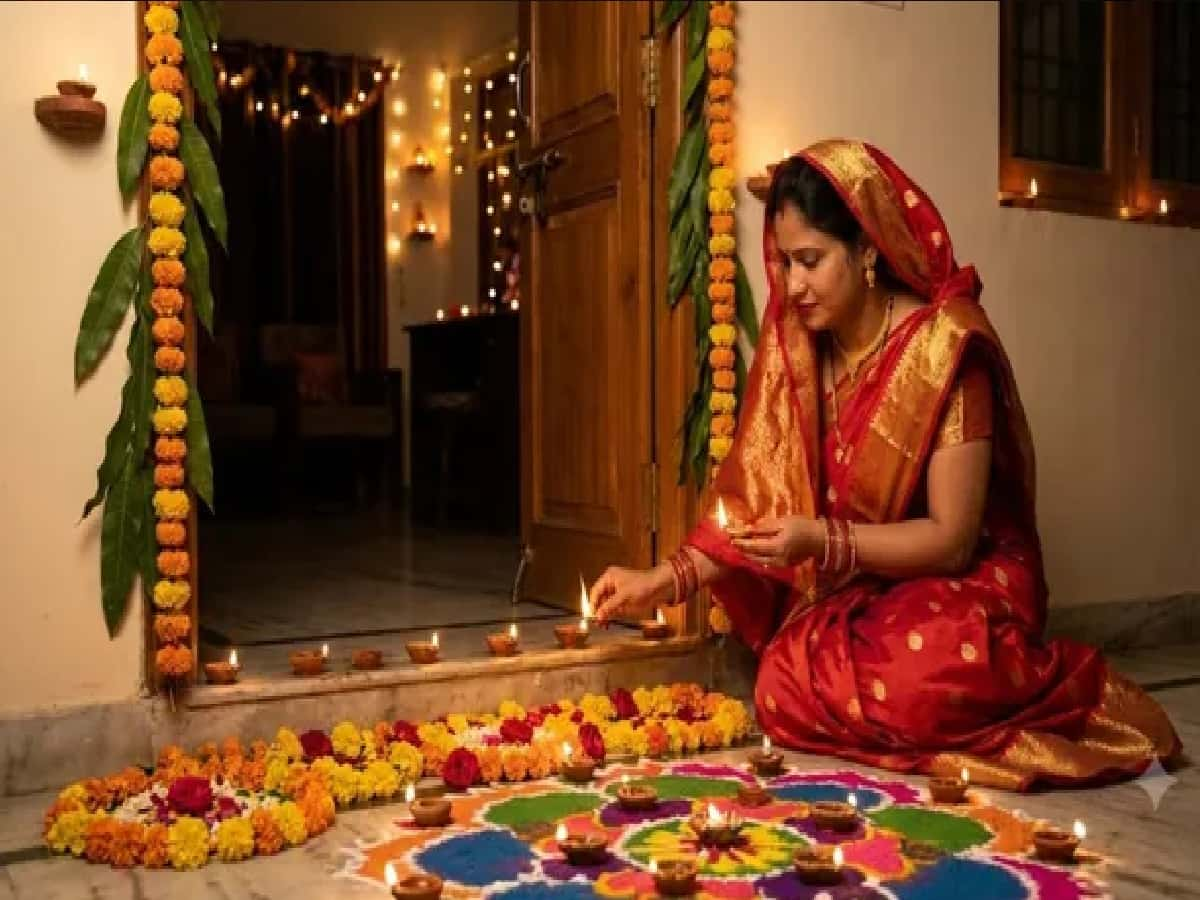
To properly consecrate this primary gateway, householders should clean and wash the threshold thoroughly, decorating it with vibrant rice-flour rangoli designs and fresh mango-leaf torans. On either side of the main doorframe, two large earthen diyas filled with pure mustard oil or cold-pressed sesame oil should be lit. Tradition emphasizes that these threshold lamps should ideally remain illuminated throughout the night. The continuous, steady flicker serves as a luminous beacon that repels wandering malevolent energies, closes the threshold against lingering misfortune, and creates an inviting pathway for the Goddess of Fortune to step across the doorway into the living quarters.
The Wealth Sanctuary: Lighting Near the Cash Locker and Tijori
While the main door welcomes wealth into the home, the preservation, multiplication, and ethical retention of that prosperity depends entirely on the energy surrounding the family treasury. In ancient Vedic tradition, the storage vault, cash locker, or modern safe (tijori) is revered as the sanctified seat of Lord Kubera, the divine custodian of wealth, working in unison with Mahalakshmi. Many households experience high financial turnover yet struggle with perpetual financial anxiety because accumulated wealth leaks away through sudden medical crises, speculative missteps, or unexpected family disputes.
To fortify this vital financial center, devotees should light a dedicated cow-ghee lamp directly in front of or adjacent to the cash vault on Diwali night. Prior to lighting the lamp, the safe should be wiped clean, marked with an auspicious red vermilion swastika, and adorned with unbroken rice grains (akshat). Lighting a pure ghee lamp in this space charges the immediate environment with high-vibration satvik energy, subduing the anxiety associated with financial insecurity. Astrologers note that this simple ritual invokes the protective grace of Lord Kubera, ensuring that wealth is not merely earned, but preserved, nurtured, and multiplied into sustainable intergenerational prosperity.
The Hearth of Nourishment: Honoring Goddess Annapurna in the Kitchen
The kitchen is universally recognized as the vibrant heart of the domestic sanctuary, serving as the physical space where raw agricultural produce is transformed into vital nourishment. In Hindu spiritual philosophy, the kitchen is governed by Goddess Annapurna, the benevolent manifestation of Goddess Parvati who feeds the cosmos, alongside Lord Agni, the sacred fire element. The energy of the kitchen directly influences the physical vitality, immune resilience, and emotional harmony of every family member who consumes the food prepared within its walls.
On Diwali night, after the primary evening puja concludes, a clean earthen diya filled with pure cow ghee should be placed reverently upon the kitchen counter or near the primary cooking stove. Placing light within the culinary space honors the divine source of daily sustenance and invokes the continuous blessings of Goddess Annapurna. Scriptural lore maintains that households observing this ritual will never suffer from sudden shortages of grain, basic kitchen provisions, or food security throughout the year. The warm glow of the diya purifies the cooking environment, ensuring that the meals prepared in the home foster love, physical vitality, and deep contentment among family members.
The Sacred Courtyard: Invoking Sthir Lakshmi at the Tulsi Plant
No traditional Indian home is complete without the sacred presence of the Tulsi plant (Ocimum sanctum), revered across Vaishnava literature as Vrinda Devi, the earthly embodiment of absolute devotion and the eternal beloved of Lord Vishnu. Because Goddess Lakshmi resides inseparable from Lord Vishnu, scriptures affirm that wherever the holy basil plant is nurtured and worshipped with sincerity, Goddess Lakshmi settles permanently, bestowing Sthir Lakshmi—wealth that brings lasting peace, righteous intellect, and spiritual elevation rather than vanity or moral decay.
On Kartik Amavasya, the Tulsi altar (Tulsi Chaura) in the courtyard, garden, or balcony serves as a focal point for evening prayers. Devotees should illuminate the base of the sacred plant with a pristine earthen lamp filled with pure cow ghee, using a handmade cotton wick. Circling the plant with folded hands while reciting the sacred hymn "Om Tulasi Devyai Cha Vidmahe, Vishnu Preyasyai Cha Dheemahi", worshippers create a sanctified perimeter that cleanses the surrounding atmosphere. Beyond its spiritual symbolism, the delicate interaction of burning ghee with the natural aromatic oils emitted by the Tulsi foliage purifies the nighttime air, filling the courtyard with restorative vibrations that calm the nervous system and promote peaceful domestic coexistence.
The Divine Ishan Kon: Dispelling Vastu Defects in the Northeast Corner
The fifth and essential location for a Diwali lamp is the domestic prayer room and the overarching Northeast direction of the property, classically known as the Ishan Kon. In Vedic spatial science, the Northeast is designated as the most sacred zone of any dwelling, governed by Lord Shiva and influenced by Jupiter (Brihaspati), the cosmic planetary teacher of wisdom, righteousness, and spiritual expansion. This quadrant regulates mental clarity, visionary decision-making, and the spiritual consciousness of the head of the household.
If the Northeast corner of a property is shadowed, cluttered, or afflicted by structural imbalances, family members often report mental restlessness, frequent confusion, and recurring spiritual stagnation. Lighting an auspicious lamp in the home temple located in this sector—or placing an independent brass diya directly in the Northeast corner if the temple is situated elsewhere—acts as a corrective Vastu remedy. The sacred flame burns away lingering energetic stagnation, neutralizes architectural flaws, and invites profound spiritual serenity. It clarifies the intellect, allowing individuals to make prudent life decisions, resolve long-standing personal conflicts, and maintain absolute emotional composure amidst modern life's unpredictable challenges.
Sacred Lamp Disciplines: Oil, Wicks, and Pure Devotion
To maximize the spiritual and energetic efficacy of these five essential lamps, tradition highlights several core disciplines regarding materials and execution. Wherever possible, lamps dedicated to deities and spiritual altars—such as the temple, Tulsi plant, and cash locker—should utilize pure cow ghee, which emits pure satvik frequencies. In contrast, threshold lamps positioned at the main entrance and outdoor perimeters can utilize cold-pressed mustard oil or sesame oil, which generates a protective energetic field that shields the home against lower astral influences and negative omens.
Furthermore, devotees are advised to use pristine, unchipped earthen lamps crafted from natural clay, soaking them thoroughly in clean water prior to use to ensure they do not absorb excessive oil and burn out prematurely. As the gentle glow of these five sacred lamps illuminates the darkest corners of the household on Diwali night, they deliver a profound reminder that true prosperity is not an external accident, but an intentional cultivation of inner and outer harmony. By aligning the home's key energetic quadrants with sacred light, reverence, and gratitude, families invite the timeless grace of the divine to illuminate their lives with health, harmony, and enduring abundance.




