







Dev Diwali 2026: Rule of 5 Lamps on Nov 24; Don't Miss This Home Spot
Exactly fifteen days after Diwali, devotees across India are preparing to celebrate Dev Diwali (Dev Deepawali) on the sacred full-moon night of Kartik Purnima, which falls on Tuesday, November 24, 2026. According to traditional Panchang calculations, the Purnima Tithi begins at 11:42 PM on Monday, November 23, and continues until 8:23 PM on Tuesday, November 24, making the evening Pradosh Kaal window after sunset—around 5:08 PM to 7:46 PM in Varanasi and 5:25 PM to 8:06 PM in Delhi-NCR—the prime auspicious period for Deep Daan and evening lamp rituals. Revered across Hindu tradition as the "Diwali of the Gods," Dev Diwali commemorates Lord Shiva's victory over the demon Tripurasura (earning the full moon the name Tripurari Purnima), when celestial deities are believed to descend to Earth and illuminate the sacred banks of the Ganga in Kashi (Varanasi) to rejoice. While millions of devotees will visit Shiva and Vishnu temples or gather along riverbanks on Tuesday evening, religious scholars and Vastu traditions emphasize that households should not overlook the sacred rule of lighting at least five earthen lamps (diyas) at home after sunset—and in particular, placing a dedicated lamp near the home's drinking water storage area (parinda / kitchen water corner). For devotees, temple-goers, and families across Unnao, Lucknow, Kanpur, Varanasi, Prayagraj, Ayodhya, Mathura, and New Delhi, observing this simple five-lamp ritual brings spiritual purification, prosperity, and auspicious energy into the household.
Dev Diwali 2026 (Nov 24): Panchang Timings & The Rule of 5 Lamps at Home
To bring together the verified Kartik Purnima timings for November 24, 2026, alongside the five prescribed spots for lighting lamps at home during Pradosh Kaal, the table below outlines the complete ritual guide:
| Ritual / Panchang Detail | Verified Schedule & Placement (November 24, 2026) | Traditional & Spiritual Significance |
| Kartik Purnima Tithi & Pradosh Kaal | Purnima Tithi: Nov 23 (11:42 PM) to Nov 24 (8:23 PM); Pradosh Kaal Deep Daan: 5:08 PM – 7:46 PM (Varanasi) / 5:13 PM – 7:48 PM (Lucknow–Unnao–Kanpur) / 5:25 PM – 8:06 PM (Delhi). | Lighting diyas during Pradosh Kaal while Purnima Tithi is active is considered equivalent to welcoming celestial deities home. |
| Lamps 1 & 2: Both Sides of the Main Entrance | Light two mustard-oil diyas—one on the left and one on the right of the main front door—immediately after sunset. | Wards off negative energy and the evil eye while inviting auspiciousness across the household threshold. |
| Lamp 3: Near the Tulsi Plant | Place a pure cow-ghee diya beside the Tulsi (holy basil) courtyard or balcony pot (without plucking Tulsi leaves after dusk). | Honors Goddess Tulsi and Lord Vishnu at the close of the sacred Kartik month, fostering harmony and family well-being. |
| Lamp 4: Inside the Home Puja Mandir | Light a ghee lamp in the home prayer room after worshiping Lord Shiva (Vishwanath), Lord Vishnu, and Goddess Lakshmi. | Symbolizes inner enlightenment, devotion, and spiritual peace throughout the household. |
| Lamp 5: Near the Drinking Water Storage Area | Place the fifth lamp in the kitchen or designated spot where drinking water (kalash / water filter / earthen pot) is stored, plus an optional diya beneath a nearby Peepal tree. | Associated in traditional belief with ancestral blessings, Maa Annapurna's grace, and uninterrupted abundance in the home. |
Religious Significance of Kartik Purnima and the Five-Lamp Ritual
In Hindu dharma, a lit diya represents knowledge, purity, and the triumph of divine light over darkness. Following a sacred dawn bath (Kartik Snan) in the Ganga, Yamuna, or at home with a few drops of Gangajal, devotees perform Satyanarayan Katha, offer Bel leaves to Lord Shiva, and prepare for Deep Daan at dusk. Even if a family plans to visit a neighborhood Shiva or Vishnu temple on Tuesday evening, scriptures and folk traditions urge lighting at least five lamps at home after sunset first: two mustard-oil lamps flanking the main doorway to shield the home from negativity, two ghee lamps at the Tulsi plant and home temple to nurture peace and prosperity, and the crucial fifth lamp near the household water storage area—a spot linked to life-sustaining energy, Maa Ganga, and ancestral reverence—along with lighting a lamp near a Peepal tree if one stands close by.
Why Kashi's 84 Ghats Glow With Millions of Lamps on Dev Diwali
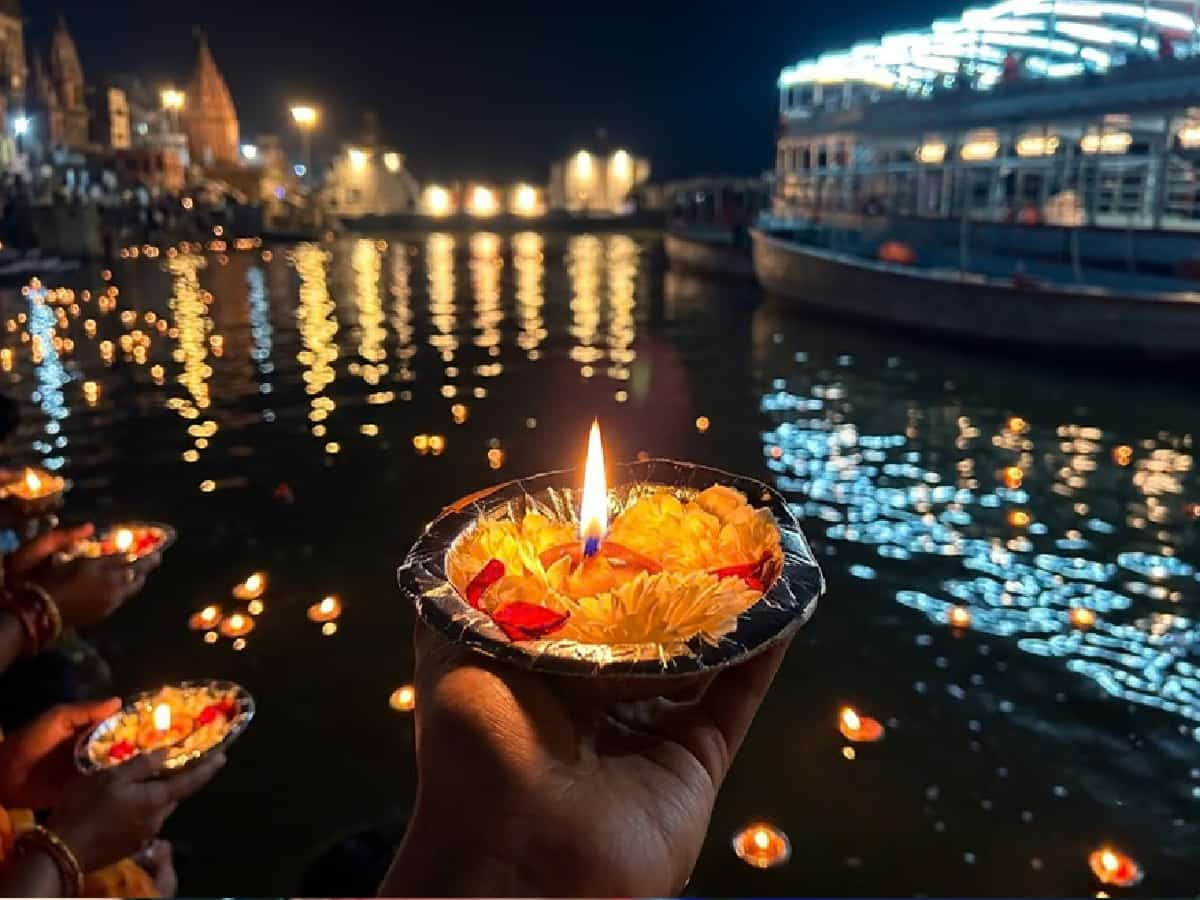
Nowhere is Dev Diwali celebrated with greater grandeur than in Kashi (Varanasi)—known in ancient texts as Anandvan and situated between the Varuna and Asi rivers along the rare northward-flowing (Uttarvahini) Ganga. Across a seven-kilometer crescent of 84 historic ghats—which spiritually symbolize the 8.4 million (84 lakh) yonis or forms of existence in Hindu cosmology—priests, residents, and pilgrims illuminate over a million earthen lamps at dusk, accompanied by the grand Ganga Aarti at Dashashwamedh Ghat and Akash Deep sky lanterns. Rooted in the legend of Tripurasura's defeat, Kashi's glowing riverfront reminds devotees everywhere that lighting even five humble diyas with sincerity at home connects every household to the timeless radiance of Dev Diwali.




