







Bride of Saptami: The Ancient Secret Behind Durga Puja's Iconic 'Kolabou' Ritual
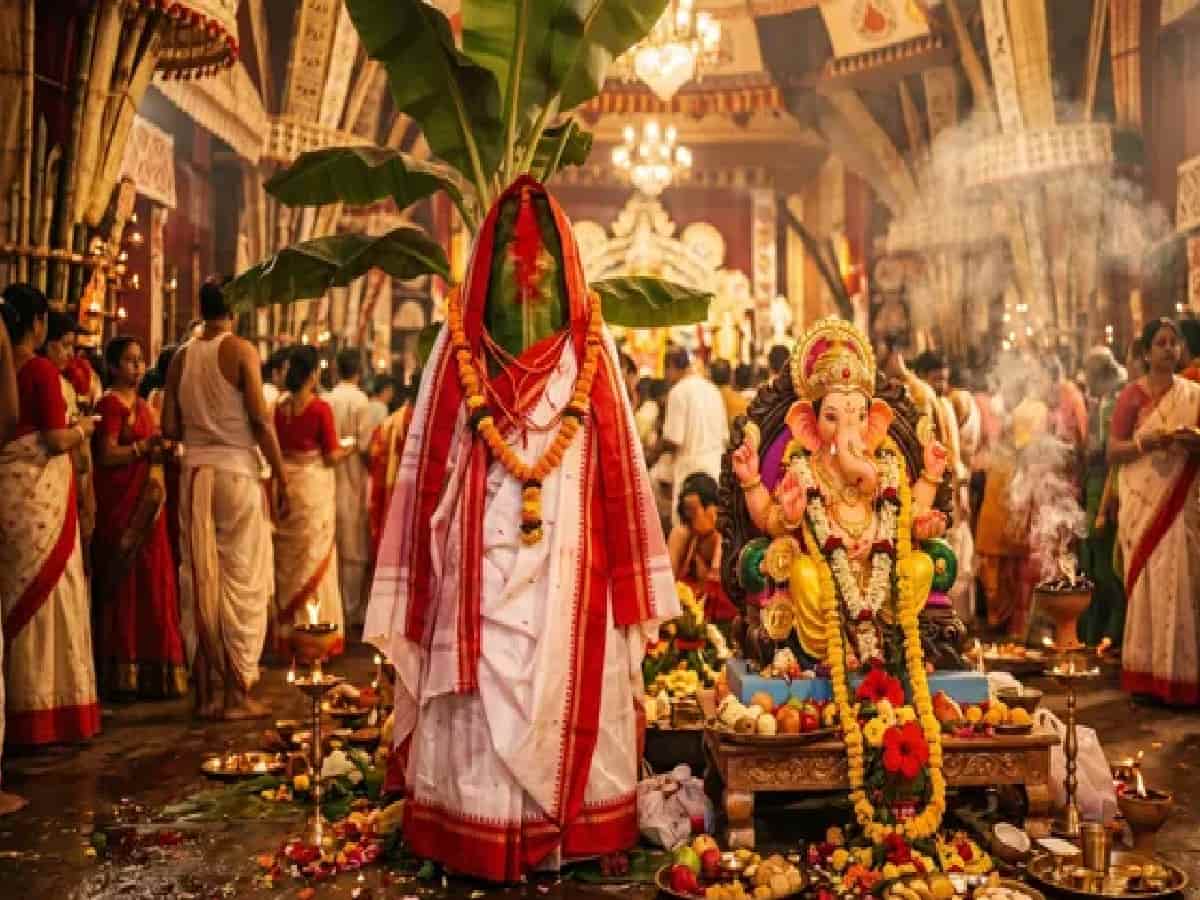
As the Sharadiya Durga Puja festivities reach their vibrant spiritual zenith across West Bengal and community pandals nationwide, millions of devotees immerse themselves in an intricate tapestry of age-old Vedic rites and regional folklore. Among the most visually captivating and spiritually profound ceremonies observed during the festival is the dawn ritual of "Kolabou." Celebrated on the auspicious morning of Maha Saptami, the ceremony draws massive crowds to river ghats and pandal courtyards as an ordinary plantain or banana plant is consecrated, ritually bathed, draped like an aristocratic newlywed bride, and installed with deep devotional reverence. Rooted in the agrarian soul of eastern India, this time-honored practice transcends ordinary ritualism, celebrating nature’s bountiful vitality while inaugurating the primary festive days of worship with an aura of domestic auspiciousness and feminine divinity.
Unveiling Navapatrika: The Nine Sacred Flora of Divine Shakti
While popular tradition colloquially identifies the ritual as Kolabou—derived from the Bengali words "kola" (banana) and "bou" (bride or wife)—the ceremony is scripturally classified in sacred texts as Navapatrika, representing the ritual unification of nine sacred botanical species. Rather than worshipping the banana plant in isolation, priests bind it together with eight other auspicious plants, including kachu (colocasia), haridra (turmeric), jayanti, bilva (wood apple or bel), dadima (pomegranate), ashoka, mankachu (giant taro), and dhan (paddy or rice stalks). Under sacred Shakta theology, each individual plant represents an organic manifestation of Goddess Durga’s cosmic energy, sanctified using water from sacred rivers accompanied by continuous Vedic chanting. By uniting these agricultural gifts into a singular sacred bundle, the ritual functions as an invocation of the Mother Goddess through the living plant kingdom, praying for bountiful harvests, environmental balance, and collective domestic prosperity.
The Saree-Clad Bride Beside Lord Ganesha: Dispelling Myths of Divine Symbolism
A distinctive visual hallmark of the ceremony is the meticulous decoration of the banana plant, which is wrapped in a pristine cream or white silk Bengali saree adorned with traditional red borders, anointed with sacred vermilion (sindoor), and ceremonially installed on the puja platform directly adjacent to the idol of Lord Ganesha. While popular folklore occasionally mischaracterizes the plant as Lord Ganesha’s mythical spouse, theological scholars clarify that Kolabou is not worshipped as Ganesha's wife; instead, she represents Ganesha’s divine mother, Goddess Durga, manifested in vegetable form, or an emblem of pure auspiciousness stationed to grace the elephant-headed deity of wisdom. In traditional Indian society, a newly married bride (navavadhu) embodies the dawn of good fortune, fertile abundance, and thriving lineage. By dressing the sacred plantain in bridal finery, the tradition honors the protective matriarchal power that shields households from adversity, bringing generations together in a shared legacy of faith and ecological reverence.




