







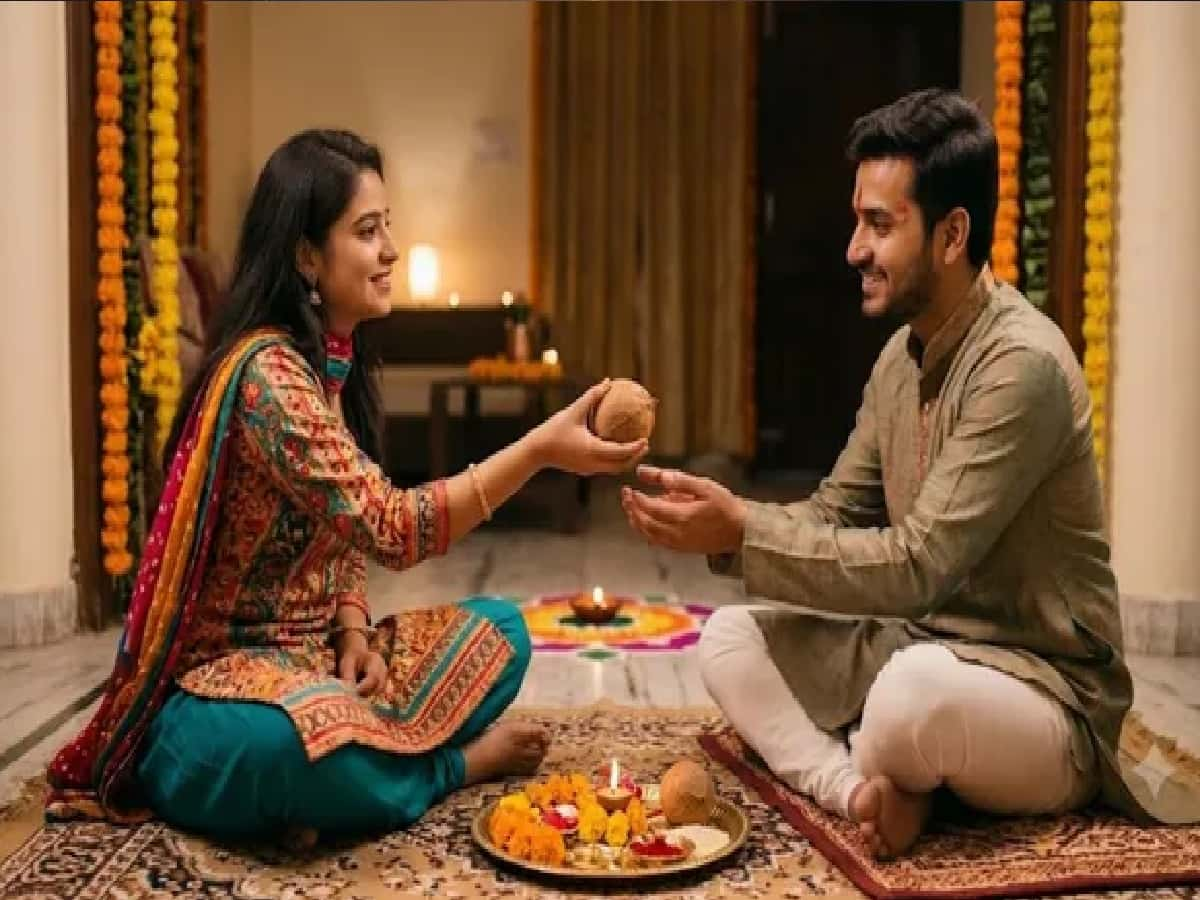
Bhai Dooj 2026: Why Sisters Gift Dry Coconut to Brothers
As the festive radiance of Diwali and Govardhan Puja illuminates homes across India, families prepare to conclude the five-day festive cycle with Bhai Dooj, the sacred celebration honoring the eternal bond of love, trust, and mutual protection between brothers and sisters. Falling on the second lunar day of the waxing fortnight in the holy month of Kartik, this festival, also classically known as Yama Dwitiya, transforms domestic spaces into altars of deep spiritual devotion. Sisters across Uttar Pradesh, Bihar, Delhi-NCR, Maharashtra, and Bengal prepare ceremonial brass plates adorned with vermilion, unbroken rice grains, aromatic sandalwood paste, and festive sweets. Yet, among all the sacred articles placed before a brother, none carries greater curiosity or ancient significance than the humble dry coconut, traditionally known in northern heartlands as the gola. While generations have observed this custom of placing a hardened coconut shell into a brother's palm after applying the auspicious tilak, the tradition is rooted in an extraordinary Puranic encounter between Lord Yamraj, the cosmic arbiter of justice and death, and his beloved sister, the sacred river goddess Yamuna.
The Sacred Myth: How Yamraj and Yamuna Bounded Bhai Dooj
The theological foundation of Bhai Dooj traces back to the celestial lineage of Lord Surya, the Sun God, and his consort Goddess Chhaya (or Sanjna), who were blessed with twins: Yamraj and Yamuna. Growing up in the heavens, the siblings shared an inseparable bond characterized by mutual respect and devotion. However, as cosmic responsibilities were assigned, Yamraj was crowned the ruler of Yamaloka and the relentless judge of human karma, tasked with guiding departed souls and maintaining cosmic equilibrium. Consumed by his austere and demanding responsibilities, Yamraj became completely isolated from personal attachments, rarely finding time to visit his sister, who had descended to Earth as the flowing river Yamuna.
Yamuna longed constantly for her brother's presence, sending regular invitations to his heavenly court, only to be met with polite deferrals driven by his overwhelming duties. Eventually, on the auspicious date of Kartik Shukla Dwitiya, touched by her persistent yearning, Yamraj resolved to set aside his cosmic scales. In a rare act of supreme mercy, the Lord of Death unlocked the gates of Yamaloka, granting temporary reprieve to suffering souls, and arrived unannounced at Yamuna’s earthly threshold. Overjoyed by her brother’s unexpected arrival, Yamuna welcomed him with utmost reverence, washed his travel-weary feet, prepared a grand feast of traditional delicacies, and applied a protective tilak of vermilion and sandalwood upon his brow.
The Mystery of the Gola: Why Dry Coconut Holds Cosmic Significance
As their joyous reunion drew to a close and Yamraj prepared to return to his underworld realm, Yamuna presented him with a parting gift: a dried, intact whole coconut (sookha gola). Perplexed by the simple offering, Yamraj asked why she had chosen a dry coconut instead of precious jewels or celestial treasures. Yamuna smiled and answered that the coconut would serve as an unyielding keepsake of her love; whenever he looked upon it amidst his grim responsibilities, it would remind him of his sister’s prayers, his promise to return, and the warmth of her home.
Moved to tears by her selfless hospitality, Yamraj urged Yamuna to ask for any boon she desired. Instead of asking for personal wealth or celestial power, Yamuna requested a universal blessing: that Yamraj visit her on this exact lunar date every year, and that any brother who visits his sister’s home on Kartik Shukla Dwitiya, accepts her cooking, and receives her sacred tilak and dry coconut shall be shielded from untimely demise (Akaal Mrityu), fear of death, and the torment of Yamadutas. Yamraj granted the boon without hesitation, adding that siblings who bathe together in the holy waters of the Yamuna on this day would attain spiritual purification and freedom from karmic distress. Thus, the dry coconut became a physical talisman of longevity, symbolizing an unbreakable armor that protects the brother from physical adversities and spiritual obstacles.
Symbolism of the Coconut: Armor, Purity, and Enduring Life
Beyond the mythological narrative, the physical structure of the dry coconut carries deep spiritual symbolism in Vedic thought. The coconut consists of three distinct layers: an outer fibrous husk, a hard wooden shell, and a pure, nourishment-rich kernel within. The impenetrable outer shell represents the sister’s fierce protective prayers, forming an invisible shield around her brother against negative energies, evil eyes (nazar dosha), and sudden calamities. The sweet, pristine kernel inside represents the purity, sincerity, and sweetness of the sister's intentions, untainted by commercial greed or personal vanity.
Furthermore, unlike fresh tender coconuts that quickly spoil once opened, a dried coconut retains its form, density, and natural oils for months without rotting. In traditional Indian symbolism, this resilience signifies longevity (Ayushya) and steadfast loyalty. By tying a sacred crimson thread (kalawa or mauli) around the dry gola before placing it on the brother’s palm, the sister invokes divine blessings for his health and economic vitality. In northern traditions, brothers are instructed to keep this consecrated coconut safe in their personal belongings or study desks throughout the year, serving as an auspicious reminder of familial duty and divine protection.
Auspicious Timings: Bhai Dooj 2026 Tithi and Shubh Tilak Muhurat
For the year 2026, the observance of Bhai Dooj requires careful attention to the lunar calendar, as the auspicious Dwitiya Tithi spans across two calendar days. According to astronomical calculations from leading Vedic panchang desks, the second day of the bright fortnight of Kartik begins on Tuesday, November 10, 2026, at 2:00 PM and concludes on Wednesday, November 11, 2026, at 3:53 PM.
Following the universal Vedic principle of Udaya Tithi—which determines festival observances based on the sunrise tithi—the nationwide celebrations of Bhai Dooj will take place on Wednesday, November 11, 2026. Vedic astrologers emphasize that the tilak ceremony holds maximum spiritual potency when performed during the Aparahna Kaal (the afternoon window), when solar energy aligns harmoniously with planetary benefic influences. For Bhai Dooj 2026, the most auspicious Shubh Muhurat for applying the sacred tilak is between 1:10 PM and 3:20 PM on November 11, providing devotees with an ideal two-hour-and-ten-minute window to execute their family rituals.
The Complete Tilak Thali: Ingredients, Chants, and Sibling Exchange
Performing the Bhai Dooj ceremony involves a structured set of traditional steps passed down through centuries. To begin the ceremony, the brother is traditionally seated on a wooden pedestal facing either the East or North direction, orientations associated with life force, mental vitality, and spiritual receptivity. The sister prepares the ceremonial thali containing pure vermilion (kumkum), sandalwood paste (chandan), unbroken raw rice grains (akshat), dry coconut wrapped in kalawa, batasha or mawa sweets, and a lighted ghee lamp.
The sister gently applies a tilak of vermilion and sandalwood paste to the brother's forehead, pressing akshat over the mark to symbolize prosperity and wholeness. Sandalwood provides a calming influence on the Ajna chakra (the third eye center), encouraging mental poise and righteous intellect. She then ties the sacred thread around his wrist, waves the aarti lamp in clockwise devotion, and presents the consecrated dry coconut and sweets to his right hand. While performing this ritual, sisters silently or vocally recite traditional Awadhi, Maithili, or Sanskrit verses, praying that just as Yamuna secured immortality for Yamraj, their brother may enjoy health, honor, and long life. In return, the brother touches his sister’s feet in reverence if she is elder, or offers blessings and heartfelt gifts if she is younger, reaffirming his lifelong pledge to support her dignity, welfare, and happiness.
Pan-Indian Resonance: From Yama Dwitiya to Bhai Phonta
While northern states refer to the occasion as Bhai Dooj or Bhaiya Dooj, the festival's spiritual core resonates across the entire subcontinent under various regional names and customs. In West Bengal and Assam, the day is celebrated with artistic splendor as Bhai Phota, where sisters observe a strict morning fast before applying a vertical tilak made of sandalwood paste, curd, and kajal to their brothers' foreheads while reciting timeless Bengali verses: "Bhaier kapale dilam phonta, Jamer duare porlo kanta" (I place this mark on my brother's brow, casting a thorn at the doorstep of Yamraj). In Maharashtra and Goa, the celebration is known as Bhau Beej, where sisters prepare special festive delicacies like basundi poori to honor their visiting brothers. In Nepal and bordering Himalayan pockets, it is celebrated as Bhai Tika, where seven-colored tilaks and floral garlands made of Gomphrena globosa flowers are offered.
Along the banks of the sacred Yamuna River, particularly in Mathura and Vrindavan, thousands of brothers and sisters gather at the historic Vishram Ghat on Kartik Shukla Dwitiya to take a ceremonial dip hand-in-hand, reenacting the divine pact made by Yamraj and Yamuna thousands of years ago. This pan-Indian harmony underscores a profound philosophical truth: Bhai Dooj is not merely a social custom or a casual exchange of gifts. It is a celebration of spiritual protection where love transcends ordinary mortality. As families come together this festive season, the unbroken tradition of the tilak and the dry coconut stands as an inspiring reminder that sincere devotion and unconditional familial love possess the power to triumph over fear, distance, and time itself.




