






Anant Chaturdashi 2026: Right Hand or Left, Vedic Rules for Tying the 14-Knot Sacred Thread
Among the most spiritually transformative observances in Sanatana Dharma, Anant Chaturdashi stands as an auspicious occasion dedicated to the infinite, cosmic form of Lord Vishnu—known as Lord Ananta. Falling on the fourteenth day of the Shukla Paksha in the holy month of Bhadrapada, this revered festival aligns this year with Friday, September 25, coinciding directly with the grand culmination of Ganesh Visarjan. Devotees fast, invoke divine protection, and perform comprehensive pujas to eliminate karmic suffering and invite domestic abundance. The central spiritual sacrament of this festival is tying the sacred Anant Sutra, a consecrated thread woven with fourteen knots that serves as a protective spiritual talisman. However, Vedic scholars caution that wearing this holy band without adhering to scriptural rules, gender designations, and sacred timelines nullifies its spiritual efficacy.
The Mystical Anatomy of Anant Sutra: 14 Knots and the 14 Cosmic Lokas
The Anant Sutra is not an ordinary decorative wristband; it is crafted from pure cotton or silk, sanctified with turmeric, vermilion, and holy water before invocation. The defining characteristic of this holy cord is its precisely knotted structure, featuring exactly fourteen knots along its length. According to classical Puranic cosmology, these fourteen knots symbolically represent the fourteen realms of existence (Chaturdasha Bhuvana) created and sustained by the Supreme Being—the seven higher planetary realms comprising Bhur, Bhuvar, Svar, Mahar, Jana, Tapas, and Satya, along with the seven lower subterranean realms including Atala, Vitala, Sutala, Talatala, Mahatala, Rasatala, and Patala. Because all cosmic realms abide within the vast expanse of Lord Ananta, each knot is infused with divine energy during the ceremony, transforming the cord into a potent shield against negative planetary transit and worldly obstacles.
Right vs. Left Arm: Strict Astrological and Gender Rules for Wearing the Thread
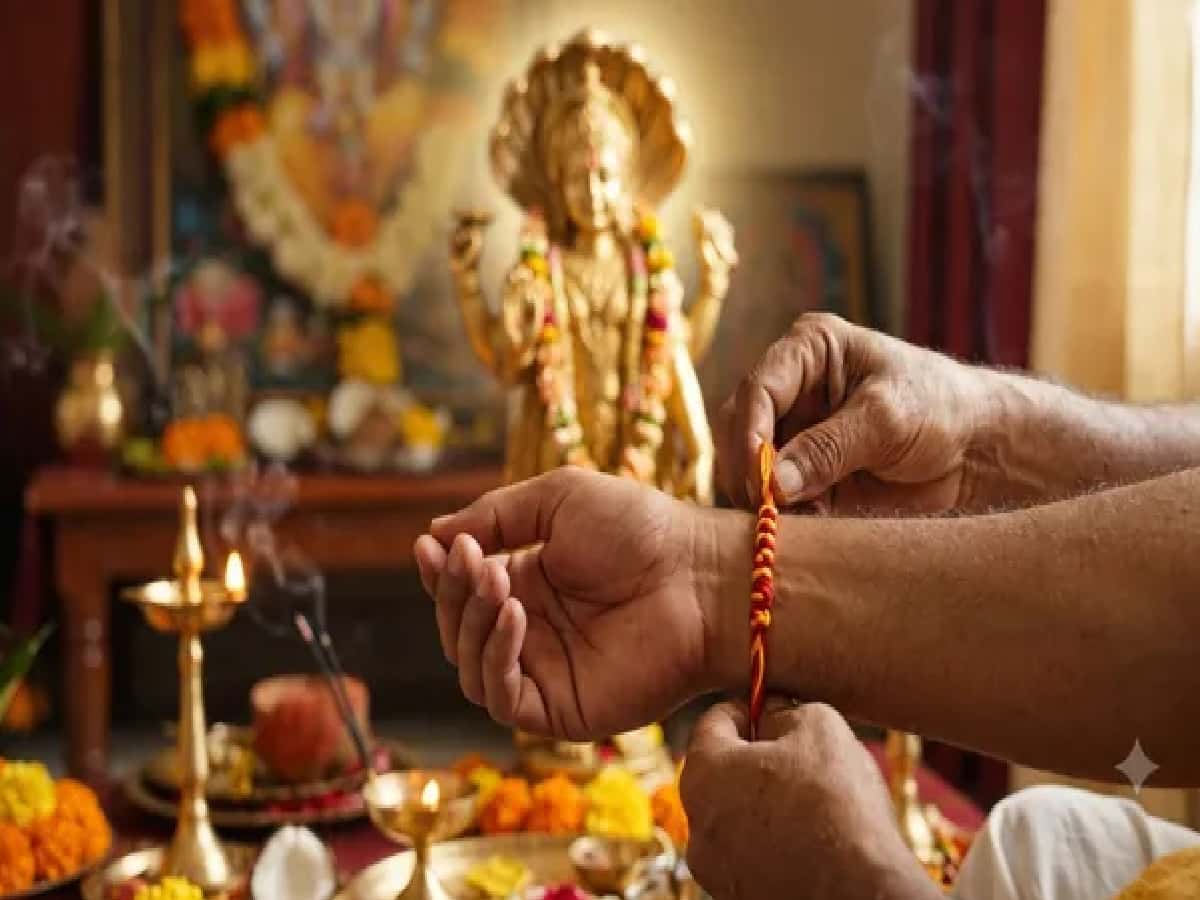
Vedic scriptures specify distinct anatomical rules for wearing the Anant Sutra to ensure proper alignment with subtle bodily energies. Astrological guidelines dictate that men must tie the consecrated thread on their right upper arm or right wrist, representing the solar, action-oriented Pingala nadi. For married women, traditional scriptures prescribe tying the sacred thread strictly on the left upper arm or left wrist. In Vedic philosophy, the left side of a woman embodies feminine grace, marital saubhagya, and auspicious vitality. However, if an unmarried woman or young girl participates in the vrat, she is advised to tie the thread on her right hand, similar to men. Tying the thread on the incorrect limb disrupts this subtle vibrational polarity, which is why priests emphasize following these traditional mandates closely.
Sacred Rituals, Consecutive 14-Day Vow, and Methodical Puja Vidhi
To activate the spiritual potency of the Anant Sutra on September 25, the cord must undergo systematic ritual consecration before being worn. Devotees should cleanse their home altar, place an idol or image of Lord Vishnu resting on Sheshanaga, and offer panchamrit, yellow flowers, and sweet bhog. The 14-knot thread is placed reverently at the feet of Lord Vishnu, purified with sacred mantras, and sanctified with chandan and akshat. Only after the completion of the Anant Vrat Katha and aarti should the thread be worn with sincere prayers for forgiveness and prosperity. Once tied, traditional discipline requires keeping the thread intact on the arm for a minimum of fourteen consecutive days, adhering to a lifestyle of purity and mindfulness to ensure continuous divine protection throughout the year.