







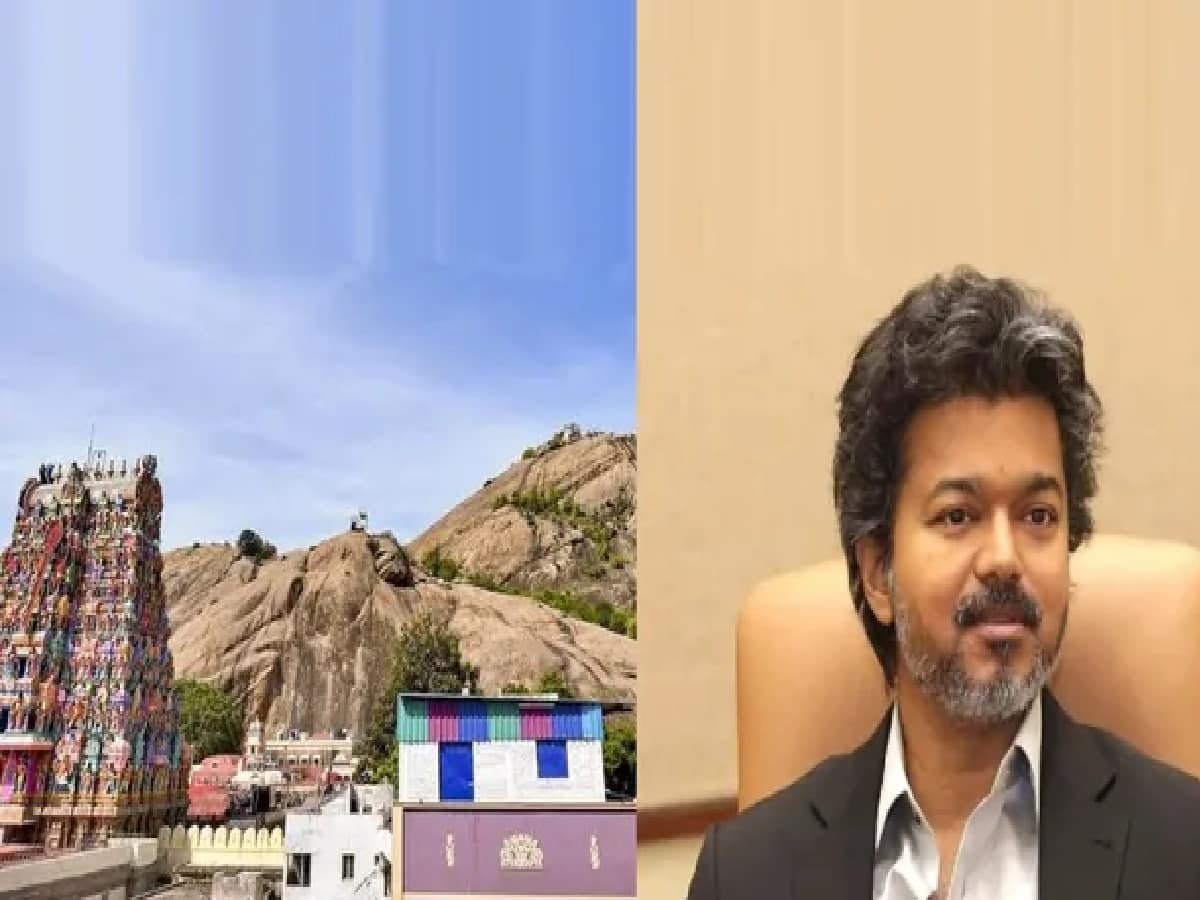
TN Opposes SC Plea for ASI Takeover of Tirupparankundram Hill
The Tamil Nadu government has formally opposed a petition before the Supreme Court of India seeking the transfer of control of the historic Arulmigu Subramaniaswamy Temple and the Tirupparankundram hill in Madurai to the Archaeological Survey of India (ASI), alongside major alterations to traditional Karthigai Deepam rituals. In a detailed counter-affidavit filed before a bench of Justices Arvind Kumar and Vipul M. Pancholi, the state’s Hindu Religious and Charitable Endowments (HR&CE) Department urged the apex court to dismiss the plea moved by the Hindu Dharma Parishad, which is scheduled to come up for hearing on Tuesday, November 17, 2026. Revered across Tamil Nadu—from Madurai, Chennai, Coimbatore, and Tiruchirappalli to Thanjavur and Tirunelveli—as the first of Lord Murugan’s six sacred abodes (Arupadai Veedu), the Tirupparankundram hill shrine sits at the center of a long-running legal and administrative dispute over where and by whom the ceremonial Karthigai Deepam lamp should be lit.
Why the Karthigai Deepam Location Is at the Center of the Dispute
For over 150 years, the ceremonial Karthigai Deepam at the Arulmigu Subramaniaswamy Temple has been lit exclusively by temple authorities at the Deepa Mandapam, located near the Uchippillaiyar Temple on the lower slopes of Tirupparankundram hill. However, the petitioner organization and allied Hindu groups have sought judicial directions permitting lamps to be lit atop the hill at an ancient stone pillar known as the Deepathoon—situated roughly 50 meters away from the Hazrat Sultan Sikandar Badusha Aulia Dargah.
In its counter-affidavit, the Tamil Nadu government firmly rejected the claim that lighting the lamp on the lower slope was merely a temporary wartime adjustment. HR&CE Commissioner Dr. T. G. Vinay submitted that the Deepa Mandapam tradition rests on established Agama scriptures, the opinion of temple Sthanikars (hereditary priests), and uninterrupted customary practice spanning more than a century and a half. Relying also on binding directions issued by the Madras High Court in 1996, the state maintained that only the temple Devasthanam holds the authority to light the Deepam at its customary spot, and no private organization or individual can unilaterally impose a new ritual site without Devasthanam approval and statutory HR&CE clearance.
Three Specific Demands Opposed by Tamil Nadu in the Supreme Court
In its submission before the Supreme Court, the HR&CE Department specifically countered three core reliefs sought by the Hindu Dharma Parishad in its Article 32 writ petition:
| Petition Relief Sought by Hindu Dharma Parishad | Tamil Nadu Government's Legal & Administrative Stand |
| 1. Handing over the entire temple and Tirupparankundram hill to the ASI | Opposed; temple holds settled title per 1923 civil court decree & 1931 Privy Council order; ASI protection covers only specific rock-cut caves and inscriptions. |
| 2. Keeping a lamp burning 24 hours a day on the hilltop 'Deepathoon' pillar | Opposed; departs from 150-year-old Agamic practice and risks friction near the dargah located ~50 meters away. |
| 3. Illuminating the entire Tirupparankundram hill with lamps during Karthigai Deepam | Opposed; lighting lamps across multiple hilltop spots could disrupt crowd safety and trigger law-and-order issues. |
Addressing the demand for an ASI takeover, Commissioner T. G. Vinay pointed out that ownership of the Tirupparankundram hill by the Arulmigu Subramaniaswamy Temple was conclusively settled through decades of civil litigation—including a landmark 1923 civil court judgment subsequently affirmed by the Privy Council in 1931. The state emphasized that central archaeological protection at Tirupparankundram applies strictly to designated monuments such as ancient rock-cut caves and inscriptions, rather than the entire hill or an active, functioning temple governed by statutory endowment law.
Law-and-Order Concerns and Article 32 Maintainability Challenge
Beyond historical title and religious custom, the Tamil Nadu government raised serious public-order concerns in its affidavit. Officials noted that the temple administration conducts annual festivals in close coordination with Madurai district police, fire services, and revenue authorities to ensure peaceful coexistence at a sensitive hill site that carries a past history of communal tension. Permitting lamps to be lit at multiple locations higher up the hill—particularly in close proximity to the Hazrat Sultan Sikandar Badusha Aulia Dargah—could unsettle long-standing administrative safeguards and spark avoidable law-and-order complications.
The state also challenged the constitutional maintainability of the petition under Article 32, arguing that the petitioner had failed to demonstrate any violation of fundamental rights that would justify bypassing settled civil decrees or stripping statutory custody from the HR&CE Department. With the Supreme Court scheduled to hear the matter on November 17, 2026, the upcoming proceedings will weigh century-old property adjudications and customary Agamic practices against the petitioner’s plea for expanded hilltop worship.




