







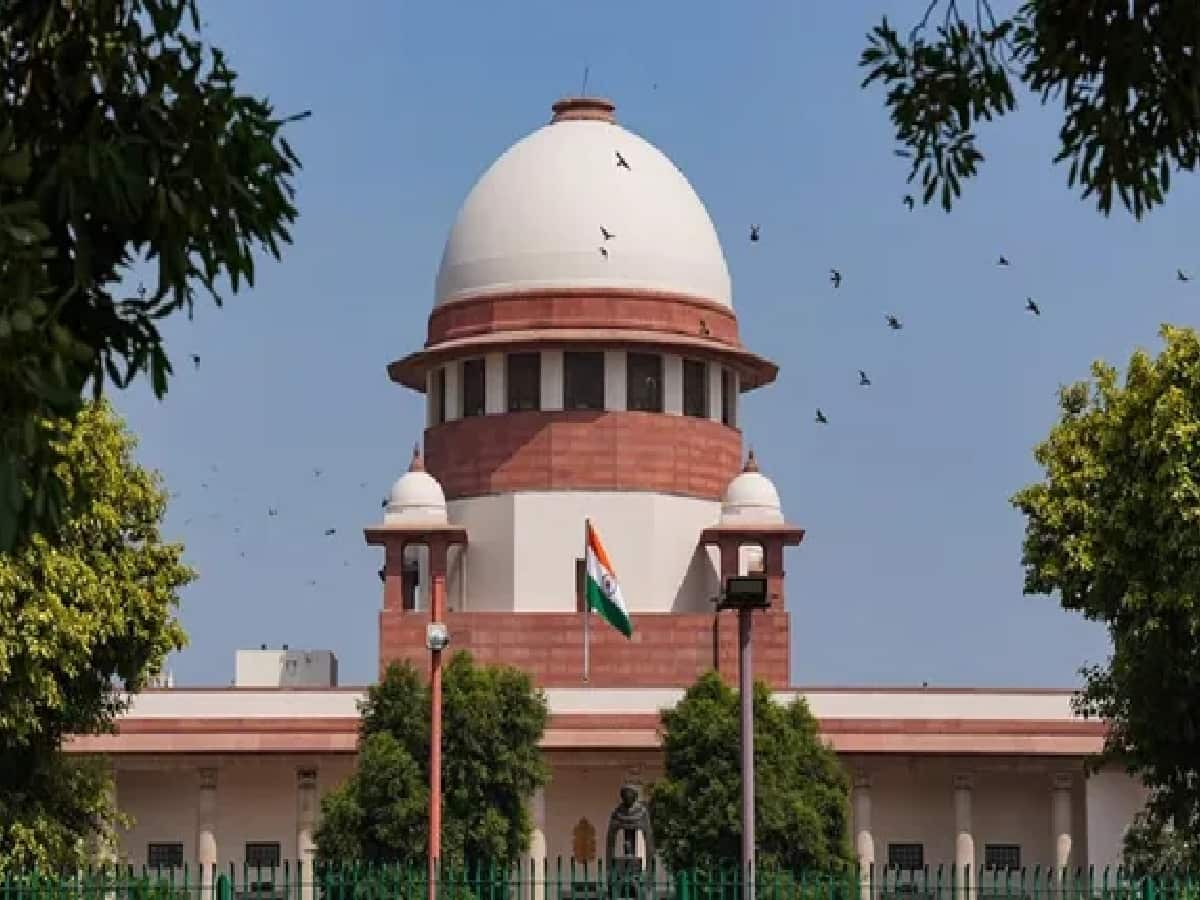
SC Reaffirms OBC Creamy Layer Rule: Parental Salary Not Decisive
In an authoritative ruling upholding substantive equality and constitutional jurisprudence, the Supreme Court of India has reiterated that the salary or commercial earnings of parents employed in Public Sector Undertakings (PSUs) or the private sector cannot serve as the sole determinative ground for excluding Other Backward Class (OBC) candidates from non-creamy layer reservation benefits. Reaffirming its landmark verdict delivered earlier on March 11, 2026, a division bench comprising Justice P.S. Narasimha and Justice R. Mahadevan dismissed the Union Government’s plea seeking prospective application of the judgment. The apex court clarified that parental occupational status, cadre equivalence, and the layered parameters codified under historical government memorandums must be evaluated comprehensively rather than relying on crude income computations. Delivered alongside another consequential verdict from a separate bench classifying the National Book Trust (NBT) as an organ of the "State" under Article 12, Friday’s legal proceedings mark a major milestone in Indian constitutional law, safeguarding affirmative action for civil service aspirants while holding government-controlled institutions accountable to fundamental rights.
Rebuffing Prospective Relief: Centre's Plea for Deferral Denied
The legal confrontation unfolded after the central government approached the top court requesting that the March 11, 2026, verdict in the high-profile case titled Union of India v. Rohith Nathan be made effective exclusively from a future date. Invoking the extraordinary plenary powers of the Supreme Court under Article 142 of the Constitution, the Centre argued that an immediate or retrospective enforcement of the ruling would trigger "administrative chaos" across central ministries, recruitment boards, and public sector enterprises. The government submitted that revisiting finalized selection drives would inflict unintended hardship on serving officers and appointees who were never parties to the original litigation, urging the bench to restrict the ruling's reach to future recruitment cycles.
However, the bench of Justices P.S. Narasimha and R. Mahadevan firmly rejected the Centre’s arguments, stating that there was no valid legal or constitutional justification to defer the implementation of its judgment. The court emphasized that the March 11 decision conclusively crystallized the legal rights of the aggrieved candidates who had spent years fighting for their legitimate entitlements before judicial forums. The judges noted that the respondent candidates rightfully fall within the non-creamy layer bracket of OBCs and are fully entitled to their reservation benefits, rank allocations, and cadre postings in the recruitment drives where they qualified. While refusing to grant prospective overruling, the bench took a balanced approach to administrative realities by granting the Union Government a final two-month extension to execute the directives, extending the original six-month compliance window established in March.
Deconstructing the Criteria: Status, Equivalence, and the 1993 OM
The core of the dispute centers on the method by which administrative bodies assess the economic threshold for the OBC creamy layer. For decades, the foundational framework governing creamy layer exclusions has been guided by the landmark Indra Sawhney (1992) nine-judge Constitution Bench ruling and the subsequent Department of Personnel and Training (DoPT) Office Memorandum (OM) issued on September 8, 1993. Under these established instruments, sons and daughters of Group A and Group B civil servants are excluded from OBC quotas based on the occupational status and social standing of their parents. Crucially, the 1993 framework explicitly decoupled ordinary salary earnings and income derived from agricultural holdings from the income-wealth test.
In the case of public sector undertakings, public banks, universities, and private enterprises, the 1993 OM mandated that the government establish formal equivalence between PSU positions and central civil service cadres. However, successive administrative delays left several PSU categories without clear statutory equivalence. As a result, recruitment bodies began directly aggregating the total salaries and gross incomes of PSU and corporate-sector parents, treating them as disqualified under the gross financial income ceiling, which has historically been set at ₹8 lakh per annum. The Supreme Court dismantled this practice, reaffirming that evaluating parents purely on nominal salary without establishing post equivalence or examining non-salary income violates the letter and spirit of the 1993 OM and the subsequent DoPT explanatory circular issued in 2004. The bench observed that treating a middle-tier PSU employee’s gross earnings on par with affluent corporate wealth ignores social reality, stressing that income from salary cannot be used as an automatic weapon to disenfranchise deserving backward-class candidates.
Safeguarding Concluded Appointments: The Scope for Affected Aspirants
Addressing the Centre's concerns regarding potential instability in public administration, the Supreme Court provided clear operating parameters to govern the implementation of the verdict. The bench clarified that granting relief to the petitioners would not lead to reopening closed appointments or altering the seniority of personnel already serving across government cadres. The court highlighted a crucial piece of administrative history: in a formal communication dated December 20, 2016, the DoPT had expressly put candidates on notice that selections and allocations under the Civil Services Examination (CSE) 2016 were provisional and strictly subject to the final outcome of the appeals pending before the apex court. Consequently, fulfilling the claims of the winning litigants represents the execution of an established judicial undertaking rather than an unexpected disruption.
For candidates in similar situations who were not direct parties to the appeal, the bench ruled that individuals whose challenges are actively pending before the Central Administrative Tribunal (CAT), High Courts, or other competent administrative authorities may have their claims adjudicated on their individual merits. Adjudicating bodies have been directed to evaluate those claims in accordance with the principles laid down in the March 11 judgment and the interpretation of the 1993 OM and 2004 letter. At the same time, the top court underscored its respect for executive domain, declining to impose rigid judicial deadlines on the government for consulting stakeholders or formalizing equivalence across PSU cadres, confirming that overarching policy formulation remains within the domain of the legislature and executive.
Defining the State: National Book Trust Brought Under Article 12
In another significant judgment delivered on Friday, a Supreme Court bench comprising Justice Prashant Kumar Mishra and Justice Augustine George Masih held that the National Book Trust (NBT) qualifies as an organ of the "State" within the meaning of Article 12 of the Constitution. Dismissing an appeal filed by the Chairman of the National Book Trust and others against a 2012 full-bench ruling of the Delhi High Court, the apex court ruled that the central government exercises "deep and pervasive" administrative, financial, and functional control over the publishing body. Writing the judgment, Justice Mishra noted that NBT’s existence traces directly back to Government of India resolutions dated June 15, 1957, and September 28, 1962, established with the public objective of producing and distributing affordable literature.
The bench noted that the NBT Chairman is appointed directly by the central government and serves at its pleasure, government nominees dominate its executive committee, and representatives from the Union Ministry of Finance act as its chief financial advisers. Rejecting arguments that commercial revenues generated from book sales gave the institution independent autonomy, the court held that partial financial self-sufficiency cannot override the extensive statutory and executive supervision exercised by the Union Ministry of Education. The ruling carries practical significance for citizen rights: by declaring NBT an authority under Article 12, the Supreme Court confirmed that aggrieved citizens, authors, and employees can file constitutional writ petitions under Article 226 and Article 32 to enforce their fundamental rights against arbitrary decisions, even though its staff members are not classified as conventional civil servants under Articles 309, 310, and 311.
Together, the dual rulings issued from New Delhi demonstrate the Supreme Court's balanced approach to constitutional governance. By shielding OBC candidates from arbitrary income calculations, the court has defended the original intent of affirmative action, while its ruling on the National Book Trust ensures that public bodies funded and directed by the state remain subject to constitutional scrutiny and fundamental rights guarantees.




