







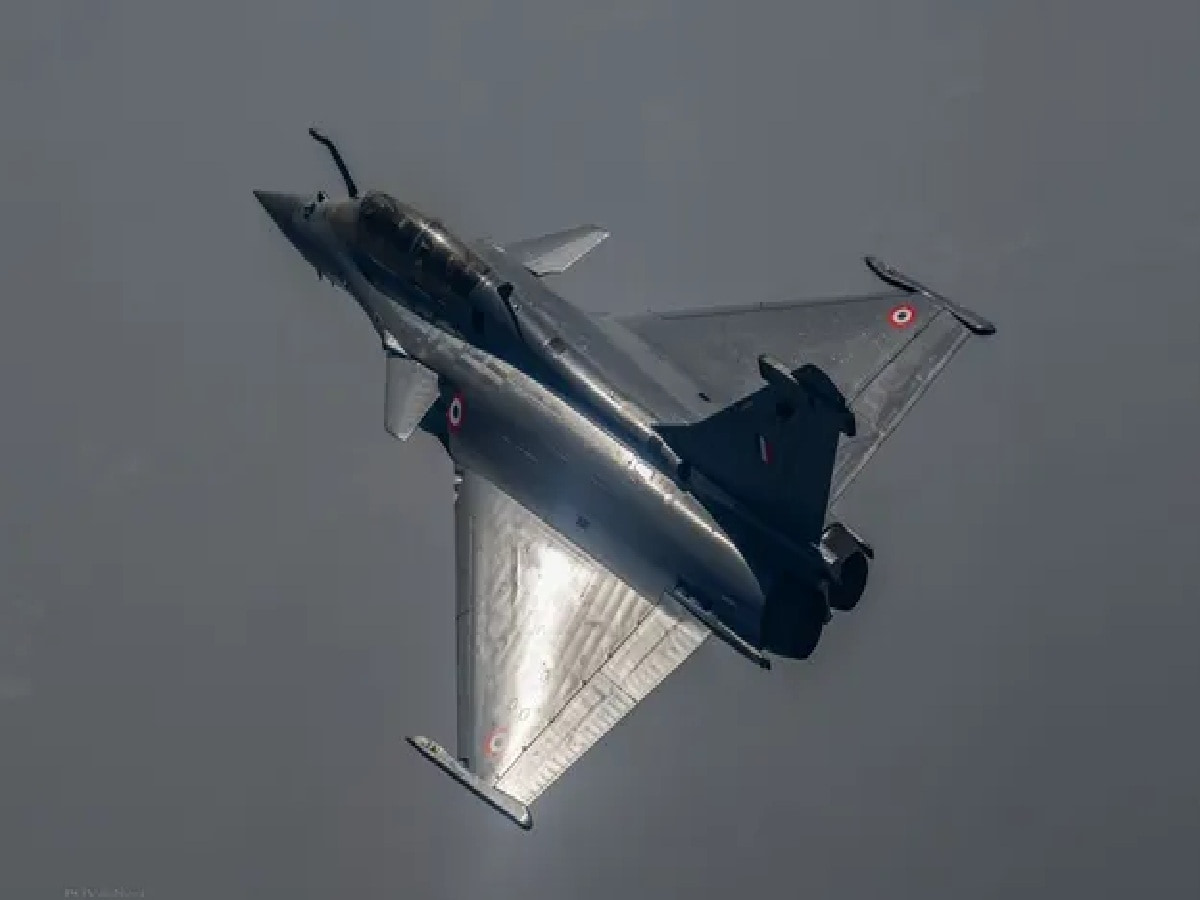
Rafale Marine Begins Final Goa Trials for INS Vikrant: India Prepares for Game-Changing
In a landmark step toward reinforcing India’s maritime strike capabilities across the Indian Ocean Region, the Indian Navy has commenced the final phase of operational trials for the Rafale Marine (Rafale M) fighter aircraft at the naval aviation facility in Goa. The intensive testing regime is designed to validate structural modifications and flight envelope parameters required to operate the advanced French fighter jets from the flight deck of the indigenous aircraft carrier INS Vikrant. Defense officials confirmed on Thursday, October 22, 2026, that the evaluation focuses on fine-tuning onboard mechanical and software interfaces for seamless carrier integration. The trials mark an essential milestone under India’s inter-governmental procurement of 26 Rafale Marine multirole carrier-borne fighters, with initial fleet deliveries projected to begin in late 2028 or early 2029 to replace aging platforms and elevate the navy's carrier air wing to frontline global standards.
Bridging CATOBAR to STOBAR: Validating Ski-Jump Takeoffs and Arrestor Recovery for INS Vikrant
The primary technical objective behind the Goa trials is bridging the operational divide between two distinct carrier launch philosophies. The 45,000-ton indigenous aircraft carrier INS Vikrant operates on a Short Take-Off But Arrested Recovery (STOBAR) design, utilizing an angled ski-jump ramp to launch aircraft under their own engine thrust, accompanied by three arrestor wire cables to trap incoming jets during landing. In contrast, the French Navy originally commissioned the Rafale Marine for Catapult Assisted Take-Off But Arrested Recovery (CATOBAR) flattops—such as the nuclear-powered Charles de Gaulle—which rely on steam or electromagnetic catapults to launch aircraft. The trials at the shore-based test facility (SBTF) in Goa are rigorously evaluating the fighter's aerodynamic performance during maximum-load ski-jump launches, emergency wave-offs, structural stress on the reinforced undercarriage, and arrestor hook engagement dynamics. These comprehensive tests verify that the French platform meets all flight safety standards, deck footprint tolerances, and internal weapon lift dimensions required for operational deployment on the Indian warship.
Mach 1.8 Speed and Heavy Payload: Unpacking Dassault's Naval Multirole Dominance
Manufactured by French aerospace leader Dassault Aviation, the Rafale Marine is an omnirole, twin-engine fighter engineered specifically for expeditionary sea control, blue-water air defense, deep interdiction strikes, maritime reconnaissance, and long-range anti-shipping missions. Powered by twin Safran M88-E4 turbofan engines producing formidable dry and afterburning thrust, the aircraft achieves a maximum speed of Mach 1.8 (approximately 2,200 km/h) and boasts a maximum take-off weight (MTOW) of 24.5 metric tons. Equipped with a heavy-duty naval landing gear, a nose-wheel jump-strut system, and an arrestor hook, the Rafale M carries a formidable arsenal. Its multi-station weapons load includes beyond-visual-range Meteor and Mica air-to-air missiles, long-range SCALP cruise missiles, sea-skimming Exocet AM39 anti-ship missiles, and HAMMER (Highly Agile Modular Munition Extended Range) precision-guided strike munitions. Once integrated aboard INS Vikrant alongside its companion combat fleet, the Rafale Marine will provide the Indian Navy with unrivaled air-superiority range and tactical deterrence across strategic maritime choke points.




