







These Sacred Puja Items on the Floor to Prevent Poverty and Bad Luck
In the ancient architectural and metaphysical science of Vastu Shastra, the spatial energy of a household is intricately linked to the purity, placement, and veneration of sacred objects. Rooted in Vedic philosophy, every consecrated artifact, deity idol, and ritualistic accessory carries a specific cosmic vibration that influences the peace, health, and economic stability of the occupants. Religious scholars and Vastu practitioners emphasize that allowing revered ritual items to touch the bare floor—whether inadvertently during daily prayers or while cleaning the home altar—is considered an act of spiritual disrespect that instantly neutralizes their positive frequencies. Disregarding these foundational guidelines can disrupt the spatial harmony of a residence, causing acute Vastu dosha, chronic mental stress, and persistent financial setbacks.
Shivalinga, Shaligram, and Deities: Why Direct Floor Contact Violates Sacred Purity
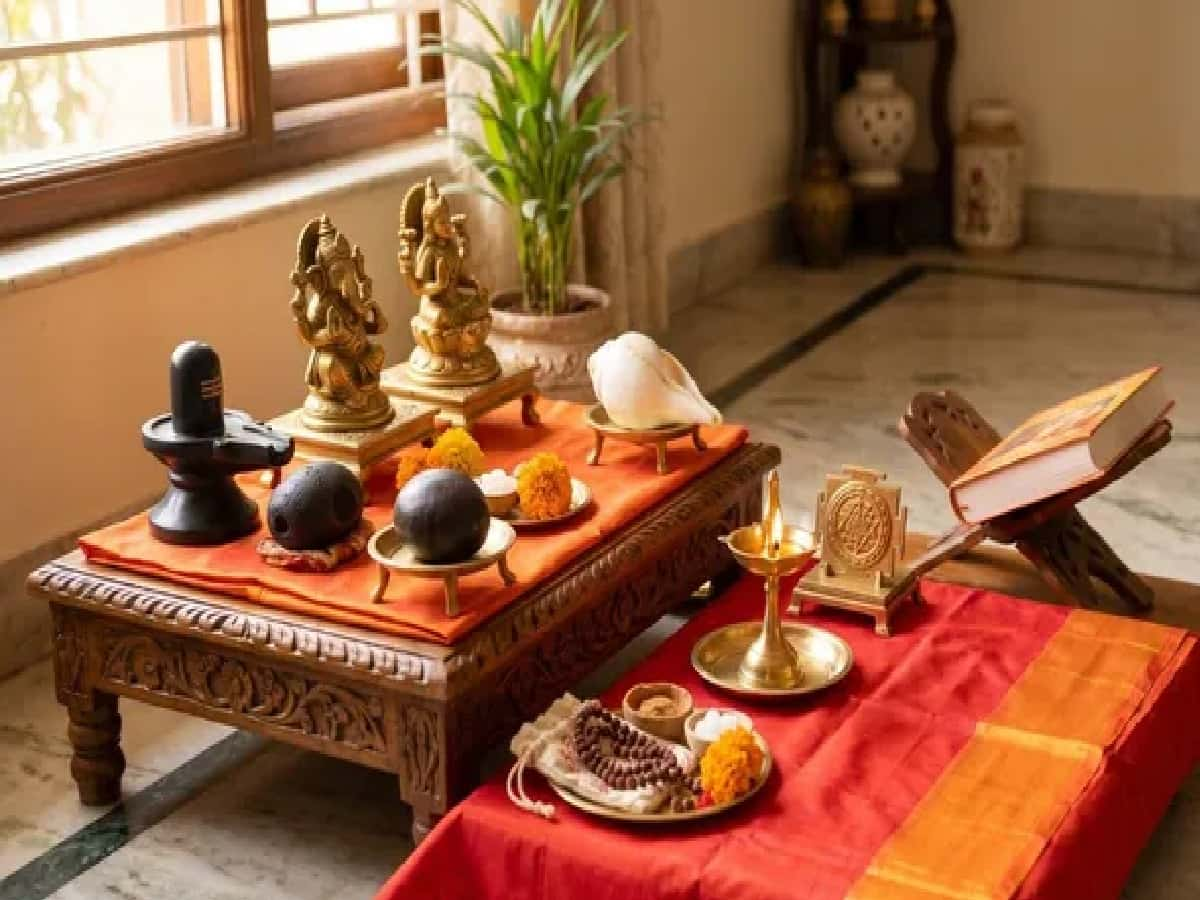
Among the most sacred artifacts found in home temples, the Shivalinga and the holy Shaligram stone demand the highest degree of ritual sanctity and should never, under any circumstances, be set directly on the bare ground. Regarded as direct embodiments of cosmic consciousness, Lord Shiva and Lord Vishnu, these sacred stones must always remain installed upon a dedicated pedestal, brass platter, or consecrated altar. Handling them requires strictly clean hands, and placing them on the ground is viewed as a severe transgression that depletes the spiritual sanctity of the household. Similarly, the idols and framed images of gods and goddesses must never be placed on the floor even temporarily during deep-cleaning routines. Whenever the home temple is being tidied or refurbished, all deities should be gently rested upon a clean wooden stand (chowki) or draped on an unblemished cloth made of natural yellow or red silk.
Shankh, Diya, and Yantras: Consecrated Symbols That Guard Domestic Wealth
Sacred ritual tools such as the conch shell (Shankh), the ceremonial oil lamp (Diya), and energised Yantras possess potent spiritual significance that directly affects the material fortunes of a household. The conch is revered as the divine brother of Goddess Lakshmi and the sacred emblem of Lord Vishnu, while the lighted diya represents Agni Dev (the fire deity), and geometric structures like the Sri Yantra function as concentrated focal points of cosmic energy. Setting any of these sanctified items directly onto flooring or tiles is believed to generate financial blockages, leading to sudden monetary losses and stagnant career prospects. Traditional rules dictate that a conch must always rest on a brass or silver tripod, the diya should be set on an earthen base, plate, or grain bed, and holy yantras must be permanently anchored to elevated, sanctified platforms within the prayer sanctuary.
Holy Scriptures, Tulsi, and Consecrated Offerings: Preserving Prosperity and Grace
The protocol of elevated placement extends to sacred spiritual scriptures and daily puja offerings. Holy texts such as the Bhagavad Gita, the Ramayana, the Upanishads, and the Puranas are viewed as literal vessels of divine wisdom and should never be placed upon the floor; they must always be stored respectfully on a wooden book stand (rehal), wrapped in clean fabric, or kept inside dedicated cabinets. Furthermore, natural offerings that channel divine blessings—including freshly harvested Tulsi (holy basil) leaves, fragrant puja flowers, natural camphor (kapoor), pure sandalwood paste (chandan), sacred gorochan powder, precious gemstones, and gold—must never touch the floor. By maintaining strict discipline and ensuring that every sacred offering is housed in dedicated containers, brass thalis, or elevated altars, devotees protect the sanctity of their worship space and ensure the continuous flow of divine grace and prosperity throughout their living spaces.




