







9-Day Sharad Purnima: Panna’s Prannathji Temple Recreates a 1740 Miracle
While Sharad Purnima—celebrated across India as Kojagari Purnima or Kumar Purnima—is traditionally observed as a single auspicious night of lunar worship, the historic town of Panna in Madhya Pradesh transforms the occasion into an extraordinary nine-day international spiritual gathering. Set to culminate on Sunday, October 25, 2026, the International Sharad Purnima Festival at the sacred Shri Prannathji Temple draws millions of pilgrims, Pranami sect followers, and global travelers to the diamond city. Unlike conventional full-moon observances, this extensive nine-day festival bridges deep spiritual devotion with the rich martial history of Bundelkhand, creating a cultural corridor that connects sacred Hindu traditions with centuries of regional sovereignty and heritage.
The Sword of 1740: How Prannathji Blessed Maharaja Chhatrasal to Liberate Bundelkhand
The nine-day celebration formally commences on Vijayadashami with the ceremonial raising of the consecrated Veera and the holy Sword at the ancient Shri Khejra Temple. This historic ritual commemorates the pivotal moment in 1740 when spiritual reformer Mahamati Shri Prannathji bestowed a sanctified sword and the symbolic Veera upon the revered Bundela warrior Maharaja Chhatrasal within the Khejra temple complex to safeguard Bundelkhand from foreign dominance. Empowered by the saint’s divine blessings, Maharaja Chhatrasal liberated the entire Bundelkhand region, established an independent empire, and crowned Panna as its prosperous capital, forever intertwining the regional identity of the province with the spiritual lineage of Shri Prannathji.
The Midnight Chariot and the 5-Day Legend of the Akhand Maharas
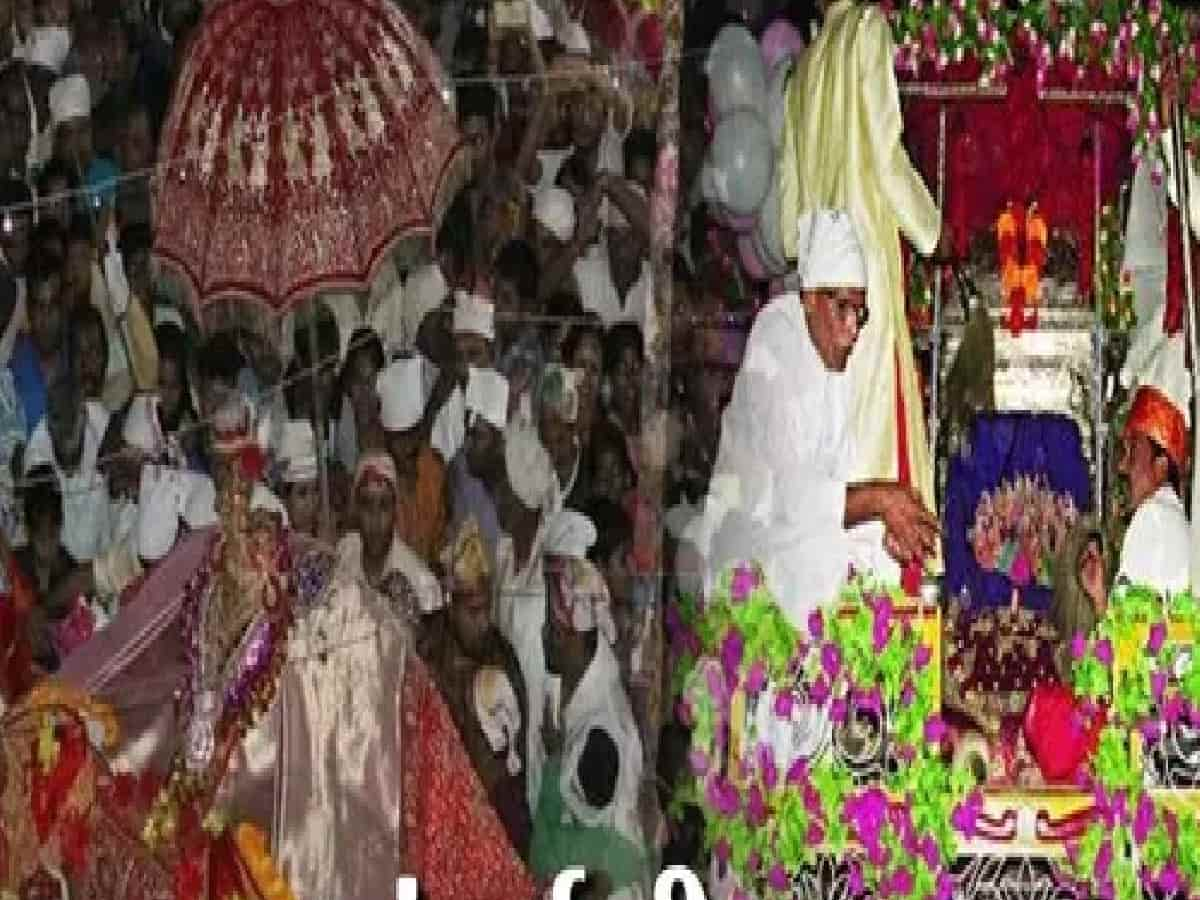
The central spiritual crescendo of the festival unfolds at midnight on the full moon night of Sharad Purnima, when the ceremonial chariot (Rath) carrying the divine presence of Shriji is escorted in a magnificent procession to the Brahma Chabutara located inside the Banglaji Temple. The sanctified procession remains stationed at the Brahma Chabutara for five continuous days, serving as the focal point for devotional night vigils, communal Garba, and classical performances. The ritual commemorates the original Sharad Purnima of 1740, when Mahamati Prannathji camped at the Banglaji Temple alongside 5,000 devoted followers, known as Sundarsaths. As Prannathji narrated the cosmic Maharas performed by Lord Krishna in Vrindavan under the autumn moonlight, a disciple named Sundarnath appealed to the guru to materialize the divine dance on earth. Responding to the collective devotion of his disciples, Mahamati Prannathji led the 5,000 Sundarsaths into an ecstatic, uninterrupted Akhand Maharas that lasted five consecutive days and nights without exhaustion, giving birth to an annual tradition celebrated for nearly three centuries. Today, the festival blends this spiritual ecstasy with a massive socio-cultural fair showcasing Bundelkhandi folk dances, classical recitals, artisanal handlooms, and traditional regional delicacies under the radiant October moonlight.




