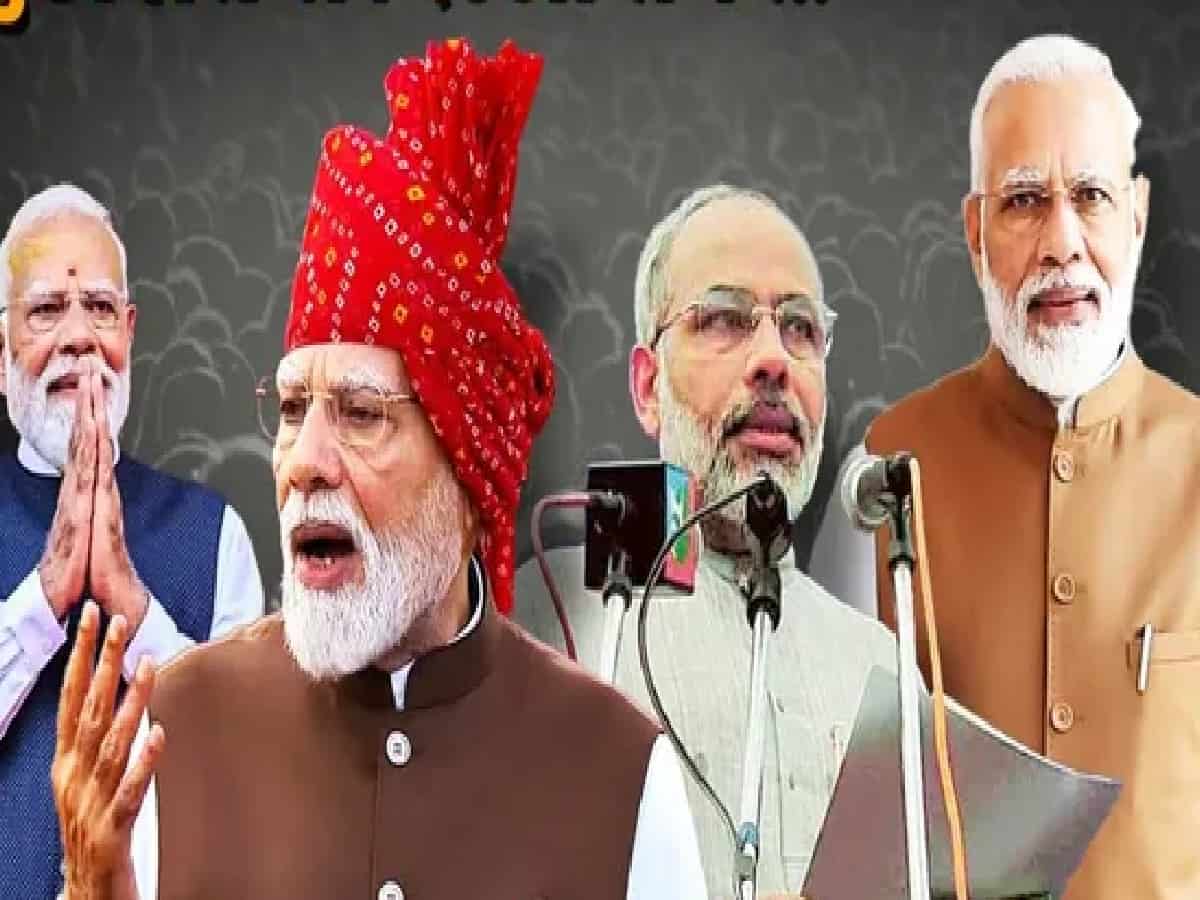
PM Modi Turns 76: 25 Milestones in 25 Executive Years From Gujarat CM to Historic Third Term
The nation is observing the 76th birthday of Prime Minister Narendra Modi today, marked by widespread civic initiatives, cultural programs, and special public outreach events across every state. This milestone carries unique historical significance as it coincides with Narendra Modi nearing a quarter-century of unbroken service in constitutional executive office. Having led Gujarat as Chief Minister for nearly thirteen years before steering the central government as Prime Minister across three successive terms since May 2014, his tenure stands as one of modern India's most consequential governance spans. To commemorate this rare landmark, the Bharatiya Janata Party has officially launched 'Seva Sankalp Abhiyan', an intensive month-long nationwide welfare and public engagement drive running from September 17 to October 17, designed to showcase the socio-economic transformations achieved over the past twenty-five years.
Decades of Grassroots Evolution: From Sangh Pracharak to State Leadership
Narendra Modi's public life began decades before he held elected office, starting in 1971 when he joined the Rashtriya Swayamsevak Sangh (RSS) at age 21, subsequently becoming a dedicated pracharak by 1978. Transitioning to formal politics in 1987 upon joining the Bharatiya Janata Party, he was appointed General Secretary of the Gujarat unit in 1988, establishing organizational frameworks that reshaped regional politics. On October 7, 2001, he took oath as Chief Minister of Gujarat during an unprecedented humanitarian crisis following the devastating Bhuj earthquake. Confronting massive structural destruction, his administration enacted the pioneering Gujarat State Disaster Management Act of 2003, establishing India's first statutory framework for institutional catastrophe response.
Transforming the Regional Blueprint: The Hallmarks of the Gujarat Era
The Chief Ministerial years transformed Gujarat into an industrial powerhouse through structural initiatives that later defined national policy discussions. Rural power supply was stabilized via the Jyotigram Yojana, delivering uninterrupted 24-hour electricity across villages, while the Sujalam Sufalam Yojana combined with check-dam networks systematically recharged groundwater in parched regions like Saurashtra and North Gujarat. In 2003, Modi launched the biennial Vibrant Gujarat Global Summit, turning the state into an international capital magnet. Parallel efforts modernized social infrastructure: the Kanya Kelvani Abhiyan and Shala Praveshotsav boosted female literacy and school admissions, while the Sabarmati Riverfront, Ahmedabad BRTS, and the greenfield master plan for GIFT City—India's first International Financial Services Centre—served as testbeds for next-generation urban architecture.
A Decade of Disruption: Welfare Architectures and Economic Formalization
Entering the national stage with a decisive parliamentary majority on May 26, 2014, Prime Minister Modi initiated governance reforms aimed at saturating welfare delivery and formalizing the economy. Financial inclusion was institutionalized through the Pradhan Mantri Jan Dhan Yojana (PMJDY), providing over 50 crore zero-balance bank accounts linked with the JAM Trinity. Basic sanitation became a mass movement under the Swachh Bharat Mission with rural toilet construction, while the Pradhan Mantri Ujjwala Yojana provided clean cooking gas connections to millions of women. Economic modernization accelerated through structural interventions: the 2016 demonetization exercise challenged unaccounted wealth, the historic rollout of the Goods and Services Tax (GST) dismantled inter-state tariff barriers under the 'One Nation, One Tax' principle, and the Unified Payments Interface (UPI) propelled India to the global summit of digital transactions. Industrial expansion was anchored by the Make-in-India campaign, establishing domestic manufacturing corridors from defense production to advanced semiconductor fabrication.
Structural Security, Constitutional Shifts, and a Global Footprint
The Prime Minister's subsequent tenures cemented sweeping ideological, legal, and geopolitical commitments. Social safety nets were fortified with Ayushman Bharat, providing free tertiary hospital coverage of ₹5 lakh per family, alongside direct income transfers through PM-Kisan Samman Nidhi, and tap-water connections to over 15 crore rural homes via the Jal Jeevan Mission. During the global pandemic, the country executed an indigenous manufacturing drive that delivered over 220 crore COVID-19 vaccine doses. Decisive legislative actions included the August 2019 abrogation of Articles 370 and 35A in Jammu and Kashmir, enacting the Citizenship Amendment Act (CAA), passing the historic Nari Shakti Vandan Act for 33% female legislative reservation, and supporting state-level adoptions of the Uniform Civil Code (UCC). Culturally, the Pran Pratishtha of the Ram Mandir on January 22, 2024, marked a landmark civilizational moment. On the global stage, India anchored modern physical infrastructure through high-speed Vande Bharat and Namo Bharat rail transit, while steering the G20 Presidency in 2023 and the 2026 BRICS platform to champion the voice of the Global South across an expanded 21-member multilateral coalition.